Chronic condition management costs the U.S. healthcare system over $4 trillion annually, with patients and families bearing an enormous financial burden. Yet most people managing diabetes, heart disease, or COPD still rely on outdated systems that make adherence difficult and outcomes unpredictable.
At The Pledge, we’ve seen how digital platforms fundamentally change this equation. Real-time monitoring, personalized interventions, and better communication between patients and providers aren’t just incremental improvements-they’re reshaping what’s possible in chronic disease care.
The Real Cost of Chronic Conditions
Chronic diseases drain healthcare budgets in ways most people don’t fully grasp. The U.S. healthcare system spends over $4 trillion annually managing chronic conditions. This staggering number masks a more troubling reality: the cost burden falls unevenly across patients, families, employers, and health systems, creating cascading financial damage that extends far beyond medical bills.
Direct Medical Expenses and Lost Productivity
Diabetes costs Americans roughly $327 billion per year in direct medical expenses and lost productivity. Heart disease and COPD follow similar patterns, with patients and employers absorbing costs that grow exponentially when conditions worsen due to poor adherence or missed interventions. A single hospitalization for an uncontrolled chronic condition can cost $10,000 to $50,000 or more, yet many of these admissions are preventable through consistent monitoring and early intervention.
The Financial Pressure on Families
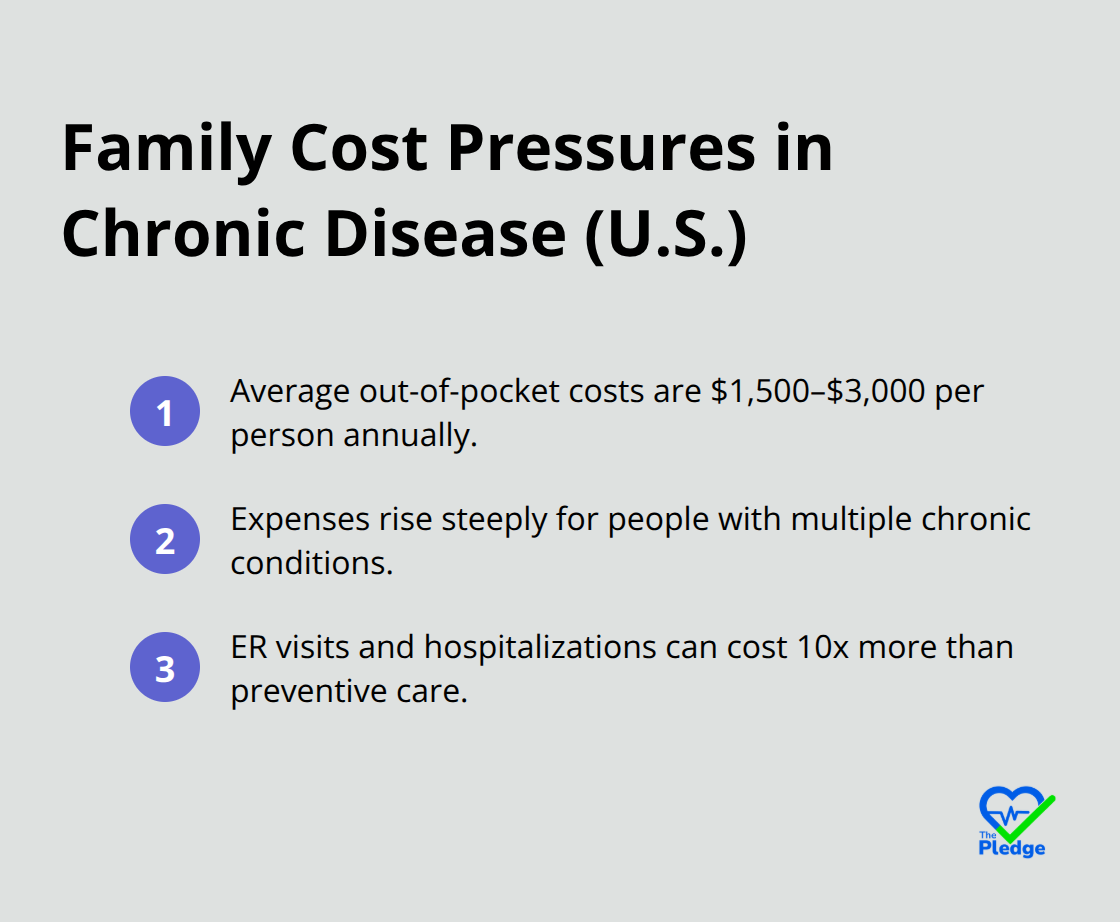
Families managing chronic conditions face financial pressure that goes far beyond copays and deductibles. Out-of-pocket costs for chronic disease management average $1,500 to $3,000 annually per person, and for those with multiple conditions, expenses climb dramatically. When patients cannot afford medications, monitoring supplies, or specialist visits, disease progression accelerates, leading to emergency room visits and hospitalizations that cost 10 times more than preventive care.
The Employer and Workforce Impact
Employers absorb these costs through higher insurance premiums, absenteeism, and reduced productivity. A worker managing uncontrolled diabetes loses approximately 5 to 8 productive hours per week due to complications, fatigue, and medical appointments. Healthcare systems face a compounding problem: they spend resources treating preventable crises rather than supporting sustained disease management, creating an inefficient cycle that wastes both money and human potential.
This financial reality sets the stage for why digital platforms matter. When patients gain access to real-time monitoring, personalized interventions, and better communication with their care teams, the economics shift dramatically.
How Digital Platforms Close the Monitoring Gap
Real-Time Data Transforms Clinical Decision-Making
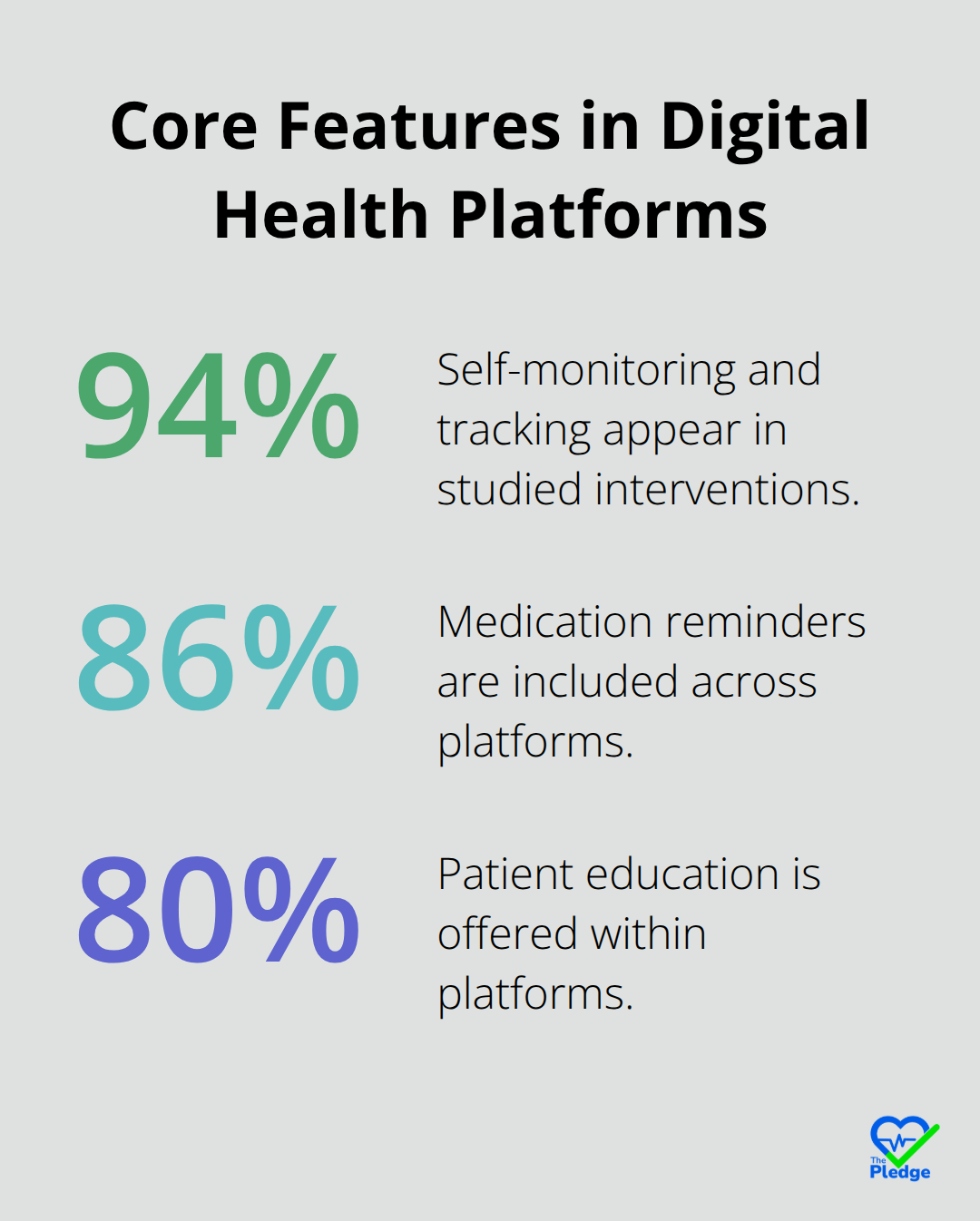
The difference between controlled and uncontrolled chronic disease often comes down to one thing: visibility. Without real-time data, both patients and providers operate in the dark, making decisions based on outdated information or patient memory. Research across 69 digital health platforms targeting chronic diseases found that self-monitoring and tracking appeared in roughly 94% of studied interventions, yet most traditional care models still lack this foundation. When patients measure blood pressure, glucose, or weight daily and that data flows directly to their care team, intervention happens before crisis strikes. A Korean study of 502 patients using a digital platform saw systolic blood pressure decline 3.8% and diastolic pressure drop 3.4% within 24 weeks, with higher-risk patients showing even steeper improvements of 8.7% and 7.1% respectively. These gains stem directly from continuous monitoring that enables clinicians to adjust medications and coaching in real time rather than waiting months between appointments.
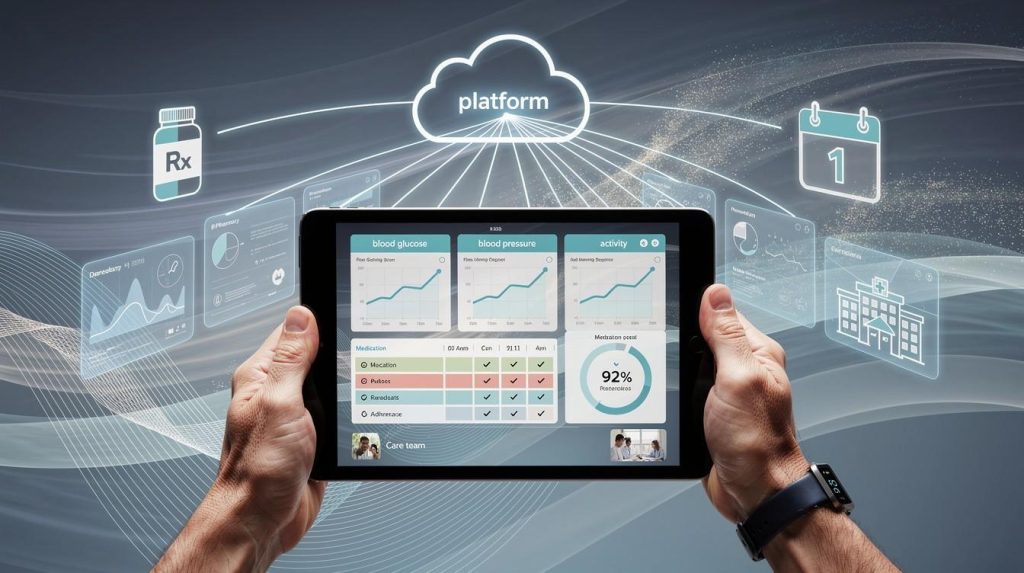
The platform combined patient-facing apps with provider dashboards, allowing clinicians to spot trends and flag abnormal readings instantly. Wearable devices amplified this effect: connected glucose monitors, blood pressure cuffs, and activity trackers feed data into centralized platforms, and patients receive immediate feedback on how their behaviors affect their metrics. This immediate feedback loop drives adherence far more effectively than generic education alone.
Personalization Converts Data Into Action
Personalization transforms monitoring into actionable change. Rather than applying the same treatment protocol to every patient, digital platforms use collected data to tailor interventions to individual risk profiles and preferences. The Korean study showed that among diabetic patients with high baseline glucose levels, fasting glucose dropped 8.9% when they received personalized medication adjustments and lifestyle guidance through the app, compared to standard care. Medication reminders, which appeared in approximately 86% of digital health platforms studied, work best when timed to patients’ actual routines rather than generic morning or evening schedules. Patient education content, present in about 80% of platforms, drives better outcomes when it addresses the specific barriers each patient faces (whether cost, complexity, or motivation). Care-team communication features, used in roughly 72% of studied platforms, enable providers to send targeted messages that reinforce adherence and celebrate progress.
The Korean platform achieved 77.5% daily active use and sustained engagement beyond typical app retention benchmarks of 31–36% at 90 days, largely because patients received personalized feedback tied to their own data rather than generic content. This personalization requires that platforms capture enough information about each patient to identify patterns: Which times of day does medication adherence drop lowest? Does this patient respond better to educational messages or reminders? What social or logistical barriers prevent exercise or healthy eating? Digital systems answer these questions automatically, then adjust their messaging and support accordingly.
Behavior Change Techniques Amplify Engagement
Behavior-change techniques such as goal-setting and motivational messaging work because platforms adapt them to each person’s baseline and progress rather than applying one-size-fits-all prescriptions. Approximately 86% of platforms included medication reminders, while roughly 70% incorporated behavior-change support. These features succeed when they reflect individual circumstances and preferences. A patient who struggles with morning routines needs reminders at different times than someone with an evening schedule. Another patient may respond better to progress celebrations than to warnings about missed doses. Digital platforms identify these preferences through usage patterns and adjust their approach accordingly (without requiring patients to explicitly state their preferences). This adaptive capability explains why platforms consistently outperform static interventions in real-world settings. When patients see that their platform understands their specific situation and responds with relevant support, engagement deepens and adherence improves. The evidence shows that this personalized, data-driven approach to behavior change produces measurable health improvements across diverse patient populations and chronic conditions. These outcomes set the stage for understanding how platforms sustain engagement over months and years, which requires more than just good data and personalization.
What Keeps Patients Engaged With Digital Health Tools
Reminders That Adapt to Individual Routines
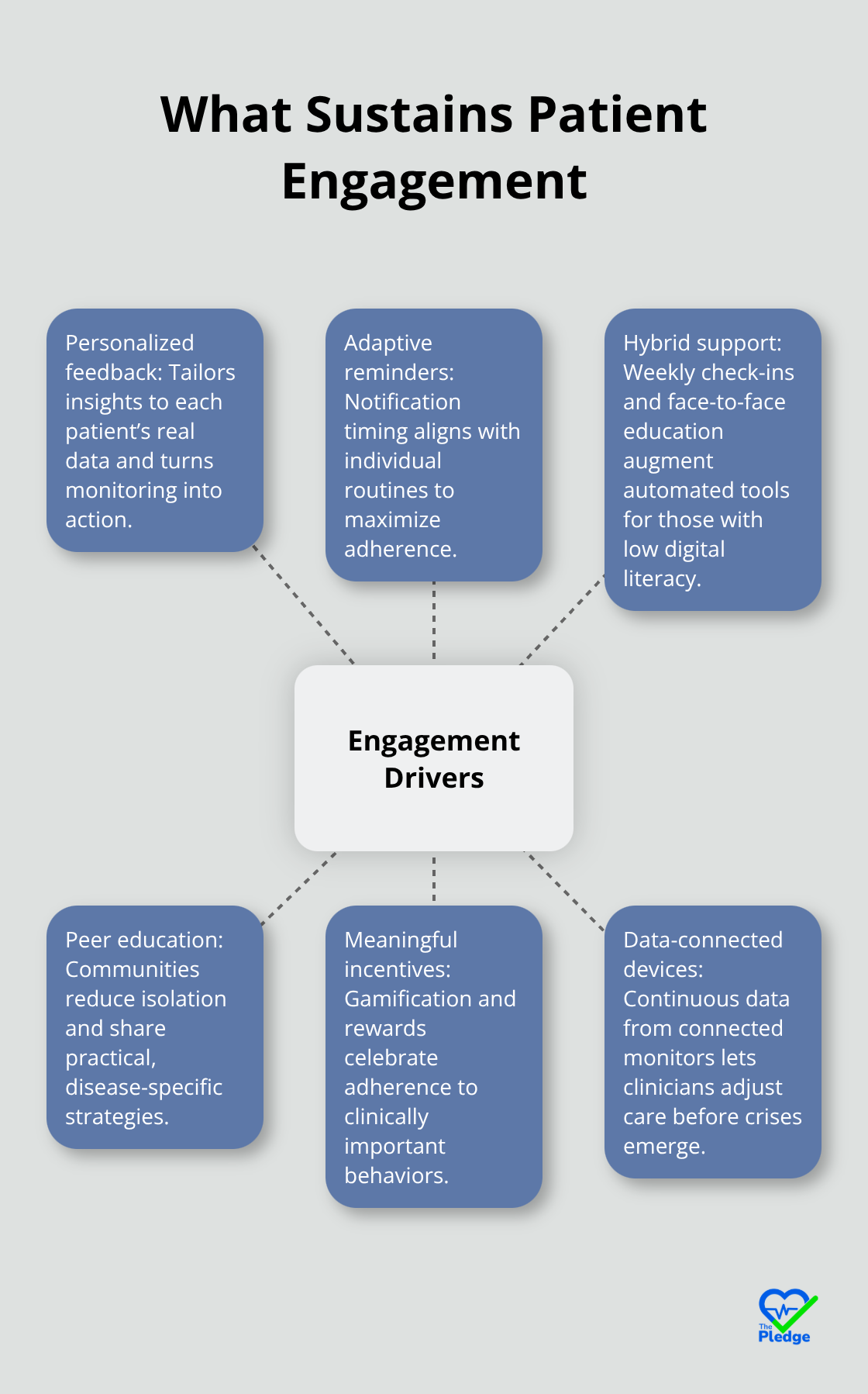
Engagement is where most chronic disease management fails. A patient downloads an app, tracks their numbers for two weeks, then abandons it. Digital platforms solve this by moving beyond passive monitoring to active engagement mechanisms that sustain motivation over months and years. Medication reminders appeared in approximately 86% of studied digital health platforms, but their effectiveness hinges entirely on timing and personalization. A generic 8 a.m. reminder fails for shift workers or patients whose schedules vary daily. Platforms that adapt reminder timing based on actual usage patterns-sending notifications when patients are most likely to take medication-show dramatically higher adherence rates. Research from a Korean study of 502 chronic disease patients revealed 77.5% daily active use over 24 weeks, far exceeding typical app retention benchmarks of 31–36% at 90 days. This exceptional engagement came from medication reminders that adapt to individual routines, not one-size-fits-all scheduling.
Meeting Patients Where They Are
The platform also employed weekly check-ins for non-recording participants and face-to-face education for older adults with low digital literacy, recognizing that sustained engagement requires meeting patients where they are rather than forcing them into a predetermined digital experience. This hybrid approach-combining digital automation with targeted human coaching at critical junctures-proves far more effective than technology alone. Older adults with limited comfort around apps benefit from in-person sessions that build confidence and address specific concerns. Younger patients with consistent digital habits respond better to app-based reminders and automated feedback. Platforms that recognize these differences and adjust their support model accordingly sustain engagement across diverse age groups and digital literacy levels.
Educational Resources and Peer Connection
Educational resources and peer support communities drive engagement by transforming isolation into connection. Approximately 80% of digital health platforms included patient education, but platforms that pair this education with peer support communities for chronic disease patients show significantly higher engagement and adherence. A patient learning that their blood sugar fluctuates after exercise gains more from hearing how another diabetic manages post-workout glucose than from generic educational content. Peer communities reduce the psychological burden of managing a chronic condition alone and provide practical strategies that patients actually use in their daily lives.
Strategic Use of Gamification and Incentives
Gamification and incentive programs sound frivolous but work when tied to meaningful health metrics rather than arbitrary points. Only about 5 of 69 studied platforms used gamification, suggesting it remains underutilized, yet those that implemented it strategically-celebrating adherence milestones, visualizing progress toward personal goals, or offering tangible rewards for consistent monitoring-sustained engagement far longer than those relying on reminders alone. The most effective incentive programs reward behaviors that matter clinically: consistent medication adherence, regular self-monitoring, and completion of health screenings. When patients see that their efforts produce measurable improvements in their own health metrics, intrinsic motivation strengthens alongside external rewards.
Layered Reinforcement for Sustained Motivation
A multi-layered approach explains why digital platforms achieve 4x industry-standard engagement rates when designed to address the actual barriers patients face-complexity, forgetfulness, lack of motivation, and isolation-rather than assuming that access to technology alone drives behavior change. Personalized feedback tied to each patient’s actual data, weekly check-ins that create accountability, disease-specific monitoring devices that reduce friction, and incentives that reward consistent participation work together to sustain engagement. No single mechanism maintains motivation indefinitely; instead, platforms that combine multiple reinforcement strategies adapt as patient needs shift over time.
A patient highly motivated by peer support may later respond better to personalized coaching. Another patient may need stronger incentives during periods of stress or illness. Platforms that recognize these shifts and adjust their engagement tactics accordingly maintain higher retention and better health outcomes than those relying on static approaches.
Final Thoughts
The evidence proves that digital platforms fundamentally reshape chronic condition management outcomes. Patients using real-time monitoring, personalized interventions, and direct communication with their care teams experience measurable improvements in blood pressure, glucose control, weight, and lipid profiles within weeks. These gains extend beyond individual health metrics-when patients achieve better disease control, hospitalizations drop, emergency room visits decline, and the cascading costs that drain healthcare budgets begin to reverse.
The most effective systems pair technology with targeted human support, recognizing that older adults may need face-to-face education while younger patients thrive with app-based reminders. Platforms that connect seamlessly to electronic health records, insurance systems, and provider workflows reduce friction for clinicians and patients alike. Data privacy and security must remain non-negotiable, as these concerns represent the most significant barrier to adoption across healthcare systems.
We at The Pledge have built a platform that centralizes health data, delivers personalized reminders, and coordinates care across patients, providers, employers, and family members. If you’re ready to see how digital platforms can improve health outcomes for your organization, explore The Pledge and discover what’s possible when technology meets thoughtful care design.