
Employee wellness programs have become a strategic priority for companies worldwide. Research shows that organizations with comprehensive wellness initiatives see 25% lower healthcare costs and 40% fewer sick days.
At The Pledge, we’ve analyzed the best workplace wellness programs that deliver measurable results. These programs go beyond basic gym memberships to create holistic health ecosystems that boost productivity and employee satisfaction.
What Types of Wellness Programs Actually Work
Physical Fitness Programs Build Strong Foundations
Physical fitness programs form the backbone of successful workplace wellness initiatives, but companies that limit themselves to basic gym memberships miss massive opportunities. The most effective organizations implement comprehensive fitness ecosystems that include on-site fitness centers, virtual workout platforms, and activity tracking challenges. Companies integrate these programs with wearable technology that tracks employee movement and rewards active behavior through point systems (gamification makes fitness more engaging for participants).
Mental Health Support Delivers Strongest ROI
Mental health programs show the strongest return on investment among all wellness categories. Progressive companies now offer meditation apps, stress management workshops, and mental health days as standard benefits through their comprehensive Employee Assistance Programs and on-site counseling services. Organizations that implement mindfulness training programs across their workforce see significant productivity increases and reduced healthcare costs.
Preventive Care Catches Problems Early
Preventive care and health screenings catch problems before they become expensive medical emergencies. Companies that offer on-site biometric screenings, flu vaccinations, and regular health assessments see fewer emergency room visits according to health industry research. Comprehensive screening programs identify early-stage health issues in participants and help prevent future medical costs.
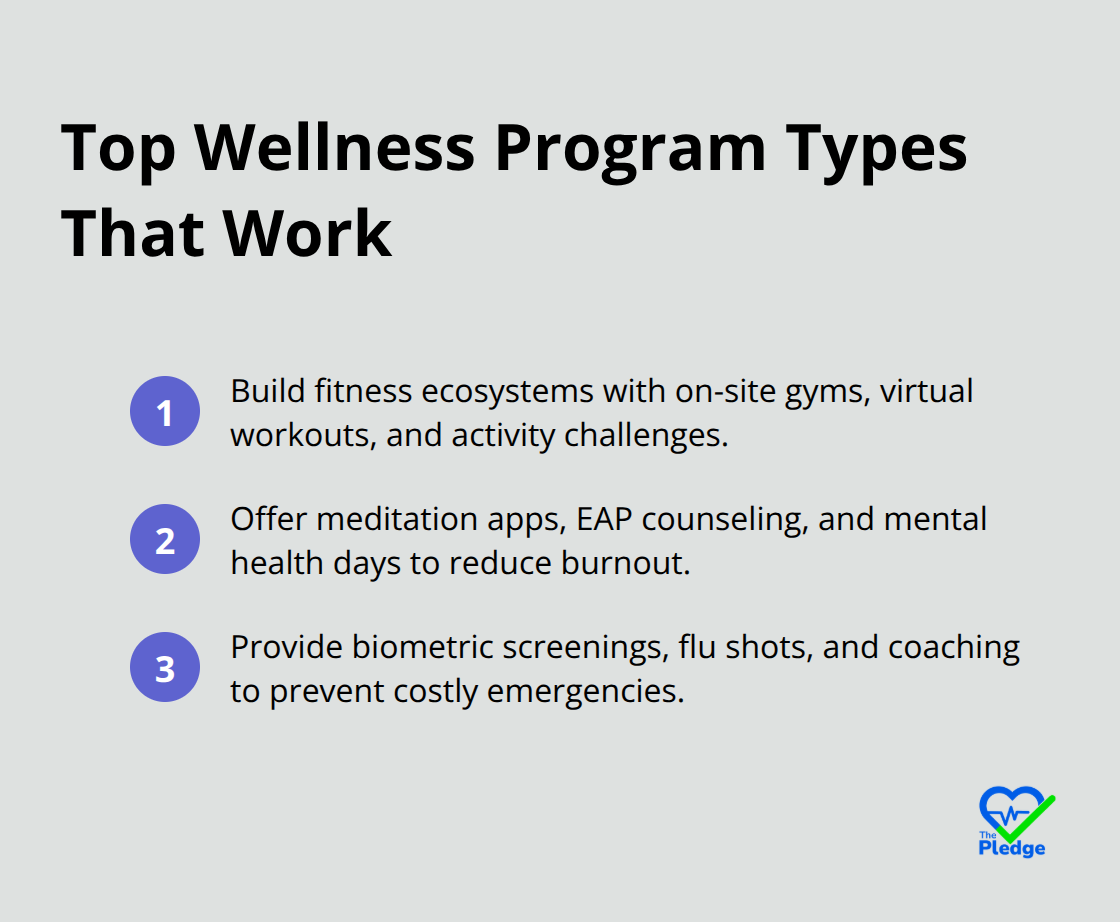
Smart organizations pair these screenings with personalized health coaching and digital platforms that track progress and send automated reminders for follow-up care (technology integration amplifies the impact of traditional screening methods).
The success of these wellness program types depends heavily on how companies structure and implement them, which brings us to the key features that separate effective programs from basic offerings.
What Makes Wellness Programs Actually Work
Effective wellness programs share three non-negotiable features that separate winners from wasteful initiatives. Companies must implement personalized health assessments that go beyond basic questionnaires to include biometric data, lifestyle factors, and individual health risks. Salesforce uses comprehensive health risk assessments that combine medical history with real-time data from wearables to create individualized wellness roadmaps. These assessments identify specific health risks for each employee and set measurable goals based on their current health status rather than generic company-wide targets.
Technology Integration Drives Real Results
Technology integration transforms wellness programs from optional benefits into daily habits that employees actually use. The most successful programs use platforms that sync with popular fitness trackers, health apps, and medical devices to create seamless data flow. Microsoft Teams integrates wellness challenges directly into their workplace collaboration platform, which makes health tracking as natural as checking email. Companies that implement comprehensive wellness platforms see higher participation rates compared to those with disconnected tools.
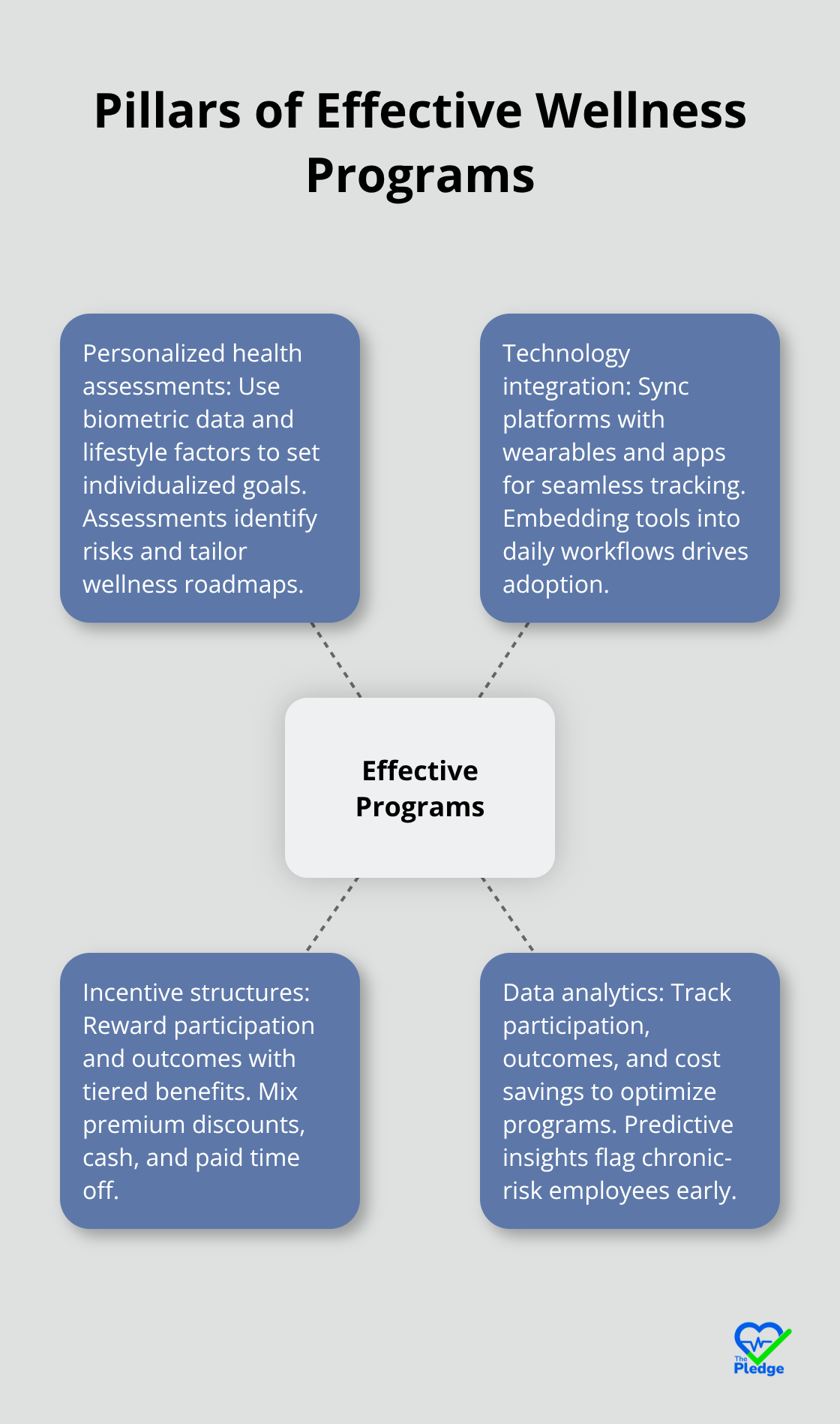
Smart organizations also use AI-powered analytics to identify health trends and send personalized recommendations through mobile apps (this automation removes barriers that typically prevent employee participation).
Incentive Structures Must Reward Outcomes
Incentive structures make or break employee engagement in wellness programs across all industries. Research shows that companies with meaningful rewards see higher participation rates than those with minimal incentives. The most effective programs reward both participation and health improvements through tiered incentive systems that include premium discounts, cash rewards, and additional paid time off. Johnson & Johnson’s wellness program offers annual rewards for completing health screenings and achieving personal health goals (this outcome-based approach creates stronger motivation than participation-only rewards).
Data Analytics Transform Program Effectiveness
Data analytics separate successful wellness programs from basic health benefits that collect dust. Progressive companies now use predictive analytics to identify employees at risk for chronic conditions before symptoms appear. These organizations track participation patterns, health outcomes, and cost savings to continuously optimize their wellness offerings. Companies that leverage comprehensive health data see better health outcomes and lower healthcare costs compared to programs without analytics capabilities.
These foundational features create the framework for success, but the companies that truly excel take wellness programs to extraordinary levels through innovative approaches and comprehensive implementation strategies.
Which Companies Lead Workplace Wellness Innovation
Johnson & Johnson Sets the Gold Standard
Johnson & Johnson operates the most comprehensive workplace wellness program in corporate America, with Harvard Business Review research showing $2.71 in healthcare savings for every dollar invested. Their program combines biometric screenings, personalized health coaching, and on-site fitness centers with advanced analytics that track employee health trends across 250 locations worldwide. Johnson & Johnson provides employees with quarterly health assessments that include blood pressure tests, cholesterol screenings, and diabetes evaluations, all connected to electronic health records that create individualized wellness plans for specific risk factors.
Google Revolutionizes Wellbeing Through Technology
Google transforms employee wellness through their comprehensive platform that combines mental health support, nutrition programs, and fitness initiatives powered by machine learning algorithms. Their program includes on-site medical clinics with physicians and mental health professionals, plus meditation rooms and stress management workshops that reduce employee burnout according to internal Google studies. Google employees receive personalized wellness recommendations through their internal app that analyzes work patterns, stress levels, and physical activity data to suggest optimal break times and exercise routines (this data-driven approach personalizes wellness for each individual).
Microsoft Achieves Work-Life Balance Excellence
Microsoft leads work-life balance innovation through flexible work policies combined with comprehensive mental health resources that include unlimited mental health days and access to professional counseling services. Their program offers employees four-day work weeks during certain periods, flexible schedules, and sabbatical opportunities that result in higher employee retention rates compared to industry averages according to Microsoft HR data. Microsoft integrates wellness tracking directly into their Teams platform, which allows employees to schedule meditation breaks, track stress levels, and participate in company-wide fitness challenges without switching applications (this seamless integration removes barriers to participation).
Final Thoughts
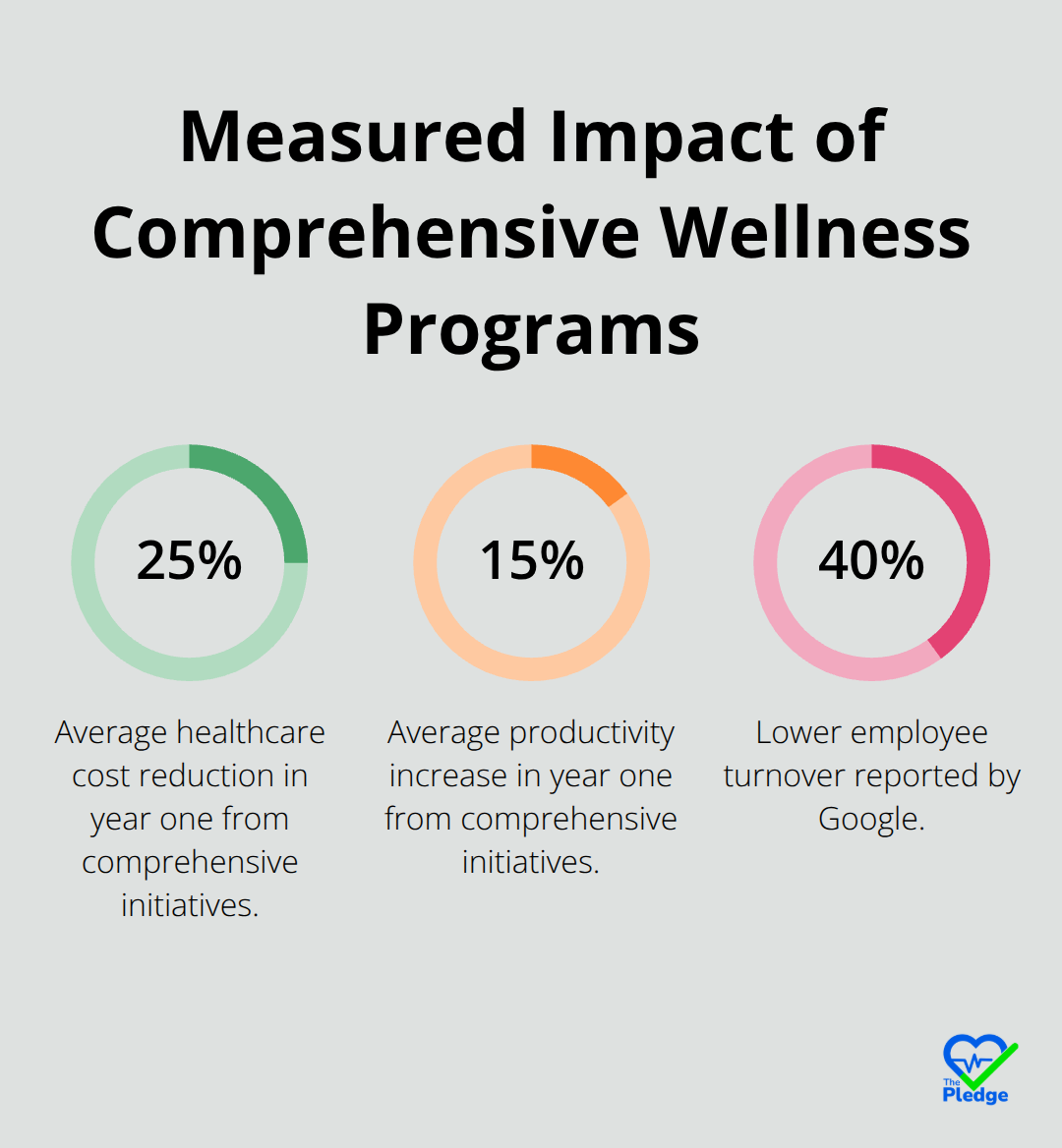
The best workplace wellness programs deliver measurable returns that extend far beyond employee satisfaction. Companies that implement comprehensive wellness initiatives see average healthcare cost reductions of 25% and productivity increases of 15% within the first year. Johnson & Johnson’s program demonstrates this impact with $2.71 saved for every dollar invested, while Google reports 40% lower employee turnover rates.
Successful implementation requires three foundational elements: executive leadership commitment, comprehensive data analytics, and technology that makes participation effortless. Organizations must start with baseline health assessments, establish clear metrics for success, and create incentive structures that reward both participation and health outcomes. Smart companies recognize that wellness programs are strategic investments in their workforce’s long-term health and productivity, not optional benefits.
The future of employee wellness centers on AI-powered personalization and predictive health analytics. Companies will increasingly use machine learning to identify health risks before they become costly medical emergencies (this proactive approach prevents expensive treatments through early intervention). The Pledge represents this evolution by centralizing health data and providing AI-driven insights that help employees take control of their wellness journey.





![[Guide] Incentives That Drive Preventive Health Participation](https://thepledge.app/wp-content/uploads/emplibot/Guide_-Incentives-That-Drive-Preventive-Health-Participation_1783650286-300x168.jpeg)