

Telehealth adoption rates have climbed significantly, yet many organizations still face real obstacles when rolling out these systems. Integration headaches, staff pushback, and security worries often derail even well-intentioned initiatives.
We at The Pledge have seen firsthand how the right approach transforms these challenges into opportunities. This guide walks you through concrete solutions that actually work.
Why Organizations Struggle with Telehealth Adoption
Technical integration failures Halt Momentum
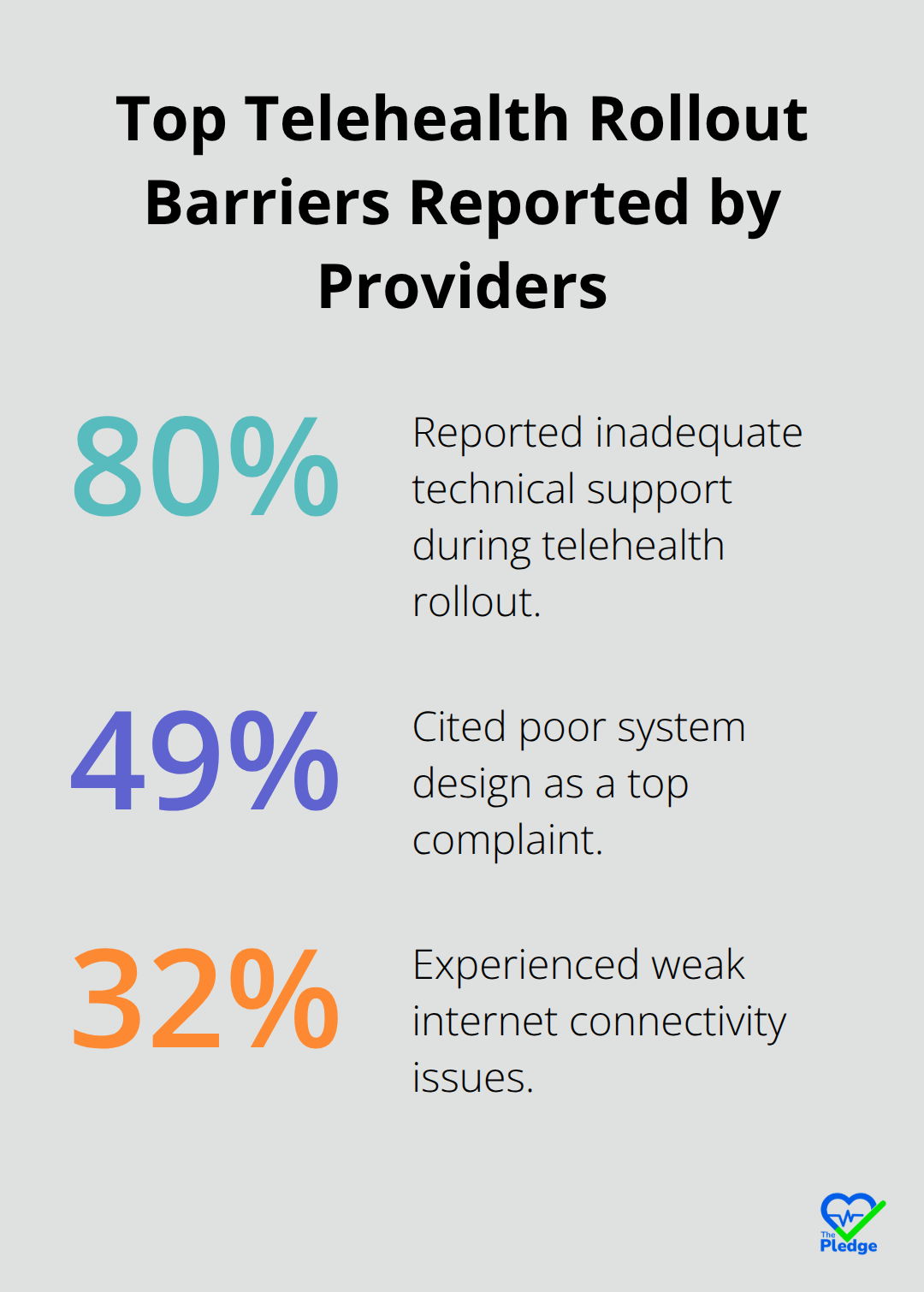
Technical incompatibility remains the most persistent barrier organizations face when launching telehealth. Legacy electronic health record systems, billing platforms, and scheduling tools were built decades ago and do not communicate with modern telehealth applications. When a new video platform fails to sync with your EHR, staff spend hours manually entering data, creating duplicate records, and introducing errors. One New York academic medical center found that 80% of providers reported inadequate technical support during their telehealth rollout, and roughly two-thirds frequently encountered technical challenges. Poor system design (49%), weak internet connectivity (32%), and audio-visual quality issues (30%) topped the complaint list. This friction frustrates clinicians and kills adoption momentum.
Providers lose confidence in the system, patients experience dropped calls and frustration, and the entire initiative stalls before demonstrating value.
Workflow Disruption and Provider Resistance
Staff and provider resistance follows close behind, though it stems less from technophobia and more from disrupted workflows. Clinicians adapted to specific in-person routines over years or decades. Telehealth demands new assessment skills, different patient positioning, altered exam techniques, and unfamiliar documentation patterns. Older providers and rural staff with limited digital experience face steeper learning curves than younger urban clinicians. A New York academic medical center survey showed that older patients had significantly less experience with computers and mobile devices compared to younger patients, highlighting how age affects technology readiness across your workforce. This gap extends to providers as well, making role-specific training essential rather than one-size-fits-all approaches.
Security Misconceptions and Access Barriers
Security and privacy concerns add another layer of complexity. While 99.8% of telehealth providers deliver safe, compliant care according to the Office of Inspector General, misconceptions persist about data breaches and HIPAA violations. About 26% of Medicare beneficiaries lack a home computer or smartphone, yet many organizations still assume patients have reliable broadband and devices. Rural broadband gaps create an invisible equity problem. Organizations that ignore these barriers waste implementation budgets and damage credibility with staff.
Moving Forward with Targeted Solutions
The solution requires addressing technical integration first, providing role-specific training tailored to different provider types and patient demographics, and transparently communicating how your platform meets HIPAA standards and supports patients across varying technology access levels. These foundational fixes transform obstacles into advantages. The next section outlines practical solutions that organizations can implement immediately to overcome each barrier and accelerate adoption across your entire care delivery network.
How to Roll Out Telehealth Without Disrupting Your Organization
Start with High-Impact, Low-Complexity Use Cases
Start small and expand methodically. Organizations that attempt organization-wide telehealth launches fail because they ignore the reality that different departments, patient populations, and provider types require different approaches. A phased rollout begins with a single high-volume, low-complexity use case-follow-up visits for chronic disease management, lab result reviews, or behavioral health appointments. These visits generate immediate wins because they require minimal physical examination, staff already understand the workflow, and patients see tangible value. Start there. Run your pilot for 60–90 days, measure utilization rates, track no-show reduction, and gather provider feedback on technical friction points. Only after you stabilize the first use case should you expand to higher-complexity visits that demand physical assessment or real-time clinical decision-making. This sequential approach prevents overwhelming your IT support team, allows your staff to build confidence gradually, and demonstrates ROI before scaling further.
Involve End Users Before Selecting Technology
Training and platform selection must happen simultaneously, not sequentially. Too many organizations choose their telehealth technology first, then scramble to train staff on a clunky system they cannot change. Reverse this. Involve end users-both providers and patients across different age groups and technical skill levels-in platform evaluation before you commit. Ask prospective vendors how their system integrates with your EHR, billing platform, and scheduling tools; demand integration specifications in writing. Require that vendors provide role-specific training: clinician workflows differ sharply from administrative staff workflows, and older providers need different onboarding than younger ones.
Assign Dedicated Technical Support and Create Simple Guides
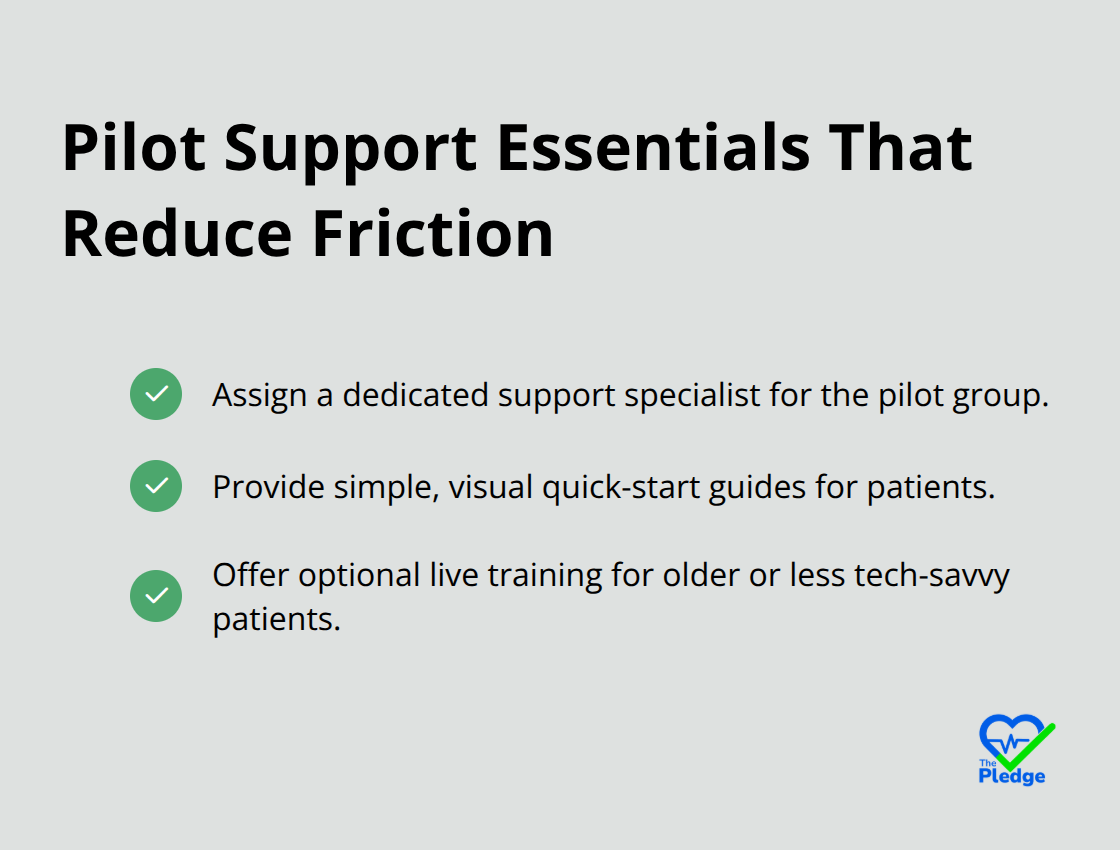
After you select your platform, assign a dedicated technical support person to your pilot group-not a shared helpdesk. One dedicated resource who understands your workflows and troubleshoots in real time reduces provider frustration dramatically. Create simple, visual quick-start guides for patients that show how to join a video visit, test audio and video, and troubleshoot common issues. Offer optional live training sessions for older patients and those unfamiliar with video conferencing.
Support Audio-only visits for Equitable Access
Audio-only visits matter significantly for equity. Ensure your platform supports phone-based visits for patients without reliable broadband or devices. Organizations that ignore this reality waste implementation budgets and exclude vulnerable populations from care access. These practical details separate successful rollouts from failed ones, and they position your organization to measure success in the next phase of your telehealth program.
Proving Telehealth Works for Your Organization
Track Metrics That Matter
Telehealth adoption stalls when organizations cannot demonstrate value. Providers skeptical of the platform need concrete evidence that it improves their workflow, not adds burden. Staff question whether the investment justifies the disruption. Executives demand clear ROI before authorizing further budget.
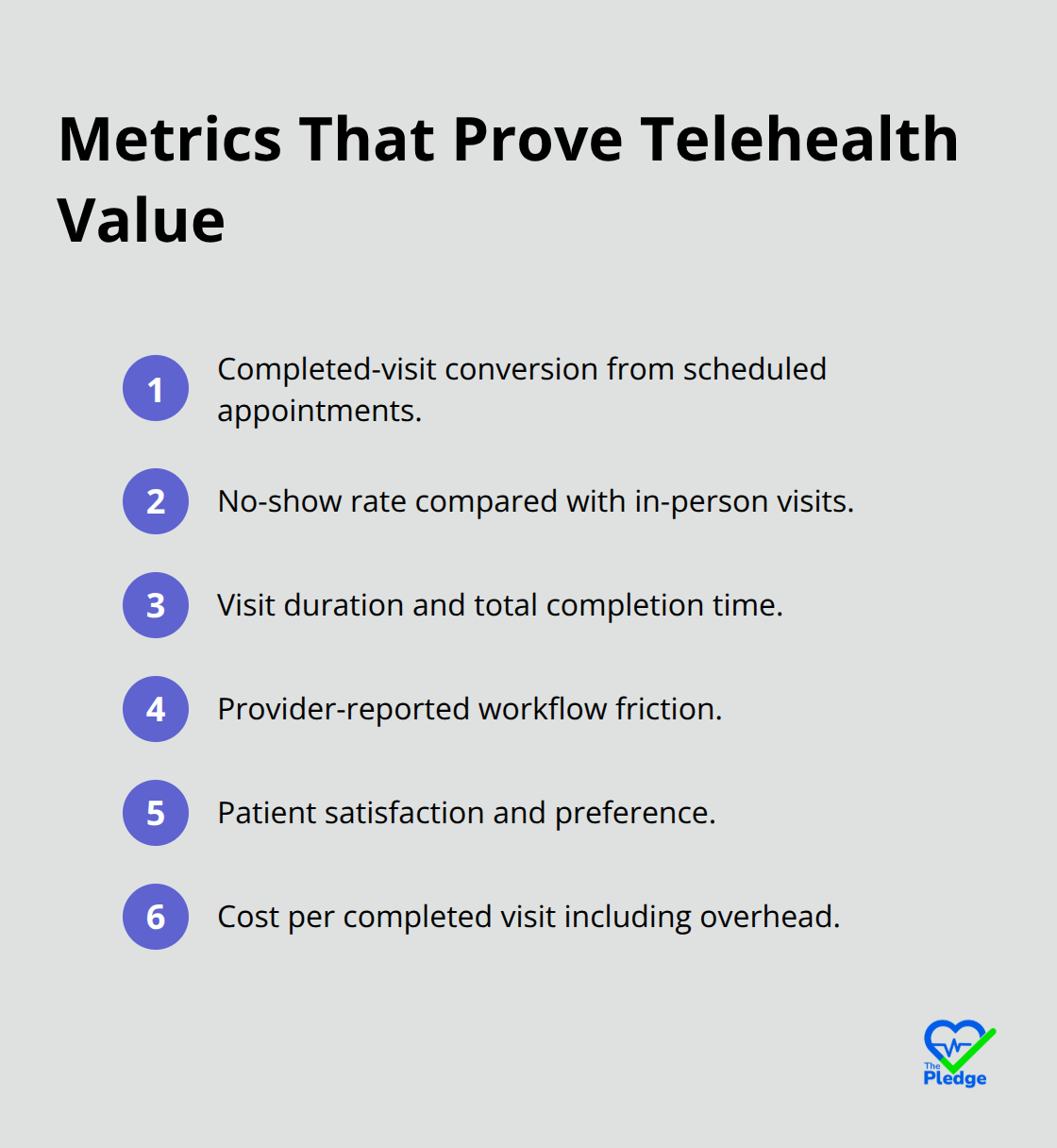
Start tracking engagement metrics immediately after your pilot launches. Monitor how many scheduled appointments actually convert to completed telehealth visits, then compare no-show rates between telehealth and in-person visits. Research indicates that telemedicine reduced no-show rates, particularly with audio and phone visits, improving appointment adherence and care continuity. If your pilot shows a reduction in no-shows compared to your baseline, that number becomes your most powerful argument for expansion.
Track visit completion time, appointment duration, and whether providers feel rushed or pressured to complete visits faster than they would in-person. A New York academic medical center discovered that 93% of patients found it easy to communicate via video, proving that telehealth does not compromise care quality when implemented properly.
Identify Which Visit Types Succeed
Document which visit types generate the highest completion rates and patient satisfaction scores. Follow-up visits for chronic disease management and lab result reviews typically exceed 85% satisfaction, while new patient evaluations or complex diagnostic assessments show lower ratings. This data guides your expansion decisions and prevents wasting resources on unsuitable use cases.
Calculate True Cost Savings
Cost savings require granular tracking beyond simple per-visit calculations. Measure appointment scheduling time, staff hours spent on pre-visit preparation, and follow-up documentation time for telehealth versus in-person visits. Calculate travel costs avoided by patients, particularly for rural populations or those managing chronic conditions requiring frequent visits. The American Hospital Association reports that telehealth can reduce urgent care visits and shift care toward outpatient settings, lowering overall system costs.
After your 60–90 day pilot, calculate your cost per completed visit, including platform licensing, staff training, technical support, and infrastructure. Compare this against your historical in-person visit cost. Organizations often discover that telehealth costs 20–30% less per visit when accounting for reduced clinic space usage and staff time. This financial proof converts skeptics into champions and justifies scaling to additional departments or patient populations.
Act on Feedback Immediately
Feedback loops separate successful programs from abandoned initiatives. Collect provider feedback weekly during your pilot, not quarterly. Ask specifically about technical friction, workflow fit, and patient interactions. When providers report that the platform design slows their documentation, fix it immediately or adjust workflows rather than accepting the friction as inevitable.
Survey patients after each telehealth visit, asking whether they would choose telehealth for their next appointment and why. Patient preference data drives adoption faster than any executive mandate. When patients prefer telehealth for follow-up visits, expanding that modality becomes obvious.
Share these metrics transparently with skeptical staff. Post weekly dashboards showing no-show reduction, patient satisfaction scores, and cost savings in break rooms or team huddles. Celebrate specific wins publicly-when a behavioral health provider sees appointment completion increase from 65% to 82% after switching to telehealth, recognize that provider by name.
Iterate Based on Real User Needs
Iterate continuously based on feedback. If older patients struggle with joining video calls, simplify your platform’s login process or deploy audio-only visits for that population. If providers report that your EHR integration creates duplicate data entry, prioritize that technical fix over adding new features. Organizations that treat telehealth as a static implementation fail; those that treat it as an evolving program based on real user feedback sustain adoption and expand systematically.
Final Thoughts
Telehealth adoption rates accelerate when organizations address technical integration, staff resistance, and security concerns systematically. The barriers you face are not unique, and the right approach solves them entirely. Start with high-impact, low-complexity use cases, involve end users before selecting technology, and assign dedicated technical support to your pilot group. Audio-only visits expand access for patients without reliable broadband, and these foundational steps prevent the friction that kills adoption momentum.
Measuring success transforms scaling decisions from guesswork into data-driven choices. Track no-show reduction, visit completion rates, and patient satisfaction scores during your pilot, then calculate true cost savings by accounting for staff time, clinic space, and patient travel costs. When your data shows that telehealth reduces no-shows by 15% and costs 25% less per visit, skeptical staff become champions. Share these metrics transparently and iterate based on real feedback, not assumptions.
Organizations that treat telehealth as an evolving program sustain adoption and expand systematically across departments and patient populations. Your program becomes embedded in daily operations, reducing urgent care visits and shifting care toward outpatient settings where it belongs. Select your pilot use case now, assemble your implementation team, and define success metrics before launch-then explore how The Pledge coordinates care through AI-driven integration and personalized engagement to accelerate your telehealth transformation.
![[Guide] Incentives That Drive Preventive Health Participation](https://thepledge.app/wp-content/uploads/emplibot/Guide_-Incentives-That-Drive-Preventive-Health-Participation_1783650286-300x168.jpeg)