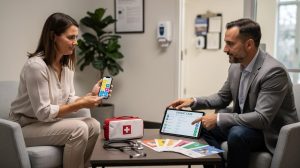
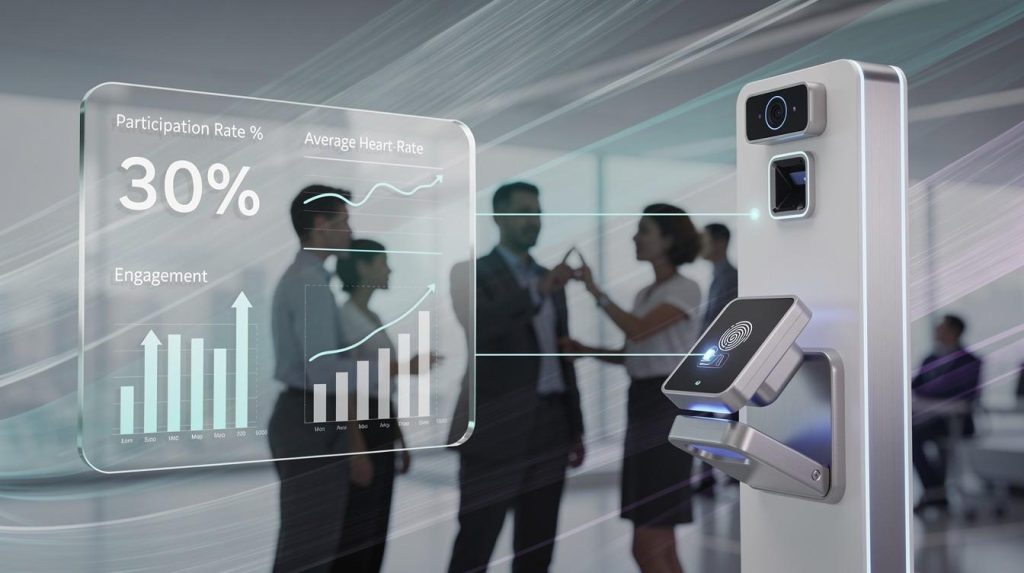
Employee engagement doesn’t happen by accident. At The Pledge, we’ve seen firsthand that when companies invest in biometric screening benefits, they unlock a powerful tool for connecting health outcomes with workplace culture.
Employees who understand their health metrics become more invested in their wellbeing-and that investment ripples through engagement, productivity, and retention. The data shows this works, and we’ll walk you through exactly how.
What Health Data Actually Reveals About Your Workforce
Objective Measurements That Matter
Biometric screenings capture objective measurements-blood pressure, cholesterol, glucose levels, waist circumference, BMI-that function as a health dashboard for both individuals and teams. These numbers tell a concrete story about who needs intervention and where. When employers work with biometric data, they see this information become the foundation for something far more valuable than a compliance checkbox: it becomes the starting point for real behavioral change.
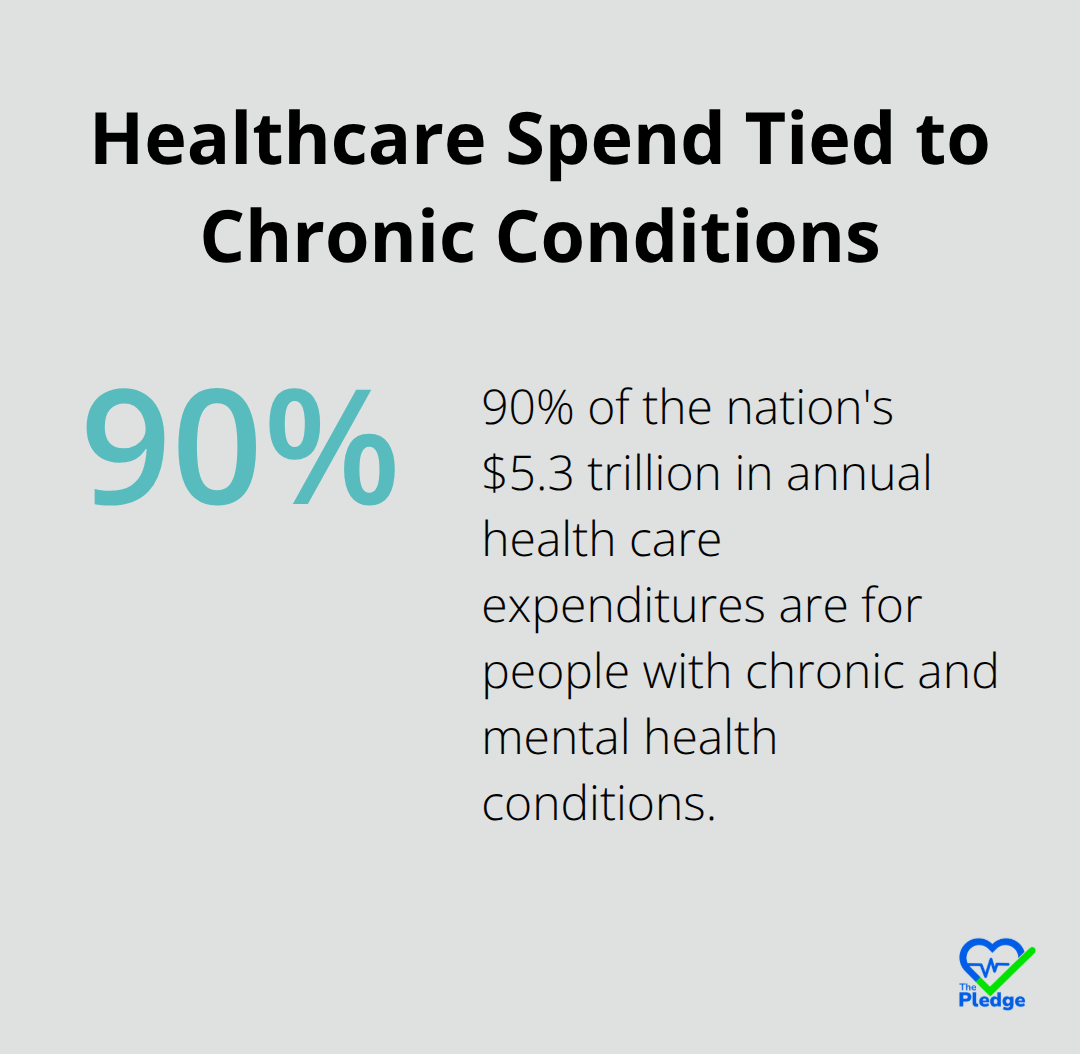
Ninety percent of the nation’s $5.3 trillion in annual health care expenditures are for people with chronic and mental health conditions, which means early detection through biometric screenings isn’t just a nice-to-have-it’s a direct lever on your bottom line. The screening process itself takes minimal time.
Fingerstick tests deliver immediate results for cholesterol, glucose, and triglycerides, while blood pressure and body measurements happen on the spot. Full results may take up to ten days depending on the lab, but the immediacy of some findings creates an urgent, teachable moment.
The Teachable Moment
When an employee sees elevated cholesterol or a larger waist circumference flagged during the screening, that’s when they’re most receptive to action. The real power emerges when screenings identify specific risk categories. Biometric data reveals who’s at risk for obesity, cardiovascular disease, sleep apnea, type 2 diabetes, and hypertension-conditions that don’t announce themselves until they become expensive crises.
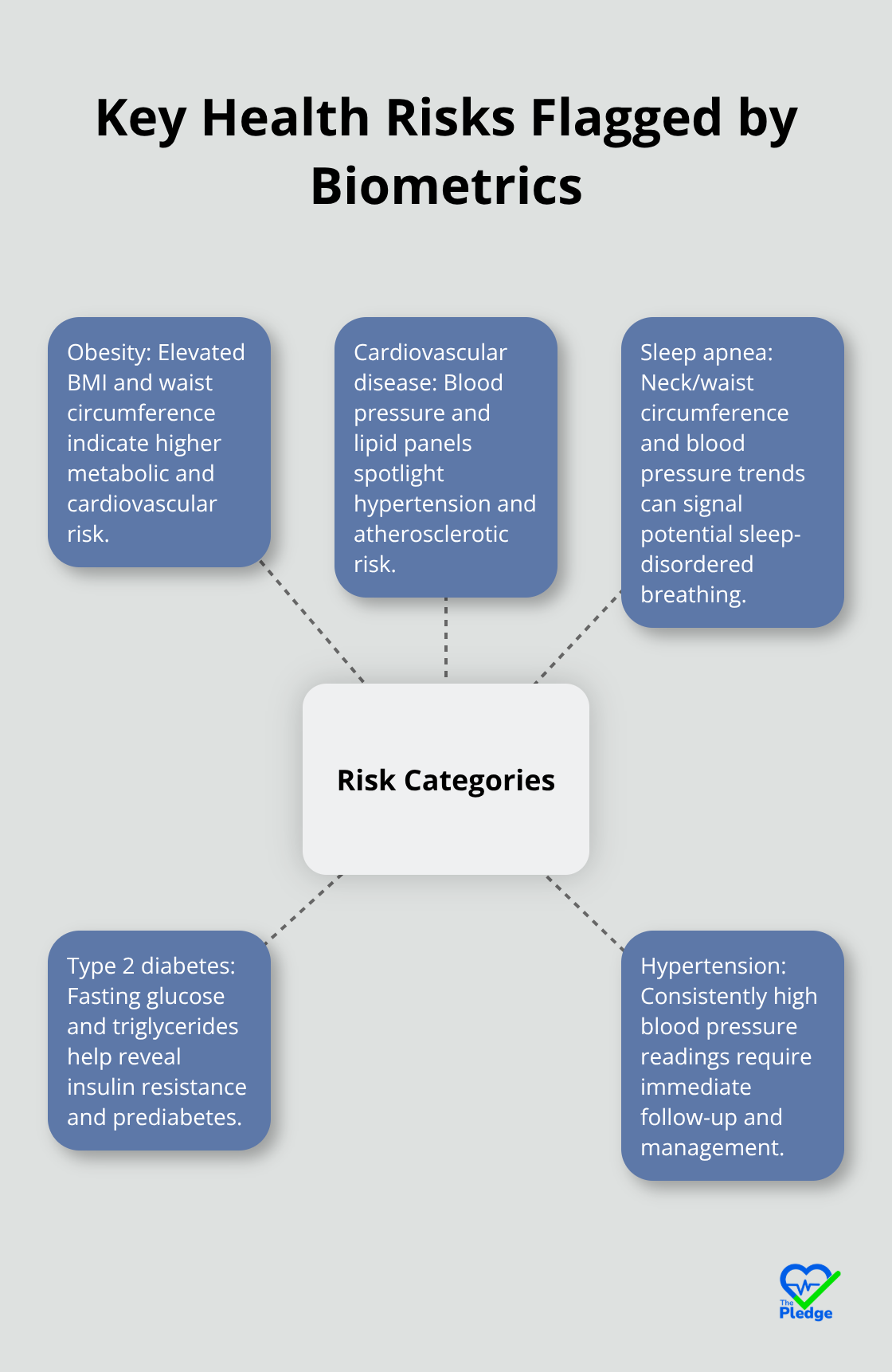
An employee with a blood pressure reading of 160/100 or a fasting glucose above 125 mg/dL needs targeted intervention now, not vague wellness advice later. This specificity is what separates effective programs from generic ones. When you pair screening results with personalized health plans-not one-size-fits-all campaigns-employees see themselves reflected in the recommendations.
Personalized Interventions Drive Results
Someone with elevated cholesterol gets concrete guidance on dietary changes and monitoring schedules. Someone with prediabetic glucose levels gets connected to diabetes prevention resources. Illness-related lost productivity costs employers $575 billion annually, a figure that screening programs directly address by catching conditions before they sideline employees.
Year-over-year biometric tracking amplifies this advantage further. Comparing an employee’s cholesterol from year one to year two shows whether lifestyle changes are working or whether medical intervention is needed. This longitudinal view transforms biometrics from a snapshot into evidence of progress, giving employees concrete proof that their efforts matter and giving employers measurable proof that their wellness investment generates returns.
Moving From Data to Engagement
The data employees receive from biometric screenings doesn’t sit in a vacuum. When organizations connect these health insights to engagement opportunities-whether through personalized wellness challenges, targeted health coaching, or incentive programs tied to measurable progress-employees shift from passive recipients of health information to active participants in their own wellbeing. This transition from awareness to action is where engagement truly takes hold.
How Biometric Data Transforms Accountability Into Action
Real-Time Metrics Create Personal Ownership
Biometric screening data only matters when it moves employees from passive awareness to active responsibility. Employees who see their own health metrics in real time-not buried in an annual wellness report-respond with measurable behavioral shifts. When someone receives their blood pressure reading immediately after screening, they don’t file it away mentally. They act on it. Real-time metrics create personal ownership by establishing a baseline of health for employees, enabling them to track progress against their own starting point.
This personal accountability differs fundamentally from generic wellness campaigns because the data belongs to the individual, not the employer. An employee who sees their cholesterol drop from 245 to 210 between year one and year two has concrete evidence that their dietary changes worked. That evidence drives sustained engagement far more effectively than any corporate messaging about the importance of heart health.
Rewards Programs Amplify Behavioral Change
Rewards programs amplify behavioral change substantially when structured around measurable biometric improvements rather than mere participation. Education and communication about benefits along with incentives for participation were associated with engagement increases of 40–60%. The mechanism is straightforward: employees earn rewards for completing health tasks like annual checkups, submitting biometric data, or achieving specific health goals, then redeem those rewards for lifestyle purchases through platforms like the UnitedHealthcare Store.
This integration matters because it connects health actions directly to tangible benefits employees actually want-gym memberships, nutrition products, stress-management tools. The connection between action and reward reinforces the habit loop that sustains long-term engagement.
Professional Staffing Elevates Program Quality
When employers staff onsite biometric screenings with licensed professionals like registered nurses or physician assistants rather than untrained coordinators, participation rates climb and the quality of health coaching improves dramatically. Employees receive real-time guidance on what their numbers mean and which specific interventions address their individual risk profile. Offering multiple participation pathways (onsite screenings for office-based employees, physician forms for remote workers, lab vouchers for those with scheduling conflicts) removes the logistical barriers that prevent engagement.
The Signal Employees Receive
The message employees receive from these investments is unambiguous: the organization views their health as a genuine priority, not a compliance requirement. This perception shift correlates directly with higher retention rates and stronger organizational commitment among employees who feel genuinely supported in their wellness journey. When biometric screening programs operate alongside year-round wellness platforms that deliver ongoing challenges, health coaching, and personalized activities, employees maintain momentum beyond the initial screening event. This sustained engagement builds employees’ knowledge, motivation, and skills to maintain healthier lifestyles over time, shifting organizational resources from disease management toward disease prevention.
Making Biometric Screening Work in Practice
Protect Data, Build Trust
Privacy concerns kill biometric screening programs before they start. Employees worry that their health data will be sold, shared with management for employment decisions, or used against them in performance reviews. These fears aren’t unfounded-they’re rooted in real regulatory complexity. HIPAA protects health information, but GINA and the ADA create additional constraints on how employers can use biometric data without triggering legal exposure.
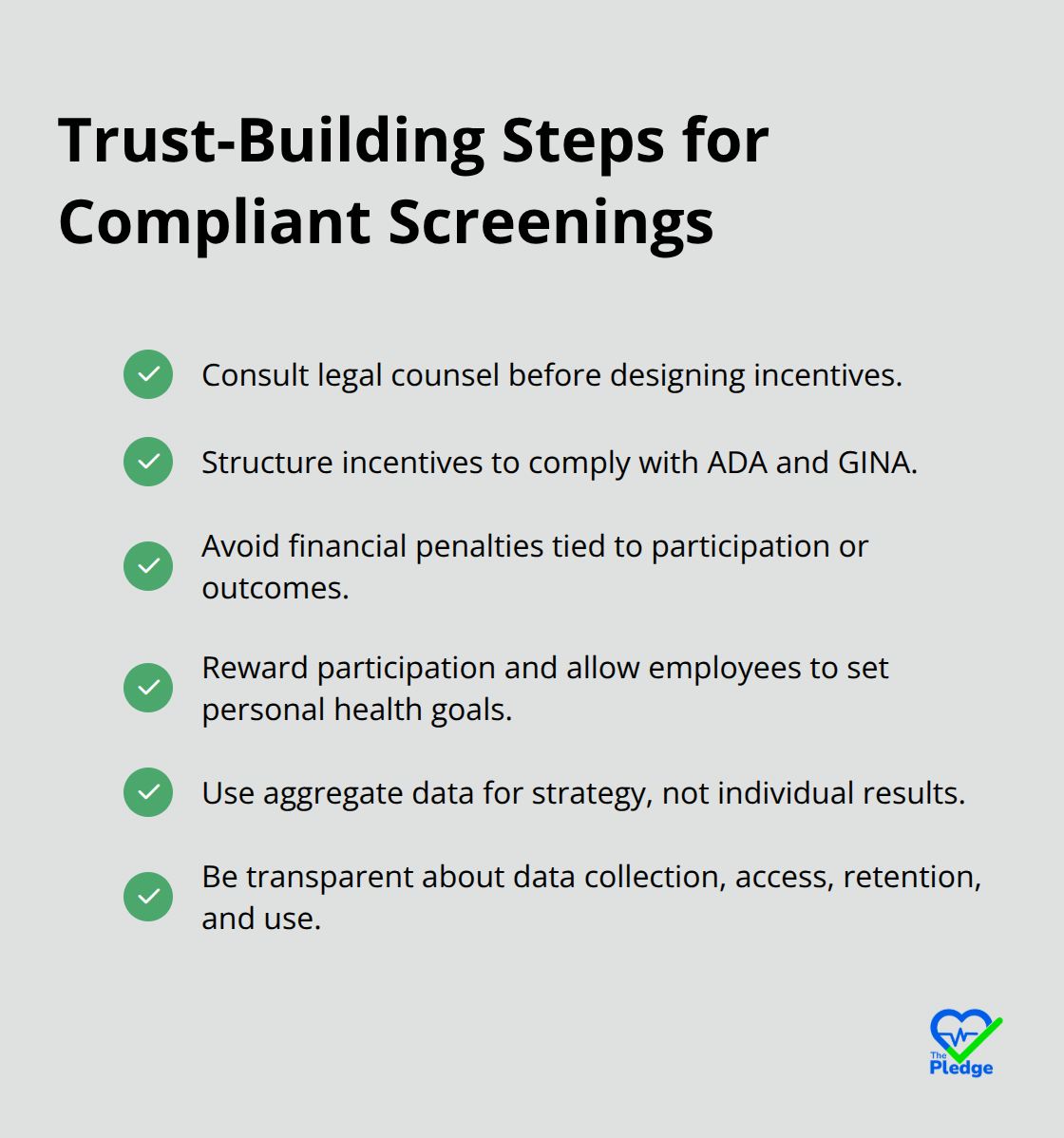
The solution isn’t to avoid screening; it’s to implement them correctly from day one. Start by consulting with legal counsel before designing any incentive structure tied to biometric results. Participation rates increase when incentives are properly structured, but only if they comply with ADA and GINA requirements. Many employers mistakenly tie financial penalties to screening participation or specific health outcomes-a practice that exposes them to litigation and tanks employee trust.
Instead, reward participation itself and allow employees to set their own health goals based on their screening results. Make aggregate data your foundation for strategy, never individual results. When you communicate screening rollout, be explicit: tell employees exactly what data you’re collecting, who can access it, how long you’ll retain it, and what you’ll do with it. This transparency transforms screening from something done to employees into something done with them.
Frame Screenings as Health Intelligence, Not Surveillance
Employees need to understand that screenings serve them first and the organization second. Frame screenings as health intelligence tools for the individual, with aggregate insights guiding organizational wellness strategy-not employee surveillance. This distinction matters enormously for trust and participation rates.
When employees see their screening results presented as personal health data that belongs to them, they engage differently than when they perceive the organization collecting information about them. The framing shifts the entire dynamic from compliance to partnership. Employees who trust that their data remains private and that screening results will help them personally rather than expose them to judgment participate at higher rates and act on their results more consistently.
Connect Screening Results to Immediate Resources
Integration with existing platforms determines whether screenings become a one-time event or a catalyst for sustained engagement. Standalone screening programs create a spike in participation that evaporates within weeks. The real engagement emerges when screening results feed directly into year-round wellness platforms that deliver personalized challenges, health coaching, and ongoing tracking.
Employees need a centralized digital hub where they access their screening results, track progress against their baseline metrics, and participate in targeted programs designed around their specific risk categories. When someone’s screening reveals prediabetic glucose levels, they should see diabetes prevention resources immediately in their wellness portal-not receive a generic email about nutrition weeks later. This immediacy transforms screening data into actionable guidance rather than abstract health information.
Remove Logistical Barriers to Participation
Multiple participation pathways matter enormously for accessibility. Offer onsite screenings for office-based employees, physician forms for remote workers, and lab vouchers for those with scheduling conflicts. This flexibility removes the logistical barriers that prevent engagement.
Staff screenings with licensed professionals-registered nurses, physician assistants, or licensed practical nurses-rather than untrained coordinators. The quality of health coaching at the screening moment influences whether employees act on their results or ignore them. A professional who explains what elevated cholesterol means and connects the employee to specific resources creates momentum that generic communication cannot replicate.
Sustain Momentum Through Year-Over-Year Tracking
After screening, maintain engagement through continuous biometric tracking capabilities that let employees monitor year-over-year progress and see whether lifestyle changes are working. This longitudinal view transforms screening from a compliance checkpoint into evidence of personal progress, sustaining motivation far beyond the initial event. An employee who watches their cholesterol drop from 245 to 210 between screenings has concrete proof that their efforts matter-proof that no corporate wellness message can replicate.
Final Thoughts
Biometric screening benefits compound when employers integrate screening programs with year-round wellness platforms, professional health coaching, and transparent data practices. Organizations that implement this coordinated approach see measurable improvements in employee health outcomes and productivity. Employees who understand their health metrics invest in their results, track progress year-over-year, and maintain momentum because they see concrete evidence that their efforts work.
Strategic implementation requires three commitments: protect employee data through proper legal structures and transparent communication, staff screenings with licensed professionals who deliver quality health coaching at the moment employees are most receptive to change, and integrate screening results into centralized platforms where employees access personalized resources and track progress throughout the year. The long-term payoff justifies the investment, as organizations shift resources from managing chronic disease toward preventing it. Employees develop healthier habits that persist beyond any single wellness initiative, productivity increases, healthcare costs decline, and retention improves.
We at The Pledge built our platform specifically to support this integration by centralizing health data and delivering personalized engagement that keeps employees connected to their screening results and wellness goals year-round. When biometric screening becomes part of a coordinated health management strategy, the results compound. Start with screening and build from there.
![Navigating Your Provider Network for Maximum Savings [Guide]](https://thepledge.app/wp-content/uploads/emplibot/Navigating-Your-Provider-Network-for-Maximum-Savings-_Guide__1781489382-300x168.jpeg)