
Managing employee benefits can be a complex and time-consuming task for HR departments. At The Pledge, we understand the challenges businesses face in streamlining their HR processes.
Employee benefits management software offers a solution to simplify and automate these tasks. In this post, we’ll explore the key features to look for, how to choose the right software for your company, and strategies for successful implementation.
What Makes Great Benefits Management Software?
At The Pledge, we know that effective employee benefits management software transforms HR processes and boosts employee satisfaction. Let’s explore the key features that distinguish top-tier solutions.
Centralized Administration
The foundation of any robust benefits management platform is centralized administration. This feature allows HR professionals to manage all benefits programs from a single dashboard. Centralized administration automates processes to reduce manual tasks, minimize errors, and save time for HR teams and employees.
ADP’s Workforce Now platform (a competitor to The Pledge) offers a unified console for managing health insurance, retirement plans, and voluntary benefits. This centralization saves time and reduces errors by eliminating the need to switch between multiple systems.
Employee Self-Service
A user-friendly self-service portal is essential in today’s digital workplace. These portals enable employees to view, select, and modify their benefits without HR intervention. Employee self-service portals empower employees with self-service capabilities, enhancing their experience with benefits administration.
Workday’s benefits module (another competitor) exemplifies this feature, offering intuitive interfaces that guide employees through the selection process with clear comparisons and educational resources.
Automated Enrollment and Eligibility
Automation reduces administrative burden and ensures accuracy. The best software tracks employee eligibility automatically based on factors like hire date, job classification, and life events. Rippling’s platform (a competitor) uses AI to predict when employees become eligible for new benefits and triggers enrollment notifications.
Compliance Management
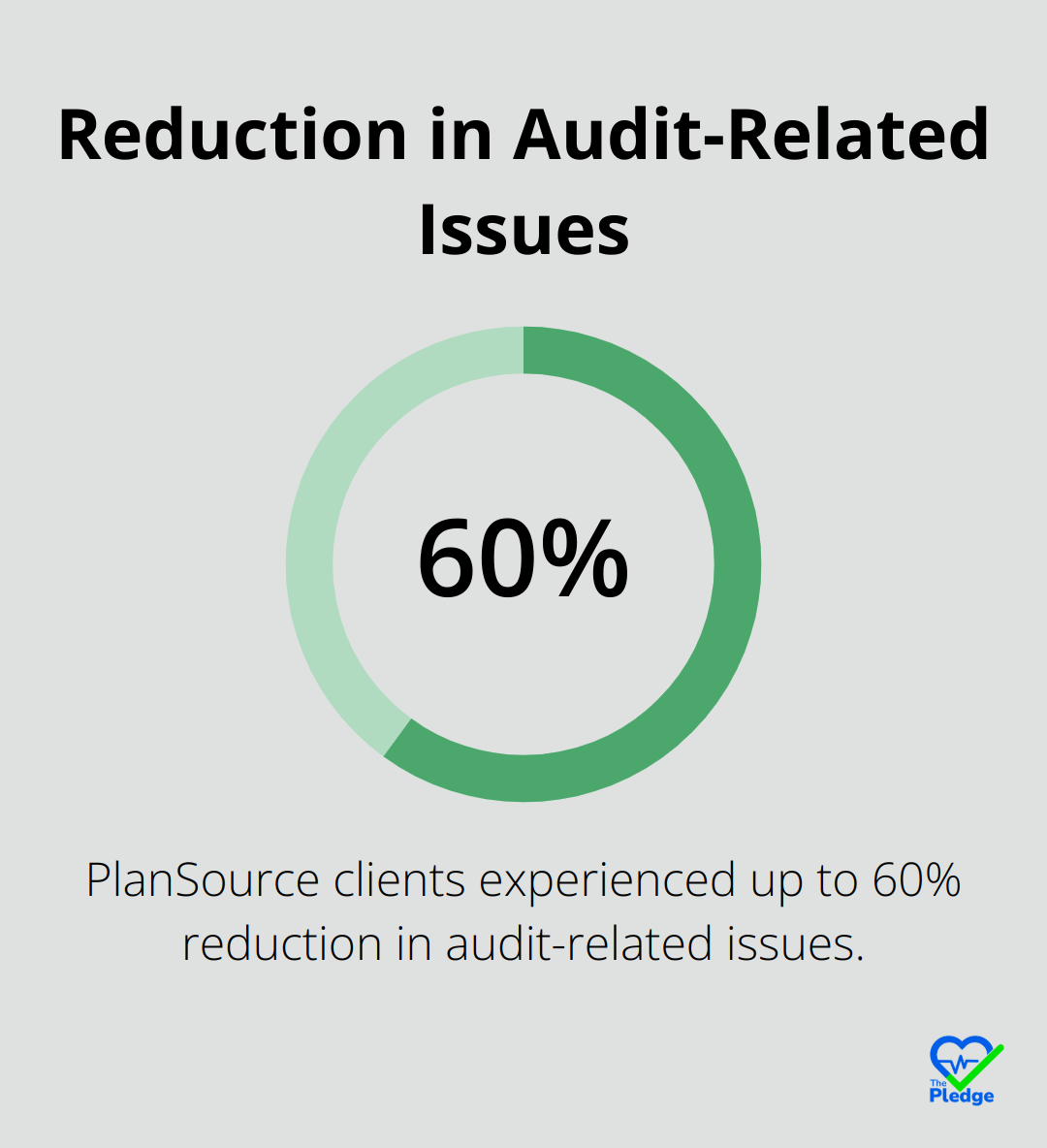
With ever-changing regulations, compliance management is critical. Top-tier software includes built-in compliance checks and automatic updates to reflect new laws. PlanSource (a competitor) reports that their compliance management features have helped clients reduce audit-related issues by up to 60%. The following chart illustrates this significant improvement:
Data Security and Privacy
In an era of increasing cyber threats, robust data security measures are non-negotiable. Look for software that offers end-to-end encryption, multi-factor authentication, and regular security audits. The best platforms (like The Pledge) prioritize data protection and comply with regulations such as GDPR and HIPAA.
These features simplify HR processes and improve employee experiences. While many platforms offer some of these capabilities, it’s important to choose a solution that excels in all areas to truly revolutionize your benefits management. The next section will guide you through the process of selecting the right employee benefits management software for your organization’s unique needs.
How to Select the Best Benefits Management Software
Identify Your Unique Requirements
Start with a thorough assessment of your company’s specific needs. Consider factors such as company size, industry, types of benefits offered, and current pain points in your benefits management process. A tech startup with a young workforce might prioritize features like digital onboarding and flexible benefits. A manufacturing company with an older workforce might focus on retirement plan management and health insurance options.
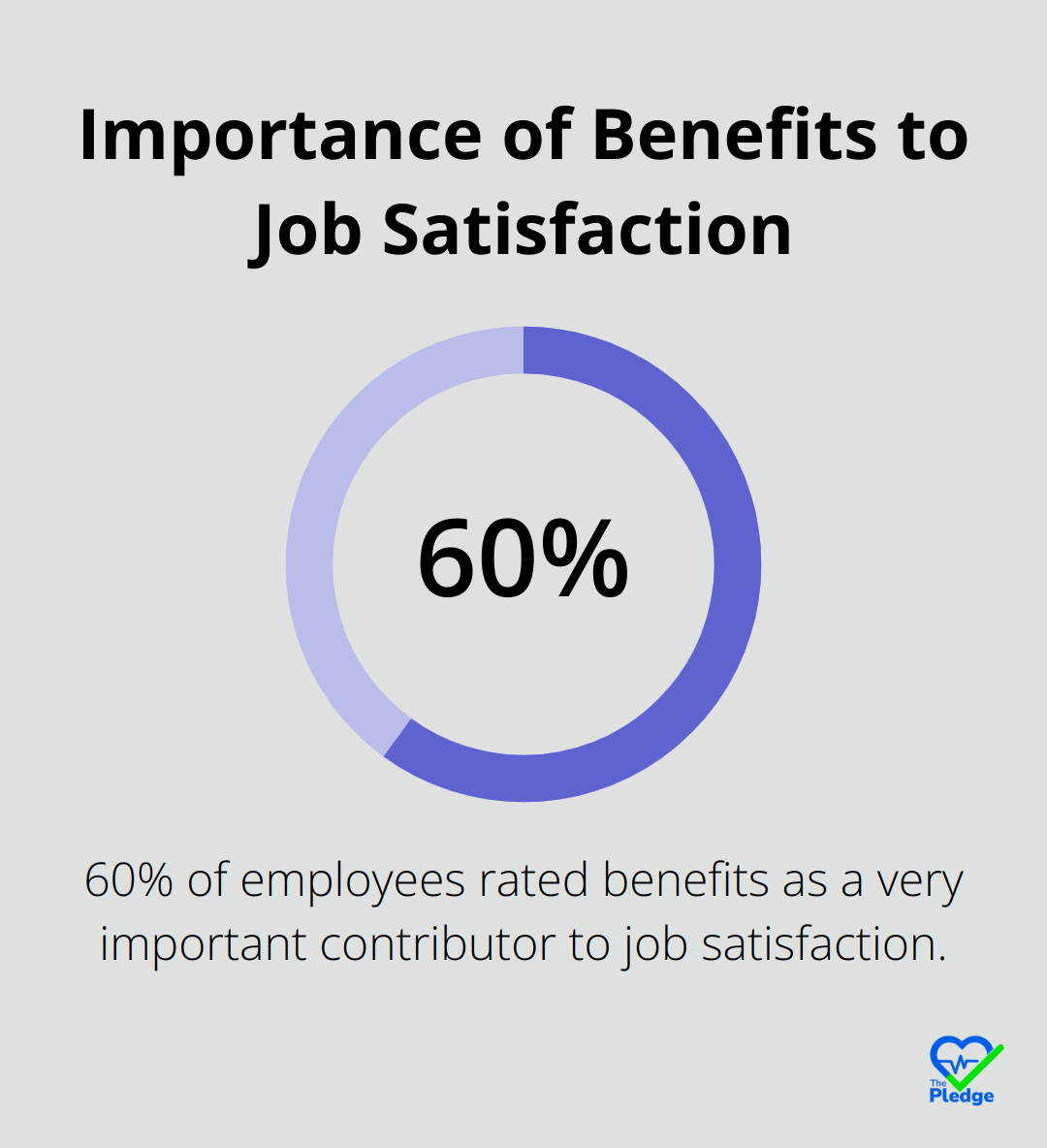
A survey by SHRM found that sixty percent of employees rated benefits as a very important contributor to job satisfaction. This underscores the importance of choosing software that aligns with your employees’ needs and preferences. The following chart highlights this crucial finding:
Evaluate Integration Capabilities
The ability to integrate with your existing HR systems is essential. Look for software that can connect seamlessly with your payroll, time tracking, and other HR tools. This integration reduces data entry errors and saves time. For instance, Workday’s platform boasts integration with over 500 applications, streamlining workflows across various HR functions.
The Pledge (our top choice) goes a step further by offering not just HR integrations, but also connections with healthcare providers and insurers, creating a more holistic benefits management ecosystem.
Prioritize User Experience and Support
User-friendly interfaces and robust support are critical for successful adoption. Consider software that offers intuitive navigation for both HR administrators and employees. Look for vendors that provide comprehensive training and ongoing support.
A study by Deloitte found that in a radically changing tech and work environment, organizations need a new calculus to select, plan, assess, and achieve value from their work and workforce technologies. This demonstrates the importance of prioritizing user experience in your selection process.
Analyze Cost vs. Value
While budget is always a consideration, it’s essential to look beyond the initial price tag. Consider the long-term value the software will provide. Factors to evaluate include potential time savings, reduction in errors, improved compliance, and increased employee satisfaction.
For example, a case study by PlanSource revealed that their clients experienced an average of 30% reduction in administrative time spent on benefits management. This kind of efficiency gain can justify a higher upfront cost.
The cheapest option isn’t always the most cost-effective in the long run. Some solutions (like The Pledge) may have a higher initial investment but offer superior ROI through comprehensive features and high engagement rates.
When evaluating costs, also consider scalability. As your company grows, you’ll want software that can grow with you without requiring a complete overhaul of your benefits management system.
The next step in simplifying your HR processes is to develop a solid implementation strategy. Let’s explore how to effectively roll out your chosen benefits management software and ensure its successful adoption across your organization.
How to Successfully Implement Benefits Management Software
Create a Phased Implementation Plan
Start with a detailed timeline for your software rollout. We recommend a phased rollout, beginning with a pilot group before full-scale deployment. This method allows for real-world testing and process refinement.
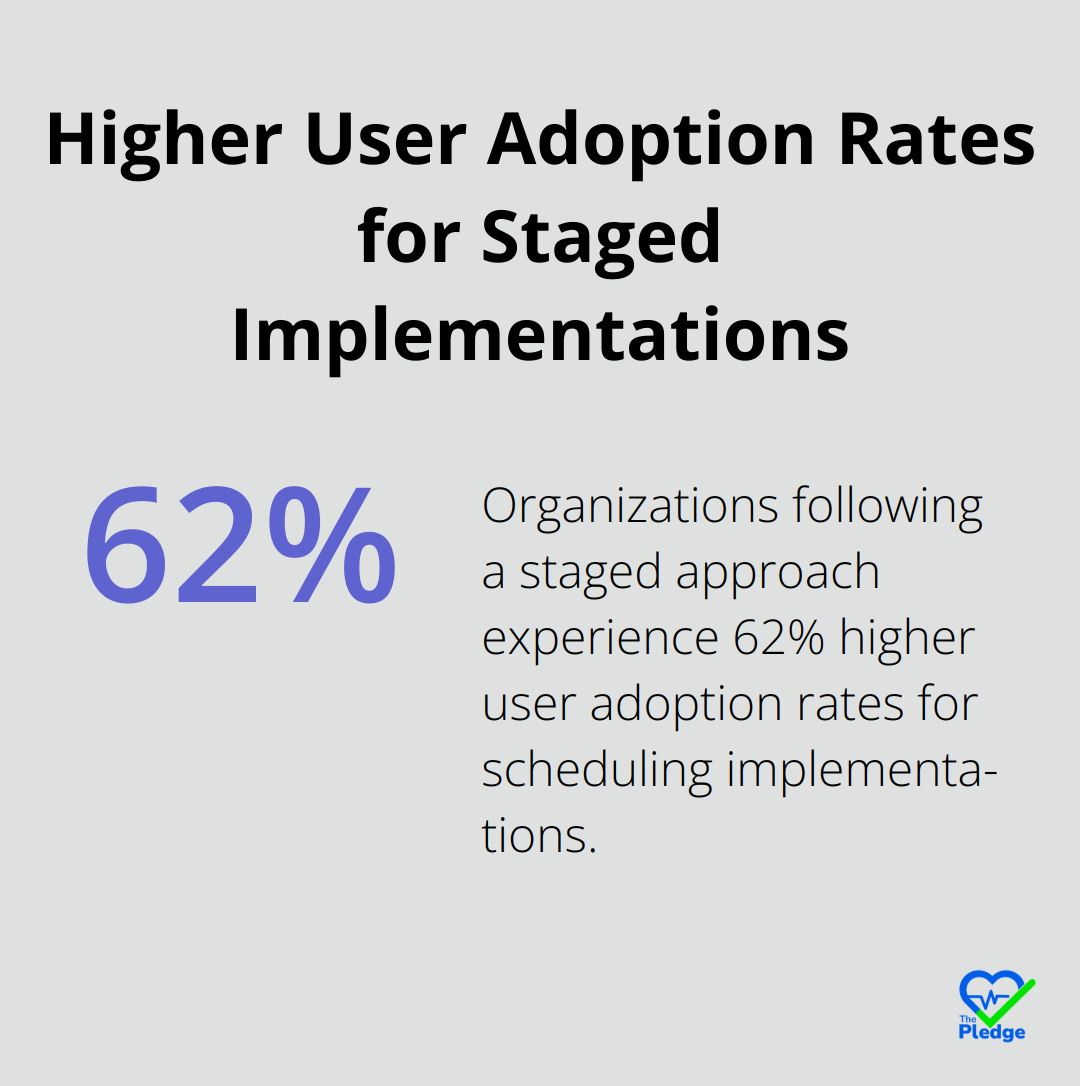
Research indicates that organizations following a staged approach experience 62% higher user adoption rates for scheduling implementations. This significant increase in adoption is illustrated in the following chart:
Start with core functionalities like enrollment and eligibility tracking, then introduce more advanced features such as predictive analytics and personalized recommendations.
Prioritize Comprehensive Training
Effective training is essential for both HR staff and employees. Develop a multi-tiered training program that caters to different user groups. For HR professionals, focus on in-depth system administration and advanced features. For employees, emphasize self-service functions and benefits selection processes.
Use a variety of training methods. Video tutorials, live webinars, and hands-on workshops can cater to different learning styles. Some platforms offer gamified training approaches that increase user engagement compared to traditional methods.
Implement Robust Data Security Measures
Data security is paramount when dealing with sensitive employee information. Ensure your chosen software adheres to industry-standard security protocols. Implement multi-factor authentication for all users and conduct regular security audits.
According to a report by IBM, the average cost of a data breach in the healthcare sector was $9.23 million in 2024. This underscores the importance of investing in top-tier security measures. Look for platforms that utilize advanced encryption methods and conduct regular penetration testing to maintain the highest level of data protection.
Establish Clear Success Metrics
Define key performance indicators (KPIs) to measure the success of your implementation. These might include:
- Reduction in administrative time spent on benefits management
- Increase in employee engagement with benefits programs
- Decrease in errors in benefits enrollment and administration
- Cost savings from improved efficiency and reduced manual processes
A mid-sized tech company reported a 25% reduction in HR administrative time and a 15% increase in employee satisfaction with benefits within six months of implementing new benefits management software.
Regularly review these metrics and make adjustments based on the data. Successful implementation is an ongoing process (not a one-time event).
Monitor and Adjust
After implementation, continuously monitor the system’s performance and user feedback. Be prepared to make adjustments as needed. This might involve tweaking processes, adding new features, or providing additional training.
Try to establish a feedback loop with both HR staff and employees. Regular surveys or focus groups can provide valuable insights into the software’s effectiveness and areas for improvement.
Final Thoughts
Employee benefits management software has become essential for modern HR departments. These platforms streamline administrative tasks, enhance compliance, and improve the overall employee experience. The right software can transform benefits management from a complex process into a strategic asset that drives employee satisfaction and retention.
We anticipate several exciting trends in HR technology. Artificial intelligence and machine learning will offer more personalized recommendations and predictive analytics. Greater integration between benefits management and other HR functions will create a more holistic approach to employee well-being.
As you consider simplifying your HR processes, choose a solution that offers comprehensive features, seamless integration, and robust security measures. The Pledge stands out as a cutting-edge option with AI-powered technology that simplifies care navigation. Our platform promotes preventative care while lowering costs, contributing to a healthier, more productive workforce.
Ready to revolutionize your benefits management? Discover how The Pledge can help you achieve higher employee satisfaction, better compliance, and smoother implementation. Schedule a demo today to see our AI-powered solution in action!