

Workplace wellness programs have become standard across most organizations, yet many employers still struggle to understand what they actually are and how to implement them effectively.
At The Pledge, we’ve seen firsthand how the right wellness program can transform employee health, reduce healthcare costs, and boost productivity. This guide breaks down everything you need to know about building and running a program that works for your team.
What Makes Up a Workplace Wellness Program
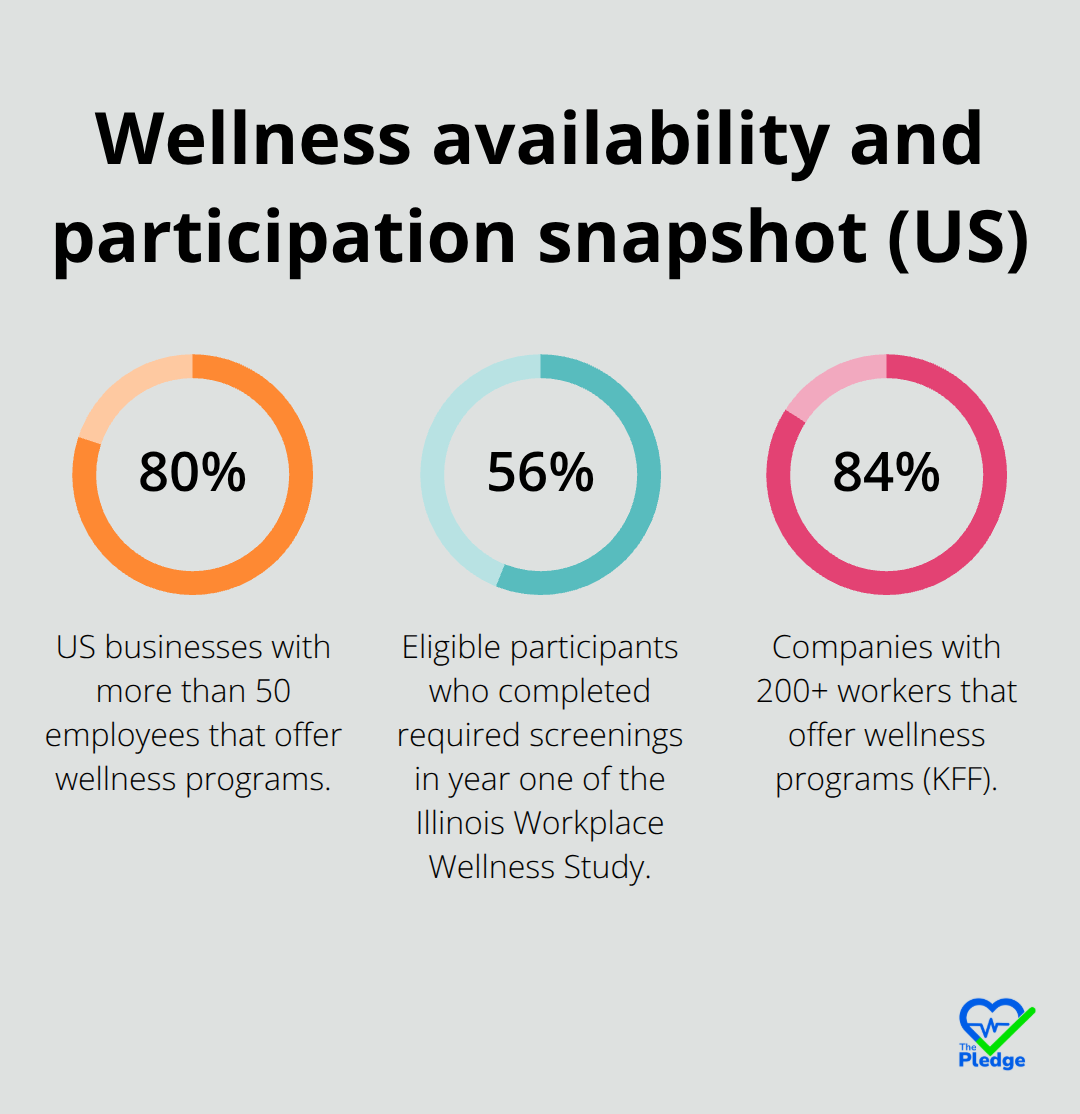
A workplace wellness program is far more specific than vague talk about employee health. We define it as a structured set of health initiatives that organizations deploy to improve employee wellbeing, lower healthcare costs, and boost productivity. The core reality: most programs fail because employers treat them as a checkbox rather than a strategic investment. According to the Kaiser Family Foundation, 84% of companies with 200 or more workers offer wellness programs, yet many lack clear measurement frameworks or realistic ROI expectations.
The Essential Components
A real wellness program combines multiple components working together, not scattered initiatives. Health screenings and biometric assessments measure blood pressure, cholesterol, and glucose levels to establish baseline health status. Health Risk Assessments (HRAs) help employees understand their personal risk factors and guide program design.
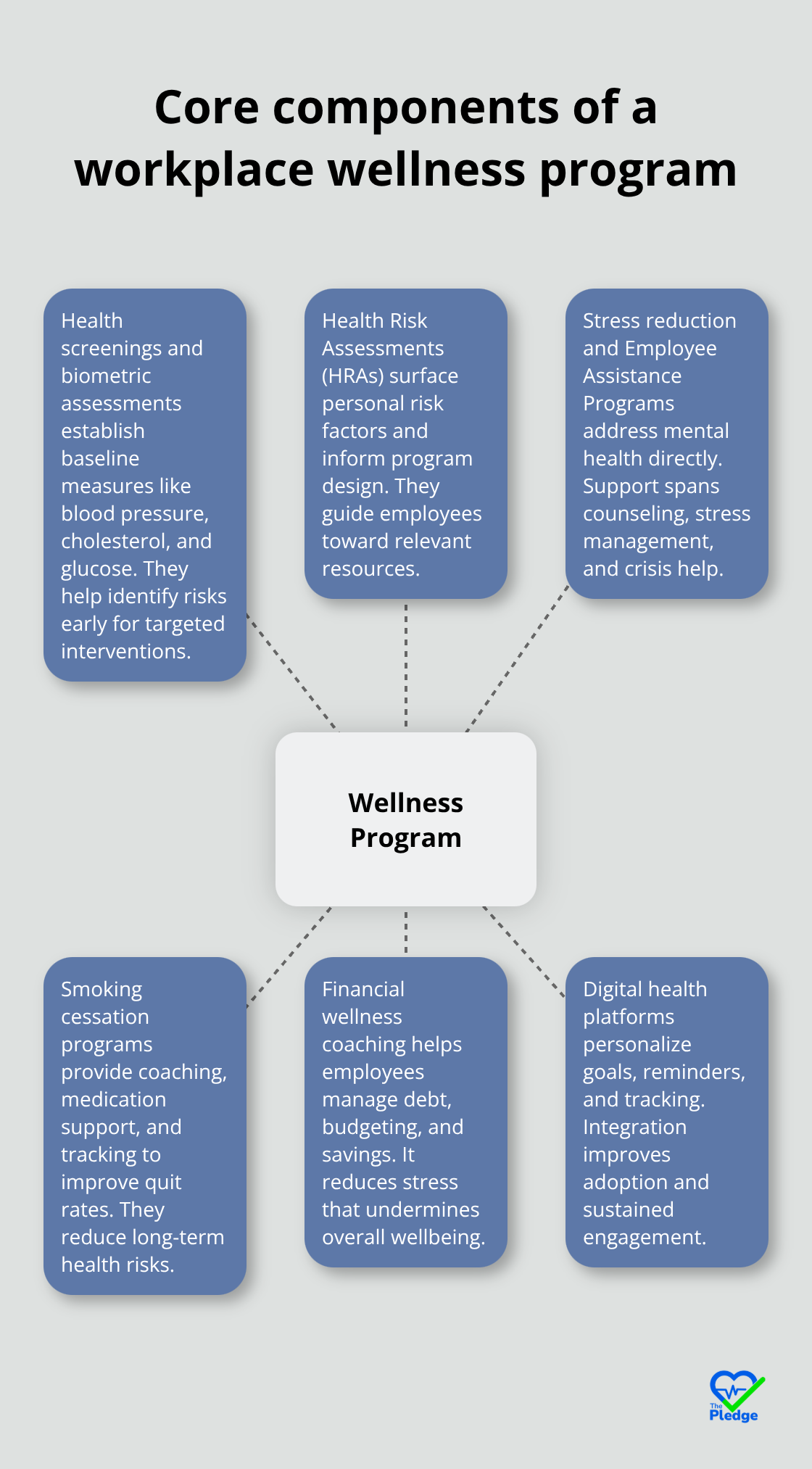
Stress reduction programs-including Employee Assistance Programs-address mental health directly. Smoking cessation support, financial wellness coaching, and digital health platforms round out comprehensive offerings.
The mistake most employers make is adding too many programs without prioritizing what their workforce actually needs. A JAMA study involving 4,037 employees at test sites found that while exercise rates jumped 8.3 percentage points and active weight management rose 13.6 percentage points, broader health outcomes like clinical markers showed no significant improvement after 18 months. This tells us behavior change happens faster than cost reduction, so patience and long-term evaluation matter.
How Company Size Shapes Program Design
Large employers and small ones approach wellness completely differently. Eighty percent of US businesses with more than 50 employees offer wellness programs, but participation rates vary drastically. Small firms often cannot afford onsite clinics or dedicated wellness staff, so they rely on digital tools and third-party vendors instead. Manufacturing and healthcare organizations prioritize injury prevention and occupational health, while tech companies emphasize mental health and stress management. Financial services firms focus heavily on financial wellness coaching given their workforce composition.
The Illinois Workplace Wellness Study, which tracked nearly 5,000 university employees across two years, revealed that participation depends on incentive design and accessibility. Only 56% of eligible participants completed required screenings in year one, highlighting how barriers reduce engagement. Onsite vaccination clinics, massage services, and wellness rooms work well for companies with physical locations.
Remote-first organizations must invest differently-digital coaching, virtual fitness classes, and asynchronous mental health support become non-negotiable.
Budget Realities and Industry Variations
The program cost matters significantly. Kaiser data from 2015 showed average wellness costs around $693 per employee annually, yet the Illinois study found a per-participant program cost of about $271, demonstrating that lean, focused programs can work without massive budgets. Industry differences also shape what gets measured. Healthcare systems track clinical outcomes rigorously because their workforce understands health metrics. Retail and hospitality companies see higher ROI from stress reduction and financial wellness because these industries face higher turnover and wage pressures.
Understanding these structural differences sets the stage for choosing the right implementation approach. Learn how to start a workplace wellness program before selecting tools and platforms.
Why Employers Actually Invest in Wellness
The Financial Reality Behind Wellness Spending
Employers fund wellness programs for one straightforward reason: healthcare spending rises relentlessly and productivity losses accumulate fast. Companies with 200 or more workers now spend around $693 per employee annually on wellness initiatives, a figure that makes sense only when matched against measurable returns. The Illinois Workplace Wellness Study tracked nearly 5,000 university employees and found that while the program cost approximately $271 per participant in year one, the longer-term financial picture remained mixed. That study’s rigorous randomized design revealed no statistically significant reductions in total medical spending or absenteeism after 30 months, which contradicts many earlier claims about wellness ROI. However, a separate JAMA study of 4,037 employees across 20 worksites showed that exercise participation jumped 8.3 percentage points and active weight management rose 13.6 percentage points after 18 months, even though clinical health markers and healthcare spending showed no significant change.
This distinction matters enormously: employers see behavioral wins faster than financial ones. Patience and proper timeline expectations separate successful programs from failed ones.
Retention Beats Immediate Healthcare Savings
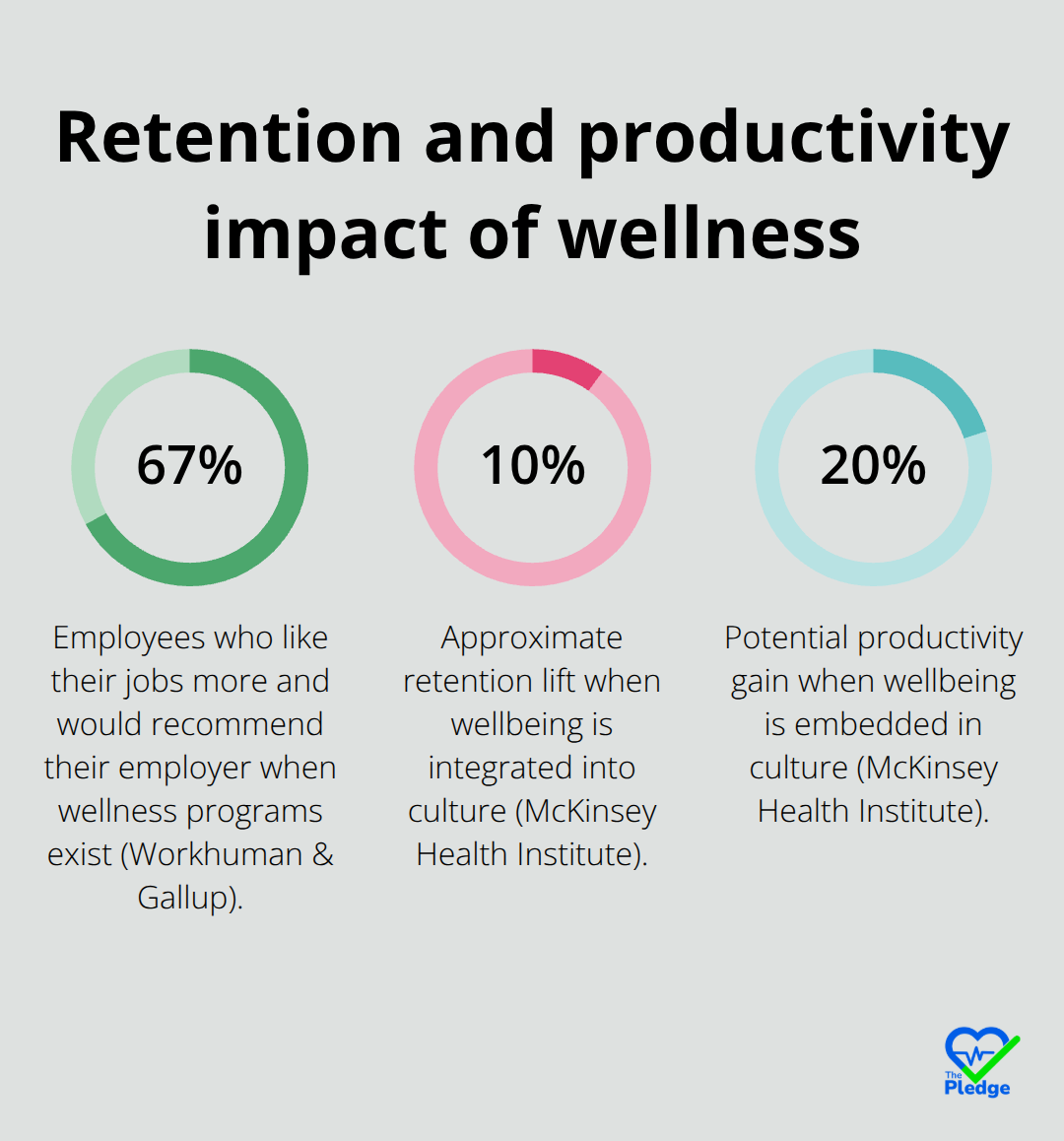
The real financial case rests on retention and productivity rather than immediate healthcare savings. Workhuman and Gallup data show that 67% of employees at organizations with wellness programs like their jobs more and would recommend their employer, directly influencing retention. Burnout-related turnover costs organizations significantly, making any program that reduces burnout economically rational.
Recognition-led wellness approaches improve workplace well-being and increase the likelihood that employees feel they belong at their organization, according to Workhuman research.
The McKinsey Health Institute reports that integrating wellbeing into culture and people practices drives approximately 10% higher retention and up to 20% higher productivity. More than half of Gen Z and millennial job seekers say wellness programs are important or extremely important when evaluating employers, making these programs essential recruitment tools.
Timeline and Strategy Matter Most
The real ROI timeline spans three to five years, not the immediate savings many executives expect. Smart employers focus first on identifying employees with genuine health risks, personalizing communications, and offering meaningful incentives that sustain engagement rather than chasing unrealistic short-term cost reductions. This approach requires selecting the right platform and measurement framework to track what actually moves the needle for your workforce.
Building a Wellness Program That Actually Works
Start With Your Workforce’s Real Health Needs
Measure your workforce’s actual health before selecting any tools or platforms. By identifying health risks early, employers can help employees take preventative measures before serious conditions develop. Conduct a basic health risk assessment to identify which conditions drive your organization’s medical spending. Does your workforce struggle with metabolic diseases, mental health challenges, musculoskeletal injuries, or financial stress? The answer determines everything. A manufacturing plant with high injury rates needs occupational health and ergonomics support; a tech company losing people to burnout needs stress reduction and recovery programs. Generic wellness menus fail because they treat all employees identically when health needs vary dramatically. Once you identify your workforce’s top three health challenges, you stop wasting money on irrelevant initiatives.
Select Platforms That Integrate, Not Isolate
Platform selection matters far more than most employers realize, and this is where many make costly mistakes. Digital tools must integrate seamlessly with your existing health plan data rather than creating another siloed system employees ignore. HIPAA compliance is non-negotiable; verify that any vendor demonstrates robust data privacy protections and won’t share personal health information with your organization without explicit consent. Programs were simple and accessible when they prioritized user experience, suggesting that platform complexity kills adoption. Look for vendors offering personalized communication, goal tracking, and real-time reminders rather than static dashboards nobody visits.
Define Success Before Launch
Measurement frameworks matter equally: define what success looks like before launch. Track sick days, engagement rates, behavioral changes, and healthcare claims over a three-to-five-year timeline rather than expecting immediate cost reductions. The McKinsey Health Institute reports that organizations integrating wellbeing into culture see approximately 10% higher retention, so include retention metrics alongside health outcomes. Set realistic expectations with leadership that behavioral improvements appear within months while financial savings require years.
Adjust Strategy Based on Real Participation Data
Most importantly, plan to adjust your strategy based on actual participation data, not assumptions. If your program shows strong exercise adoption but weak mental health engagement, reallocate resources accordingly. Programs that succeed treat measurement as ongoing feedback rather than annual compliance reporting. This iterative approach separates programs that sustain momentum from those that stall after initial launch.
Final Thoughts
Workplace wellness programs work best when employers stop chasing unrealistic short-term ROI and instead focus on measurable behavioral change, retention, and long-term cost management. The evidence is clear: exercise participation and weight management improve within months, but healthcare spending reductions require patience and proper measurement frameworks. What a workplace wellness program fundamentally accomplishes is identifying your workforce’s actual health needs, selecting integrated digital tools that employees will use, and adjusting strategy based on real participation data rather than assumptions.
Employees now expect seamless, personalized health management integrated into their daily work experience. Platforms that centralize health data, send real-time reminders, and coordinate care across providers and family members drive engagement at rates far exceeding industry standards. The Pledge centralizes vital medical information, benefits, and real-time health metrics through an AI-driven system that sends personalized reminders and facilitates secure data sharing, eliminating the siloed systems that kill adoption and engagement.
Start your wellness program assessment with your workforce’s genuine health challenges, define success over a three-to-five-year timeline, and invest in platforms that prioritize user experience and data integration. Leadership buy-in matters enormously, as does transparent communication about realistic expectations. Explore how The Pledge can simplify your health management strategy and drive the engagement your program needs to succeed.




![[Guide] Incentives That Drive Preventive Health Participation](https://thepledge.app/wp-content/uploads/emplibot/Guide_-Incentives-That-Drive-Preventive-Health-Participation_1783650286-300x168.jpeg)