

Financial stress affects 76% of employees according to PwC’s 2023 Employee Financial Wellness Survey, directly impacting productivity and mental health at work.
Companies that prioritize financial wellness in the workplace see 28% lower turnover rates and significantly higher employee satisfaction scores.
We at The Pledge believe addressing employee financial challenges isn’t just compassionate-it’s smart business that drives measurable results for organizations of all sizes.
What Is Financial Wellness and Why Does It Matter
Financial wellness represents an employee’s complete control over their current and future financial situation. This includes adequate emergency savings, manageable debt levels, retirement plans on track, and confidence in financial decisions. The Society for Human Resource Management defines financially well employees as those who meet current obligations while they save for future goals without constant money-related stress.
The Real Cost of Financial Stress on Productivity
Financial stress devastates workplace performance more than most executives realize. PwC research shows that financially stressed employees who are distracted at work spend three hours or more per week dealing with personal finance issues instead of their jobs. These workers are 5 times more likely to be distracted in meetings and 2.5 times more likely to take sick days. Mercer found that companies with high levels of financially stressed employees see productivity drops of up to 18%. When employees worry about bills, they cannot give their best effort to work tasks.
Financial Stress Statistics That Demand Action
Current workplace financial stress reaches crisis levels across all demographics. Nearly half of all employees report personal finances as their biggest life stressor (according to PwC’s latest survey). Bank of America research reveals that 73% of employees want financial guidance from their employer, yet only 28% of companies provide comprehensive financial wellness programs. The Federal Reserve found that many Americans struggle to cover a $400 emergency expense without borrowing money or selling possessions.
The Generational Impact on Workplace Performance
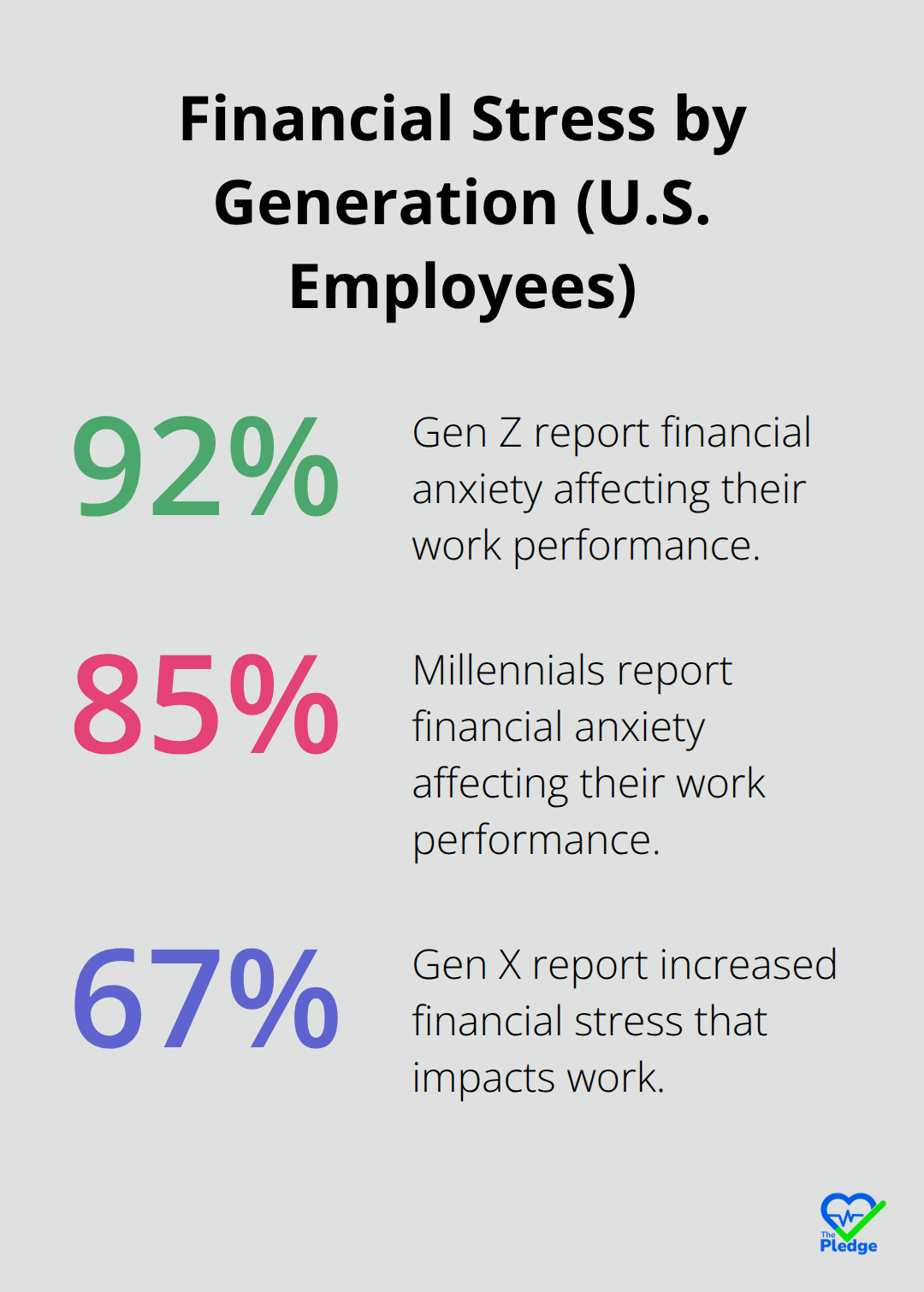
Generation Z workers face the highest stress levels, with 92% reporting financial anxiety that affects their work performance. Millennials follow closely behind at 85%, while even traditionally stable Gen X employees show increased financial stress rates of 67%. These numbers represent millions of distracted, less productive employees across every industry and company size.
Smart employers recognize these challenges and implement targeted strategies to address employee wellness needs head-on.
What Financial Wellness Strategies Actually Work
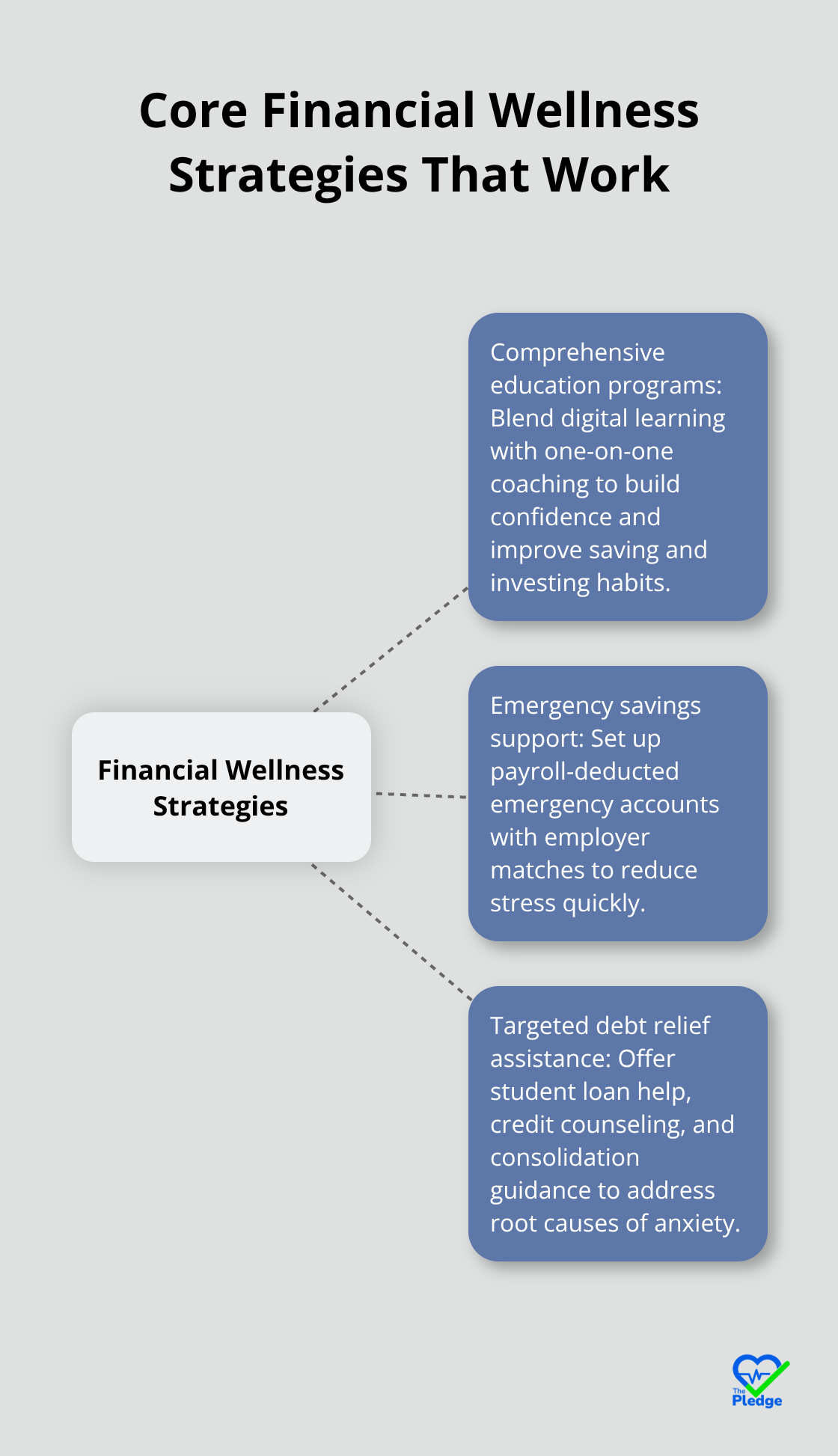
Companies need three specific approaches to address financial stress effectively: comprehensive education programs, emergency savings support, and targeted debt relief assistance. MetLife research shows that employees who participate in financial education programs increase their 401k contributions by an average of 1.37% within six months. The most successful programs combine digital platforms with one-on-one coaching sessions. Companies like Johnson & Johnson report 89% employee satisfaction rates when they offer monthly financial workshops that cover budgeting, investing, and retirement planning alongside personalized guidance from certified financial planners.
Emergency Fund Programs Drive Immediate Results
Emergency savings assistance produces the fastest stress reduction among financially struggling employees. Research shows that workers with access to employer-sponsored emergency savings accounts reduce their financial stress by 41% within the first year. The most effective programs automatically deduct small amounts from paychecks into separate emergency accounts, with employers providing matching contributions up to $500 annually (similar to 401k matching structures). Companies that implement these programs see fewer requests for paycheck advances and reduction in 401k hardship withdrawals.
Debt Management Support Transforms Employee Lives
Strategic debt management programs address the root cause of financial anxiety for most workers. Research shows that employees who receive debt counseling services can significantly reduce their total debt burden. The most impactful programs offer student loan repayment assistance, credit counseling services, and debt consolidation guidance through partnerships with accredited financial institutions. Companies that provide comprehensive debt support report higher employee retention rates and measurable improvements in workplace productivity metrics.
These proven strategies form the foundation of effective financial wellness programs, but successful implementation requires careful planning and the right partnerships to maximize employee participation and long-term impact.
How to Launch Financial Wellness Programs That Work
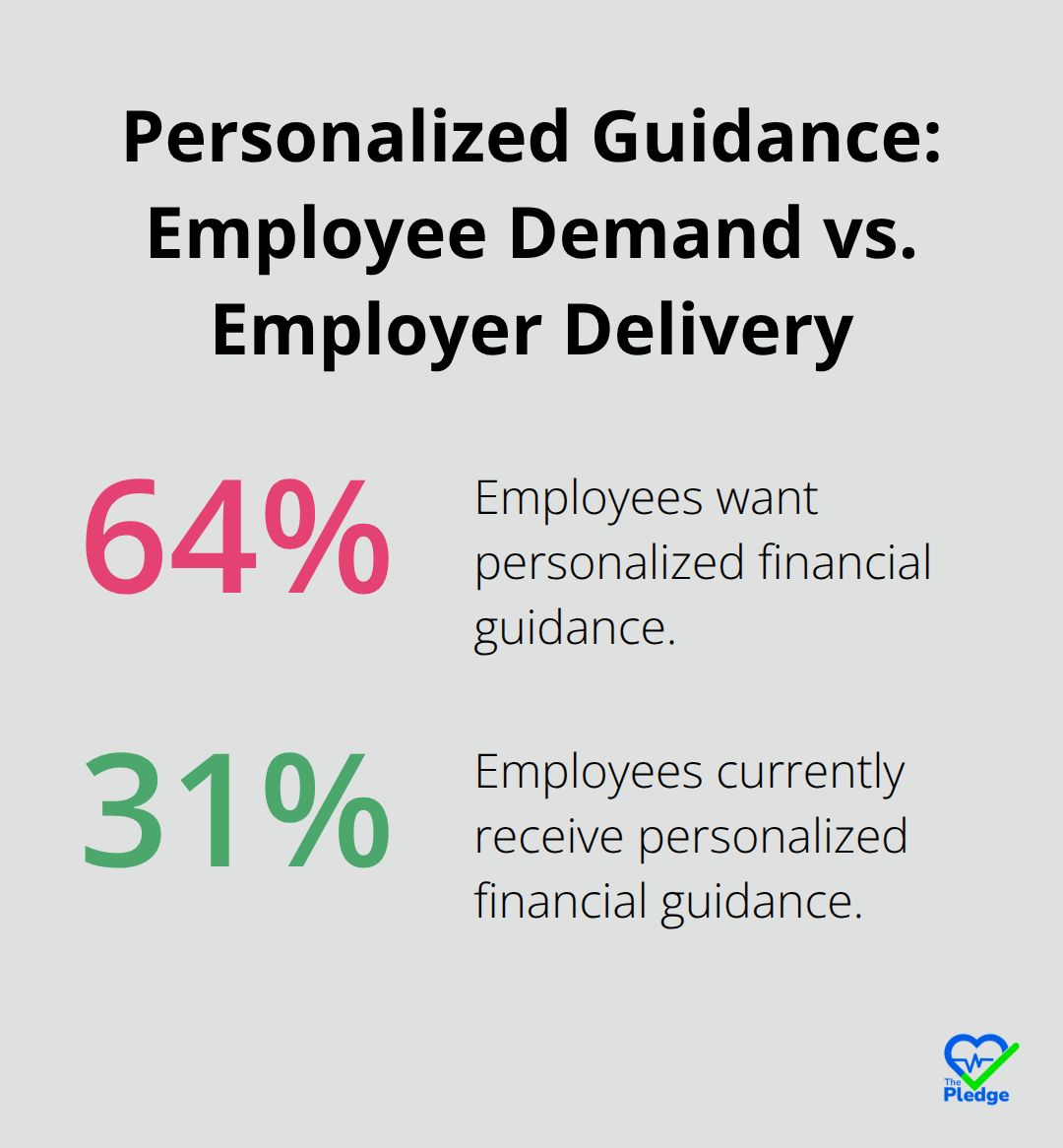
Successful financial wellness implementation starts with data-driven employee needs assessment through anonymous surveys and benefits utilization analysis. Companies must ask specific questions about debt levels, emergency savings, retirement confidence, and preferred formats rather than generic wellness inquiries. Prudential research shows that 64% of employees want personalized financial guidance, but only 31% receive it because employers skip proper assessment phases. Smart organizations analyze payroll advance requests, 401k loan patterns, and healthcare premium payment delays to identify financial stress indicators. The most effective assessments reveal that different employee segments need different solutions – younger workers prioritize student loan assistance while older employees focus on retirement catch-up strategies.
Choose Financial Wellness Partners Who Deliver Results
Partner selection determines program success more than budget size or company enthusiasm. Effective financial wellness providers offer measurable outcomes tracking, certified financial counselors, and integration capabilities with existing HR systems. Companies should demand specific metrics like average debt reduction percentages, emergency savings account adoption rates, and employee satisfaction scores before they sign contracts. The best partnerships include monthly progress reports, customizable educational content, and dedicated account management rather than generic platform access. Organizations that choose providers based on comprehensive service offerings rather than lowest cost see higher employee participation rates. Successful providers also offer bilingual support and mobile-first platforms since employees prefer to access financial tools through smartphone apps.
Track ROI Through Employee Behavior Changes
Financial wellness program success requires specific measurement beyond participation rates and employee surveys. Companies should track concrete behavioral changes that include 401k contribution increases, reduction in payroll advance requests, decreased healthcare premium payment delays, and improved credit scores through voluntary programs. Research demonstrates that employees who actively use financial wellness tools show improved job performance ratings and reduced financial stress-related absences. The most successful programs measure both short-term engagement metrics and long-term financial health improvements to justify continued investment and program expansion across different employee demographics.
Communicate Program Benefits Effectively
Clear communication drives program adoption more than any other single factor. Companies must explain financial wellness benefits throughout the year rather than only during enrollment periods to maintain employee awareness and engagement. The most effective communication strategies use multiple channels including email campaigns, lunch-and-learn sessions, and manager-led discussions to reach different employee preferences. Research shows that employees who receive regular communication about available financial resources participate more frequently than those who only hear about programs during benefits enrollment.
Final Thoughts
Financial wellness in the workplace delivers measurable benefits for both employers and employees. Companies that implement comprehensive programs see 28% lower turnover rates, reduced absenteeism, and improved productivity metrics. Employees gain reduced stress levels, better financial security, and increased job satisfaction while organizations create positive workplace cultures where workers feel supported and valued.
Three essential steps help companies start their financial wellness journey: conduct anonymous employee surveys to identify specific financial challenges, partner with proven financial wellness providers who offer measurable outcomes, and communicate program benefits consistently throughout the year. Companies should track concrete behavioral changes like increased 401k contributions and reduced payroll advance requests to measure success. These programs transform workplace culture and build trust between employers and employees (while attracting top talent who appreciate comprehensive support).
We at The Pledge understand that employee wellness extends beyond financial health. Our comprehensive health platform centralizes vital medical information and provides personalized health programs that complement financial wellness initiatives. These integrated solutions create holistic employee support systems that drive engagement and improve overall workplace satisfaction.
![Building Your Employer Health Strategy for [2025]](https://thepledge.app/wp-content/uploads/emplibot/Building-Your-Employer-Health-Strategy-for-_2025__1782094238-300x168.jpeg)



![Navigating Your Provider Network for Maximum Savings [Guide]](https://thepledge.app/wp-content/uploads/emplibot/Navigating-Your-Provider-Network-for-Maximum-Savings-_Guide__1781489382-300x168.jpeg)