![Building Your Employer Health Strategy for [2025]](https://thepledge.app/wp-content/uploads/emplibot/Building-Your-Employer-Health-Strategy-for-_2025__1782094238-1024x573.jpeg)
Employer health strategies have become a business imperative, not a nice-to-have. Healthcare costs are climbing faster than ever, and companies that ignore employee wellness pay the price in both dollars and talent.
At The Pledge, we’ve seen firsthand how organizations that invest in comprehensive health strategies outperform their competitors. The companies winning today are those taking action now.
The Real Cost of Inaction
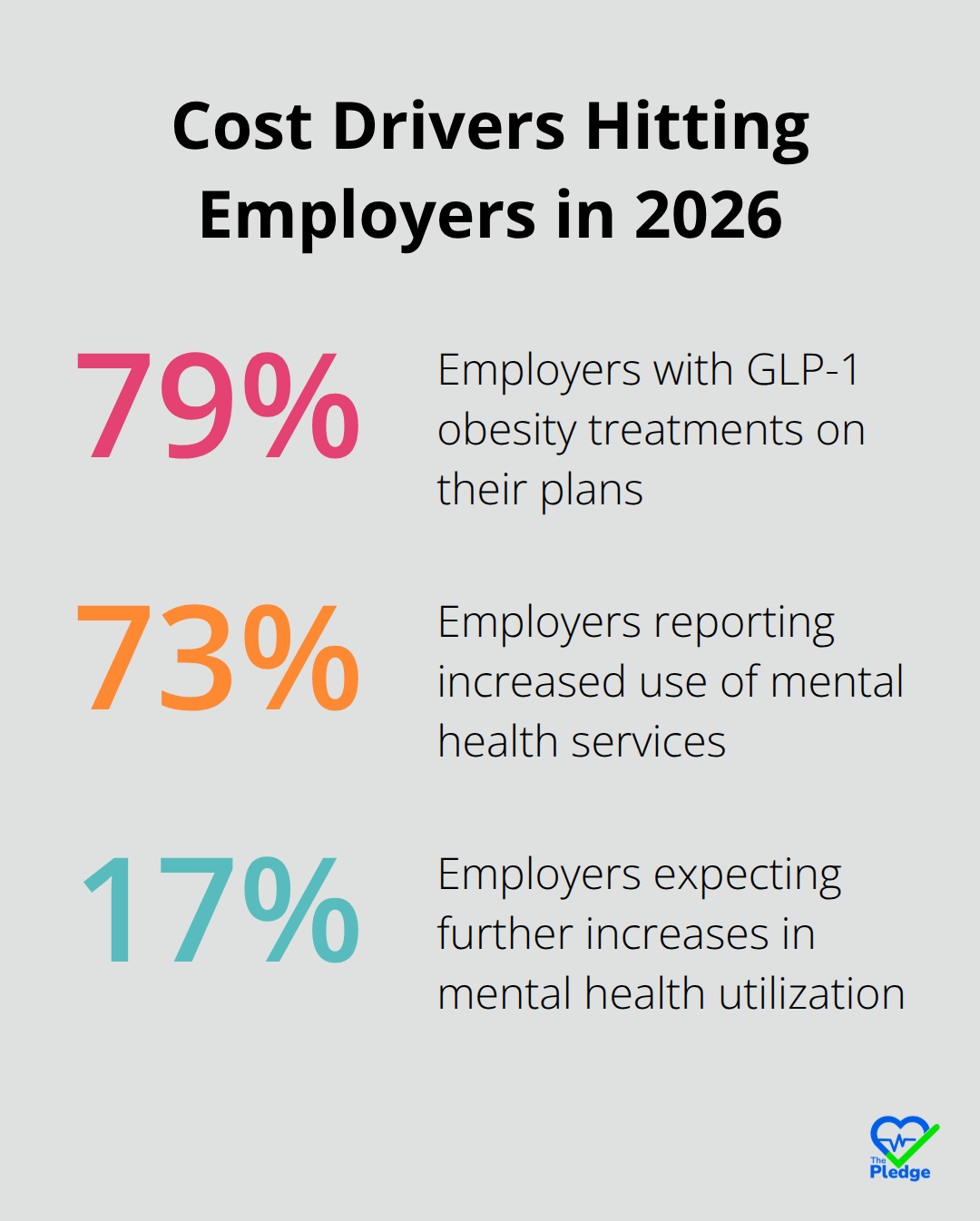
Healthcare costs now drive business performance directly. In 2026, employers face a median health care cost trend of 9 percent, narrowing to 7.6 percent only with aggressive plan design changes, according to the Business Group on Health’s 2026 Employer Health Care Strategy Survey. For a mid-sized company with 500 employees, this translates to tens of thousands in additional annual spending. The cost drivers are specific and measurable: obesity treatments like GLP-1 medications appear in 79 percent of employers with 15 percent expecting increases; cancer remains the top cost driver for the fourth consecutive year; and mental health services utilization has jumped sharply, with 73 percent of employers reporting increased use and 17 percent expecting further growth.
These aren’t abstract trends-they’re hitting your bottom line today.
Why Prevention Actually Works
The math on prevention is compelling because real outcomes back it. For every dollar invested in depression and anxiety prevention programs, employers gain approximately four dollars in health and productivity benefits. Organizations that shift from reactive care to proactive intervention see measurable results. Preventative care reduces emergency room visits, hospitalizations, and the associated productivity losses from unmanaged conditions. The alternative costs far more: loneliness costs U.S. businesses significant productivity losses through presenteeism and absenteeism. Mental health investments specifically show measurable returns, with comprehensive programs demonstrating 41 percent lower absenteeism and 25 percent higher engagement. The shift toward prevention isn’t about being nice to employees-it’s about stopping the hemorrhaging of costs before problems escalate into expensive interventions.
Your Employees Already Know This Matters
Eighty percent of workers now consider employer mental health support important when choosing jobs, according to the American Psychological Association. Ninety-two percent say access to mental health resources is critical in the workplace. Yet 25 percent of employees don’t even know whether their employer offers mental health benefits, an employee assistance program, or flexible work options, revealing a massive communication gap. This disconnect creates retention risk: 25 percent of workers have considered quitting due to mental health concerns, and 7 percent actually quit.
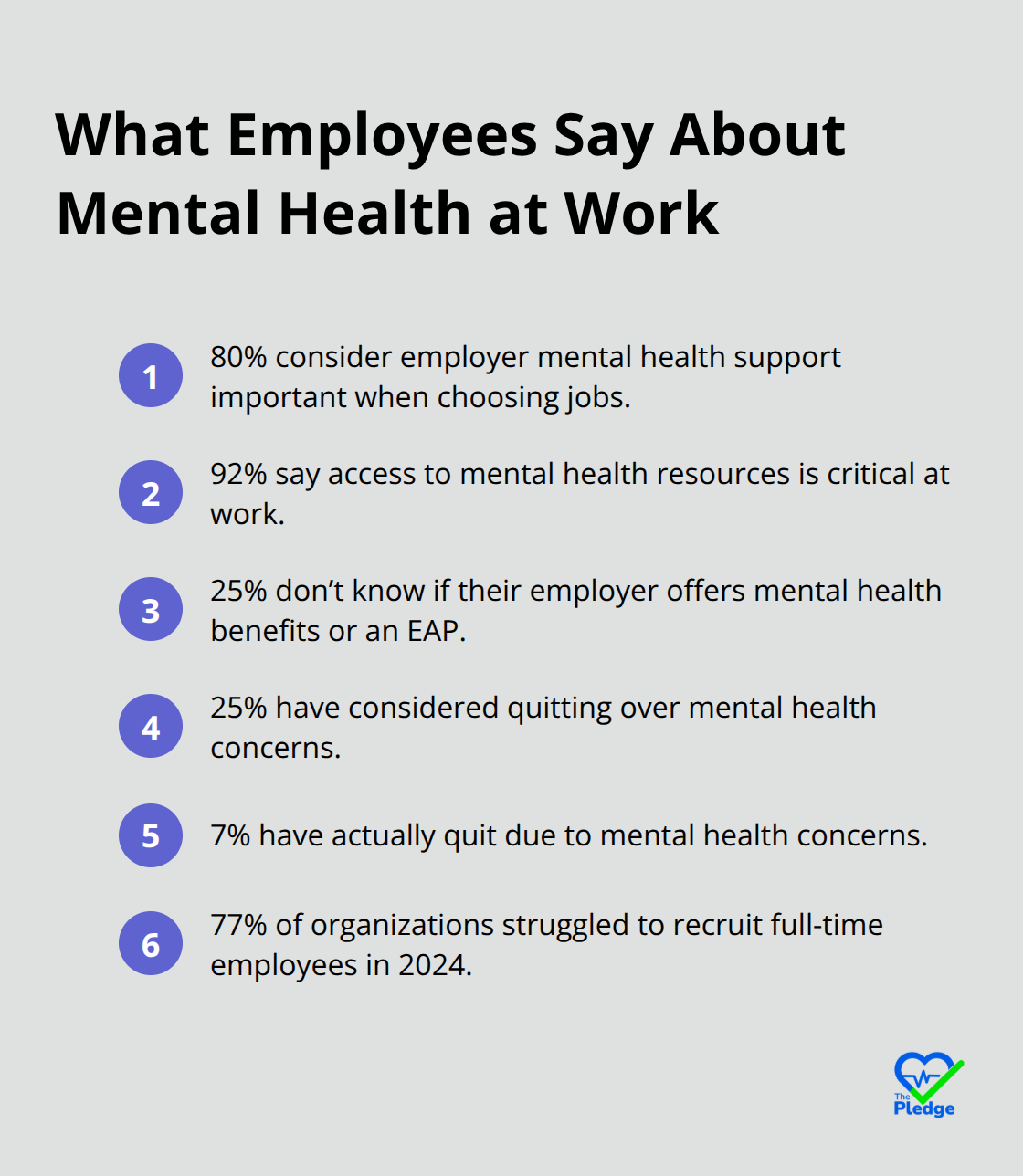
The talent shortage is real-77 percent of organizations struggled to recruit full-time employees in 2024-making health strategy a direct recruitment and retention tool. Companies that articulate their health offerings clearly and deliver on them gain a competitive advantage in a tight labor market.
Closing the Information Gap
Managers themselves struggle with knowledge gaps. Twenty-two percent of managers report not knowing whether their employer offers mental health benefits, and 45 percent do not know how to access mental health care through employer-sponsored health insurance. This leadership blind spot undermines even the best-designed programs. When managers can’t navigate benefits, employees certainly won’t either. Training mental health champions within your organization-equipping managers with clear information and communication skills-transforms how employees perceive and use available resources. The impact is measurable: workplaces with mental health trainings report 21 percent productivity impact from mental health concerns, compared to 38 percent in workplaces without trainings. Addressing this gap directly improves both awareness and utilization of your health investments.
What Makes a Health Strategy Actually Work
Centralize Your Health Data First
A modern health strategy lives or dies on execution, and execution requires three things working in concert: visibility into what’s happening with your employee population, programs that meet people where they actually are, and relentless focus on the conditions driving your costs up. Most employers operate with fragmented health data spread across multiple vendors, making it nearly impossible to see patterns or identify high-risk populations before they become expensive. Centralized health data platforms eliminate this blind spot by pulling together claims, biometrics, engagement metrics, and benefit utilization into one view. This matters because 52 percent of workers report financial stress and 41 percent of parents are highly stressed, yet many employers have no idea who these populations are within their workforce. When you can see your data clearly, you can act on it.
The 2026 Employer Health Care Strategy Survey found that cost control is now the top employer priority, followed closely by affordability for both the organization and employees. Without integrated platforms that show you exactly where money flows and which interventions create measurable returns, you’re essentially throwing resources at problems you can’t clearly identify. Platforms that centralize health information allow you to spot trends, track which programs actually move the needle, and allocate resources where they matter most.
Personalize Programs to Match Your Workforce
Personalization is the second lever, and it’s become non-negotiable in 2025. Generic wellness programs fail because they ignore the fact that your 25-year-old software engineer has completely different health priorities than your 55-year-old operations manager with diabetes risk. Effective programs now blend company-wide initiatives with individualized recommendations that employees can actually use. This means offering on-demand fitness content in 10 to 20-minute segments rather than assuming everyone wants a gym membership, providing financial wellness education because two-thirds of workers believe more education would improve their situation, and building family-inclusive benefits because loneliness is a measurable business risk associated with 37 percent higher absenteeism.
Make Mental Health the Foundation
Mental health must anchor everything because it’s become a major cost driver, with 73 percent of employers reporting increased use of mental health services and 17 percent expecting further increases. The critical insight here is that prevention-focused mental health spending delivers returns: for every dollar invested in depression and anxiety prevention, employers gain roughly four dollars in health and productivity benefits. This means your strategy should combine clinical care with preventative resources like coaching and digital tools that maximize reach. Workplaces with mental health trainings report 21 percent productivity impact from mental health concerns compared to 38 percent without trainings, proving that information and support infrastructure directly affect outcomes.
The strongest strategies treat mental health not as a separate benefit but as integral to everything else, because stress about finances, physical health, and family situations all compound into workplace performance problems if left unaddressed. When employees struggle with multiple stressors simultaneously, siloed benefits fail to address the full picture. Integrated approaches that connect mental health support with financial wellness resources, family-focused programming, and preventative care create the conditions for real behavior change and sustained engagement.
Measure What Matters
Tracking the right metrics transforms strategy from theory into action. Monitor engagement rates, absenteeism, healthcare claims, and utilization of specific programs to understand what’s working. Organizations that combine prevention, disease management, and engagement measurement see measurable cost savings and health improvements over time. The data you collect should inform quarterly reviews and guide where you invest next, ensuring your health strategy evolves with your workforce’s actual needs rather than staying locked into outdated assumptions.
Making Your Health Strategy Actually Happen
Select Technology That Integrates With Your Existing Systems
The right technology matters more than the strategy itself because a brilliant plan executed poorly costs money and erodes employee trust. Start with a hard requirement: any platform you select must integrate seamlessly with your existing health plans and centralize data from multiple sources. Fragmented systems guarantee failure because your teams spend time reconciling data across vendors instead of acting on insights. Look specifically for platforms that pull together claims data, biometric information, benefit utilization, and engagement metrics into a single view. The 2026 Employer Health Care Strategy Survey confirms that cost control is now the top priority for employers, and you cannot control what you cannot see.
When evaluating vendors, demand transparent integration timelines and proof that their system actually connects to your existing infrastructure. Ask for references from companies similar to your size and industry, then contact those references directly to understand implementation reality, not just vendor promises. Avoid vendors who treat integration as an afterthought or charge significant fees for connections to major payors. The platform should also support personalized communications because generic messaging fails to move engagement. If your system can segment employees by health status, family stage, and financial situation, you can deliver relevant content that employees actually read and act on.
Prioritize Personalized Communications and Engagement
Your chosen platform must include personalization as standard functionality, not as an expensive add-on. When you segment your population and tailor messaging to specific groups, engagement rates improve dramatically. Employees respond to content that speaks directly to their situation-a parent with young children needs different resources than a single employee managing chronic disease. Real-time updates and reminders keep health top-of-mind without overwhelming your workforce. The platform should track which messages drive action and which ones employees ignore, then adapt accordingly. This feedback loop transforms your health strategy from static to dynamic, responding to what actually works with your population rather than what vendors promise works in theory.
Define Metrics Before You Launch
Setting metrics upfront prevents the common mistake of implementing health programs and then wondering whether they actually worked. Before launch, define exactly what you will measure and establish baseline numbers so you can track movement. Track engagement rates by program type because different interventions work differently across your population. Monitor absenteeism by department and time period to see whether specific programs reduce unplanned absences. Most importantly, connect healthcare claims to program participation so you can identify which interventions actually reduce medical spending.
According to APA’s 2025 Work in America survey, job insecurity is having a significant impact on a majority of U.S. workers’ stress levels. Measure whether your communication efforts close awareness gaps through employee surveys conducted quarterly. Track mental health service utilization specifically because mental health costs are rising sharply, and you need to verify whether your preventative programs reduce crisis-level utilization.
Establish Clear Ownership and Review Cadence
Set a review cadence of quarterly, not annual, because annual reviews come too late to course-correct. Assign clear ownership for metrics, meaning one person owns the mental health engagement dashboard and another owns the claims analysis. Without clear ownership, metrics become theoretical exercises that no one acts on. Quarterly reviews allow you to spot trends early and shift resources toward what works.
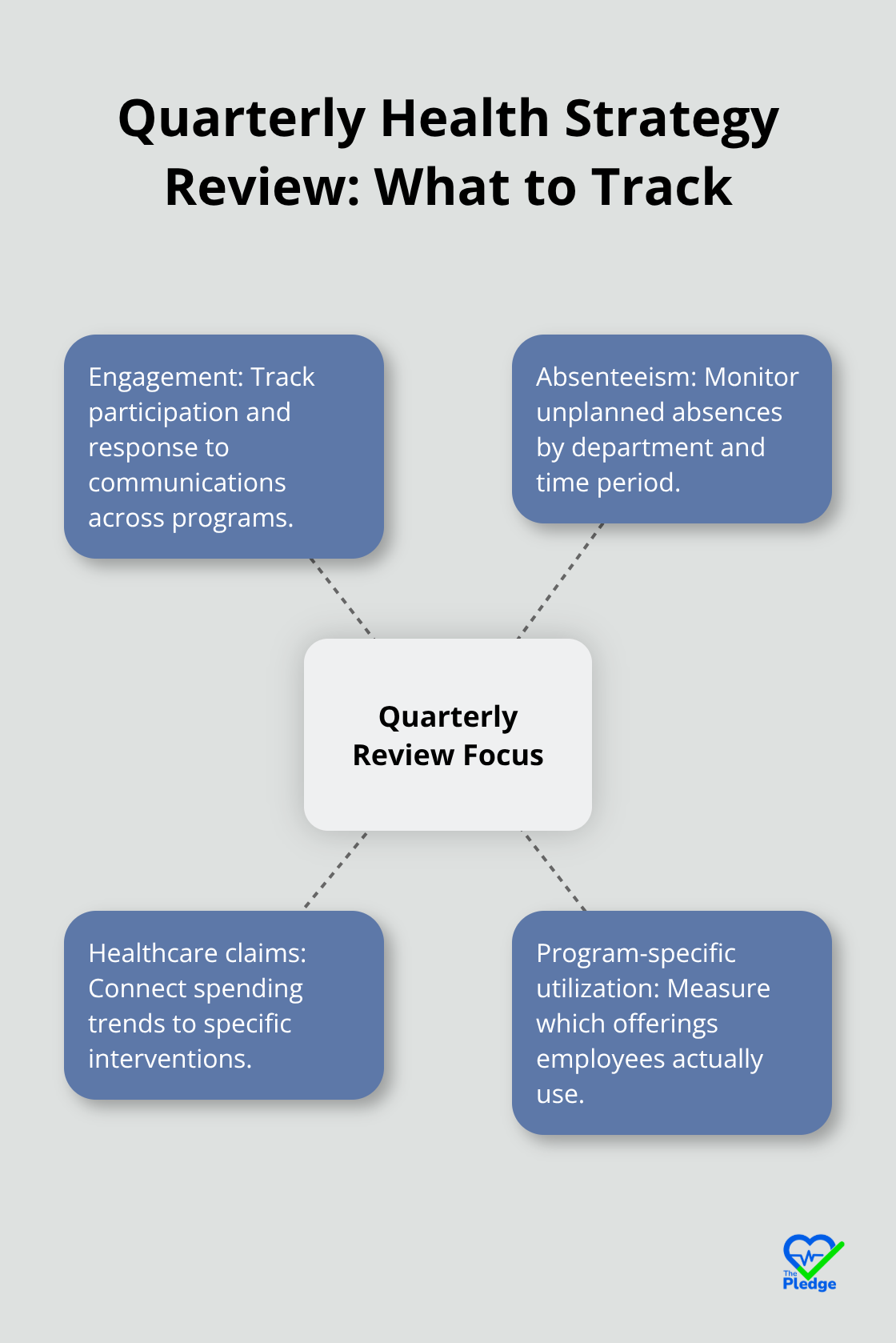
Each quarter, your leadership team should examine the four core metrics-engagement, absenteeism, healthcare claims, and program-specific utilization-then make concrete decisions about where to invest next.
Resist the urge to measure everything because too many metrics create analysis paralysis. Focus on those four areas and let them drive your quarterly decisions. This disciplined approach keeps your team focused on what matters and prevents the common trap of collecting data that no one uses.
Final Thoughts
Your employer health strategy now has a clear foundation. The companies winning in 2026 act decisively on cost control, prevention, and employee engagement. A median 9 percent health care cost trend hits your budget hard, but aggressive plan design and preventative interventions narrow that to 7.6 percent. Mental health services drive costs up, yet prevention programs return four dollars for every dollar invested. Your employees already know health matters-80 percent consider employer mental health support critical when choosing jobs-but 25 percent don’t even know what benefits exist, and that gap costs you talent and productivity.
Three elements align to make your strategy work. First, centralize your health data so you can see where money flows and which populations need intervention. Second, personalize programs because generic wellness fails when your workforce has vastly different needs and life stages. Third, measure what matters quarterly so you can shift resources toward what works instead of funding programs that sound good in theory. Technology acts as the enabler that transforms this from concept into reality.
Integrated platforms pull together claims, biometrics, and engagement data into a single source of truth, allowing you to segment your population and deliver relevant communications that drive action. We at The Pledge built our platform specifically for this-centralizing health data and using AI-driven personalization to simplify care navigation while lowering costs (our clients achieve 4x industry-standard engagement rates because the platform meets employees where they actually are). Start now by picking your metrics, selecting your technology partner, and establishing quarterly reviews-the cost of waiting accelerates every quarter.
![Building Your Employer Health Strategy for [2025]](https://thepledge.app/wp-content/uploads/emplibot/Building-Your-Employer-Health-Strategy-for-_2025__1782094238-300x168.jpeg)



![Navigating Your Provider Network for Maximum Savings [Guide]](https://thepledge.app/wp-content/uploads/emplibot/Navigating-Your-Provider-Network-for-Maximum-Savings-_Guide__1781489382-300x168.jpeg)