
![Navigating Your Provider Network for Maximum Savings [Guide]](https://thepledge.app/wp-content/uploads/emplibot/Navigating-Your-Provider-Network-for-Maximum-Savings-_Guide__1781489382-1024x573.jpeg)
Your health insurance plan comes with a built-in advantage: a network of providers negotiated to lower your costs. But most people never fully use it.
At The Pledge, we’ve seen how provider network optimization transforms what you actually pay for care. The difference between choosing wisely and choosing randomly can easily reach hundreds of dollars per visit. This guide shows you exactly how to navigate your network and keep more money in your pocket.
What Your Provider Network Actually Means
In-Network Providers and Negotiated Rates
An in-network provider is simply a doctor, hospital, or clinic that has signed a contract with your insurance company to charge negotiated rates. These rates are significantly lower than what out-of-network providers charge. When you use an in-network provider, your insurance company has already worked out the pricing, so you pay a predictable copay or coinsurance amount. Out-of-network providers don’t have this agreement, which means you’ll typically pay substantially more-sometimes 40 to 60 percent more for the same service.
The difference isn’t about quality; it’s about contracts. Your insurance company negotiated lower rates with in-network providers to reduce costs for both you and the plan. This is why staying in-network should be your default strategy for any non-emergency care.
How Plan Type Shapes Your Network Flexibility
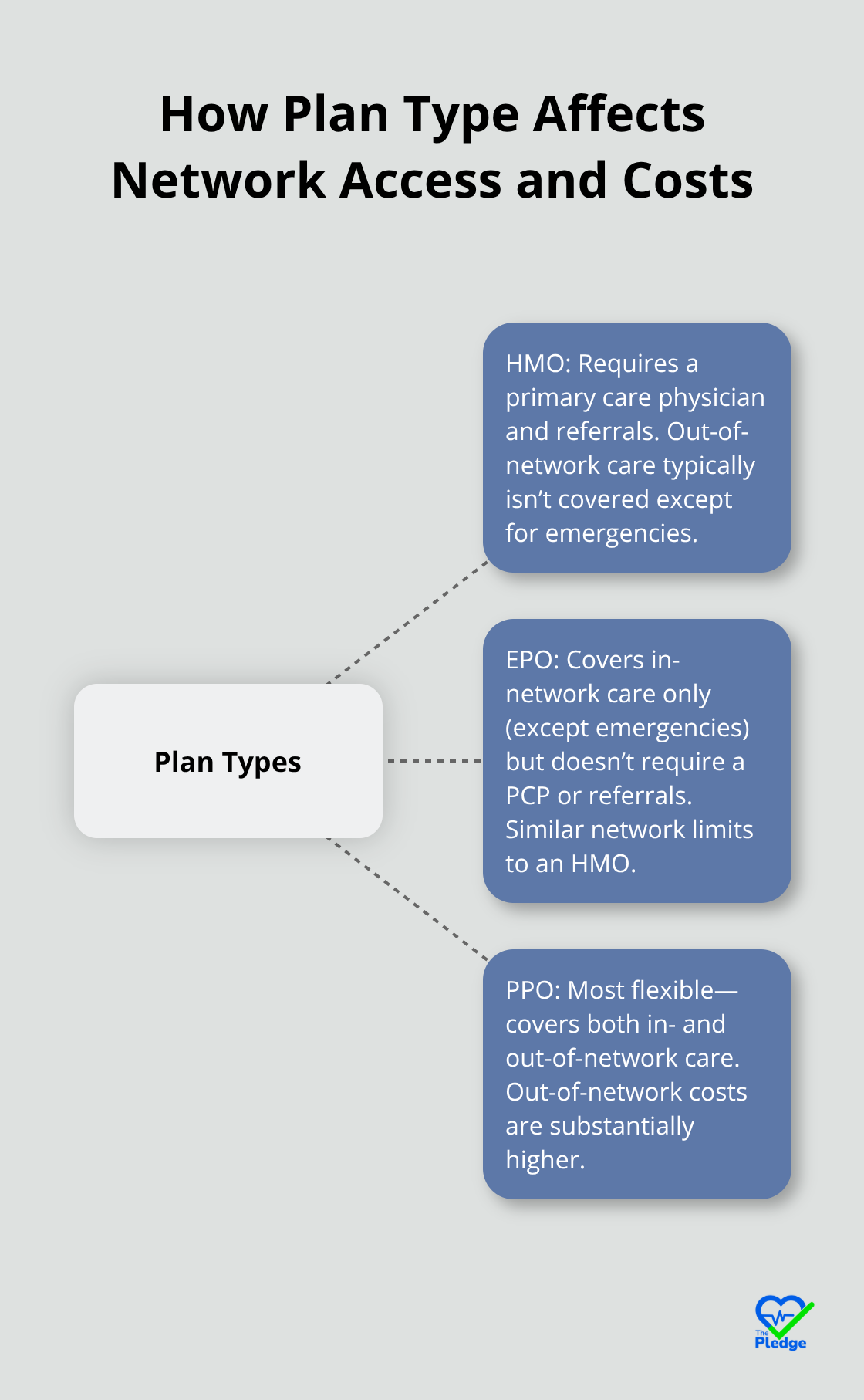
The type of plan you choose determines how much flexibility you have with networks. HMO plans lock you into a specific network and require you to pick a primary care physician who coordinates all your care and provides referrals to specialists. If you see an out-of-network provider without a referral, HMO plans typically won’t cover the cost at all.
EPO plans work similarly-they only cover in-network services except for emergencies-but they don’t require a primary care physician or referrals. PPO plans give you the most flexibility. You can see any provider without a referral, and your plan covers both in-network and out-of-network care. However, your out-of-pocket costs for out-of-network care are substantially higher.
A PPO might charge you a $20 copay for an in-network visit but require you to pay 40 percent coinsurance for an out-of-network visit after your deductible.
Choosing a Plan That Matches Your Cost Control Goals
The practical takeaway is this: if cost control matters to you, HMO and EPO plans force you to stay in-network, which removes the temptation to seek care elsewhere. PPO plans require discipline because the flexibility to go out-of-network will cost you significantly more money. Your next step involves verifying that your preferred doctors and hospitals actually participate in your plan’s network before you enroll-a critical move that prevents expensive surprises down the road.
How to Verify Your Network and Compare Costs
Confirm In-Network Status Before You Schedule
Confirm In-Network Status Before You Schedule by using your plan’s provider directory before you schedule anything. Most insurers offer online directories where you can search by provider name, medical facility, or even specific procedure. Verify three things: that your doctor participates in your plan’s network, that the specific location you plan to visit is included (large health systems often have multiple locations with different network statuses), and that the facility where any procedures would occur is covered.
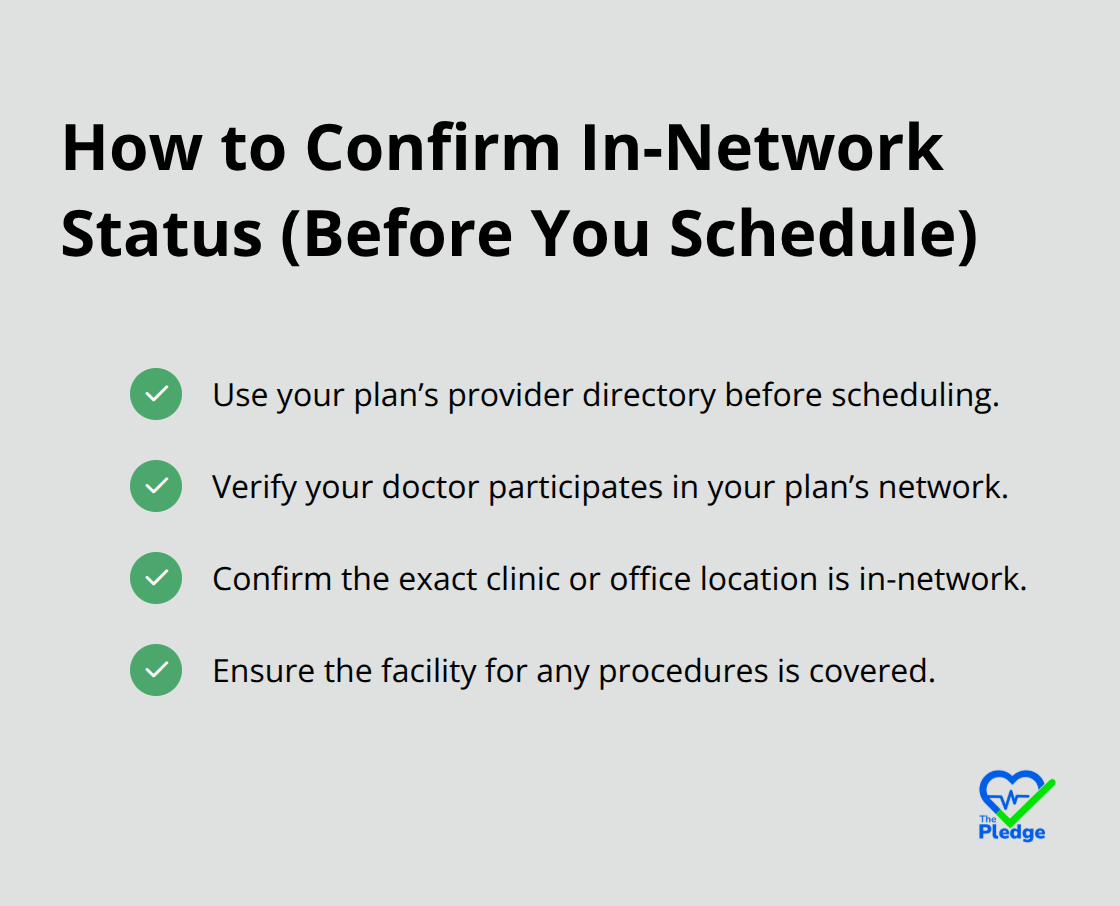
This step prevents the most common and expensive mistake people make with their insurance-showing up for care only to discover they’re seeing an out-of-network provider.
Understand Out-of-Network Costs on PPO Plans
If you’re on a PPO plan and considering an out-of-network provider, run the numbers before committing. Many PPO plans charge 40 to 60 percent coinsurance for out-of-network care after you meet your deductible. A routine specialist visit that costs $150 in-network could cost $250 to $400 out-of-network. For elective procedures, this difference compounds significantly. Start by searching your plan’s directory for in-network alternatives. Most plans have multiple providers in the same specialty, and you can often find someone excellent within your network who charges the same rates. If you absolutely need a specific out-of-network provider, contact your insurance company directly to ask about cost estimates and whether they’ll cover any portion of the bill. Some plans offer exceptions for certain situations, though this is rare and shouldn’t be assumed.
Compare Costs Between In-Network Providers
Once you’ve confirmed your providers are in-network, your next step is comparing costs between them. Two in-network providers might charge vastly different amounts for the same service because insurance companies negotiate different rates with different providers. Your plan’s cost estimator tool lets you input a procedure code or search by service to see what you’d pay at different facilities. An MRI might cost $400 at one facility and $600 at another, even though both are in-network and covered by your plan. Using this tool takes fifteen minutes and can save you hundreds of dollars. If your plan doesn’t have a transparent cost estimator, call the providers directly and ask for their negotiated rates with your specific insurance company. Write down the costs and compare them side by side before scheduling.
Maximize Your Preventative Care Benefits
Your health plan covers preventative care at no cost to you-this is federal law. Annual physicals, cancer screenings, vaccinations, and certain preventative tests are completely free when you use in-network providers. Most people skip these services and then pay much more when a preventable condition becomes serious. People who use their preventative benefits regularly catch health issues early, which costs far less to treat. Schedule your annual physical this month if you haven’t done so this year. Ask your doctor which screenings are appropriate for your age and health history, and get them done while they’re free. This approach saves money now and avoids expensive emergency care and specialist visits later.
With your network verified and costs compared, you’re ready to make strategic decisions about when and where you receive care. The next chapter shows you how to choose the right care setting for each situation-whether that’s your primary care doctor, urgent care, or a retail clinic-and how those choices directly impact what you pay.
Where Should You Get Care for Each Situation
Choosing the right care setting for each health need is where most people leave money on the table. Your primary care doctor isn’t always the most cost-effective option, and the emergency room is catastrophically expensive for routine problems. The Kaiser Family Foundation reports that 82 percent of large employers cover retail clinic services, and 16 percent offer financial incentives to use them, which signals how much money these alternatives save. Telemedicine adoption jumped from 27 percent in 2015 to 82 percent among large plans by 2019, with employers offering copay reductions and other incentives to drive usage.
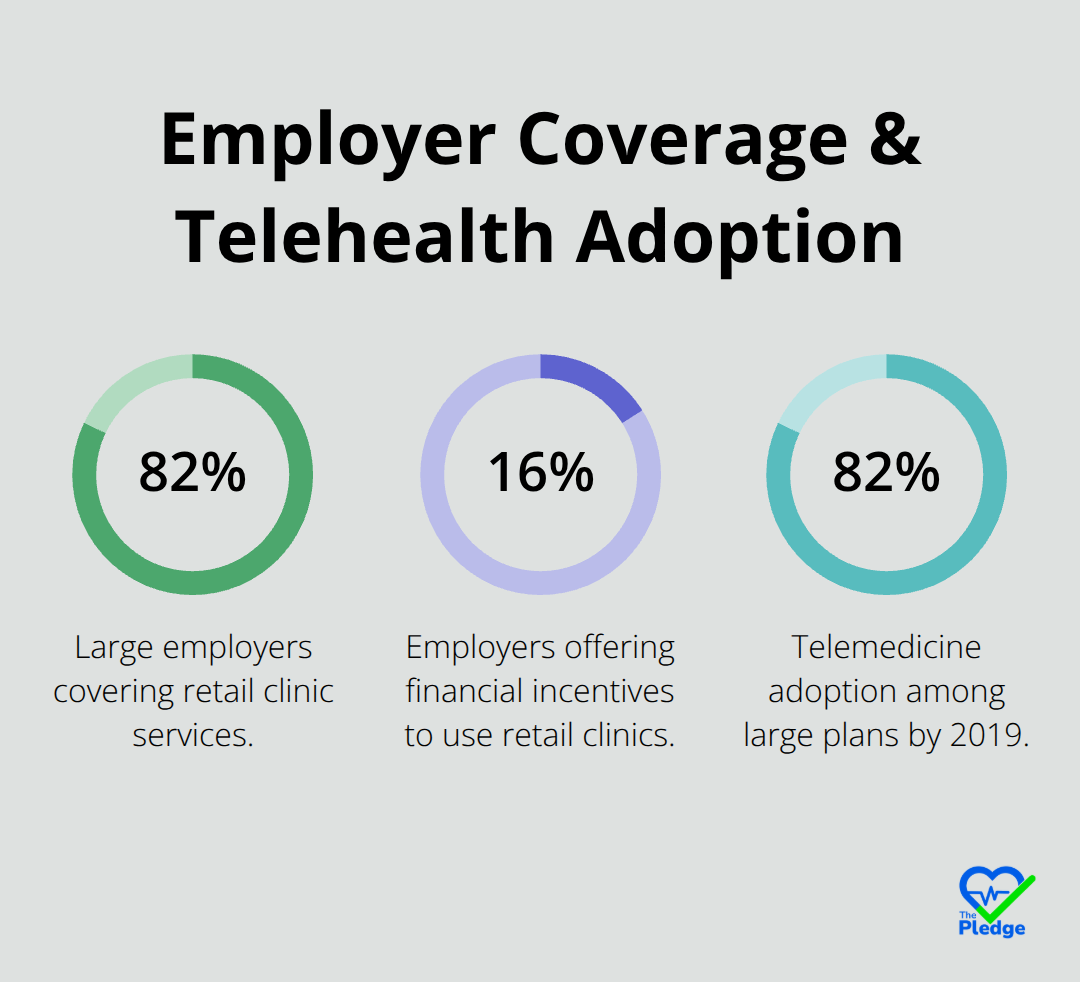
The data is clear: when you match the care setting to the problem, you spend less.
Match the Care Setting to Your Problem
An urgent care visit costs roughly half what an emergency room visit costs for the same complaint. A telehealth consultation for a sinus infection runs $50 to $75, while an in-person visit at your primary care doctor’s office costs $100 to $150. Use your primary care doctor for ongoing management and preventative care. Use urgent care for acute problems that need attention but aren’t emergencies. Use retail clinics for minor issues like strep throat or ear infections. Use telehealth for initial consultations and follow-ups when physical examination isn’t necessary. This tiered approach respects both your time and your deductible.
Plan Ahead for Elective Procedures
For elective procedures, the planning phase determines your final cost more than any other factor. Start with your primary care doctor to obtain a specific procedure code and expected timeline, then use your plan’s cost estimator to compare prices across in-network surgical centers and hospitals. Some facilities charge 30 to 50 percent less than others for identical procedures because their negotiated rates with your insurance differ. Coordinate with your surgeon’s office to confirm the exact facility where your procedure will occur, verify it’s in-network, and request an itemized cost estimate that includes facility fees, surgeon fees, and anesthesia.
Many employers and insurers now offer Centers of Excellence programs that designate high-quality, low-cost facilities for specific surgeries. If your plan offers a Center of Excellence for your procedure, using it often saves thousands and includes travel support. Avoid scheduling elective procedures during peak times like January or September when facilities are busiest and less likely to negotiate; mid-summer and late November often bring better pricing and shorter wait times.
Prevent Duplicate Testing and Unnecessary Costs
Duplicate testing destroys both your savings and your time. When you see multiple providers, they often order the same imaging, blood work, or diagnostic tests without knowing you had them done elsewhere. This costs your insurance plan money and costs you out-of-pocket expenses if you’ve already met your deductible. Maintain a current list of recent tests and results and share it with every new provider you see. If your insurance company offers a patient portal, download your test results before appointments and bring them with you.
When scheduling with a new specialist, tell the office explicitly that you’ve had recent testing and ask whether they need new tests or can use your existing results. Most specialists will accept recent imaging or blood work from another in-network facility if it’s relevant to their evaluation. This simple communication prevents thousands in unnecessary duplicate costs and speeds up your diagnosis.
Final Thoughts
Provider network optimization compounds savings over months and years because it works with how insurance actually functions. In-network providers cost less due to negotiated contracts, different care settings have different price points, and comparing costs before you schedule saves hundreds. These mechanics exist whether you use them or not, so the question isn’t whether they work-it’s whether you’ll act on them.
The real benefit extends beyond this year’s medical bills. When you consistently use in-network providers, you build relationships with doctors who understand your health history. When you plan ahead for procedures, you avoid rushed decisions made under stress. When you match care settings to your needs, you spend less time navigating healthcare and more time on what matters.
Pull up your insurance plan’s provider directory this week and search for your current doctors to verify they’re in-network. Download your plan’s cost estimator tool, schedule your annual preventative care visit, and if you want to streamline this process further, The Pledge centralizes your health information, benefits, and provider data in one place while sending you personalized reminders for preventative care.
![Navigating Your Provider Network for Maximum Savings [Guide]](https://thepledge.app/wp-content/uploads/emplibot/Navigating-Your-Provider-Network-for-Maximum-Savings-_Guide__1781489382-300x168.jpeg)