
Family caregivers save the healthcare system billions annually-yet their burden often goes unrecognized. When caregivers burn out, the costs ripple across employers, hospitals, and families themselves through lost productivity, emergency visits, and preventable hospitalizations.
At The Pledge, we’ve seen how the right support systems transform this equation. By connecting caregivers with digital tools and coordinated care, organizations can measurably reduce healthcare expenses while protecting the people who care for others.
What Burnout Costs Your Organization
Caregiver burnout isn’t a personal problem-it’s a business problem. When family caregivers experience high stress, their employers lose an estimated $5,600 per employee in reduced work productivity when annualized. Among the roughly 44 million adult caregivers in the United States, more than half work while caregiving, and about 61 percent need workplace accommodations like flexible arrival times, early departures, or unscheduled time off. The financial damage compounds quickly.
Productivity Loss Hits the Bottom Line
Caregivers managing substantial healthcare tasks-medication administration, care coordination, dementia supervision-experience triple the likelihood of work productivity loss compared to those with lighter caregiving duties. When caregivers miss work, arrive late, or leave early regularly, employers face disrupted workflows, reduced output, and coverage gaps that ripple across teams. In sectors with tight margins or specialized roles, even one caregiver’s reduced productivity translates into measurable revenue impact. Research from Wolff and colleagues found that caregivers providing high-level healthcare activities report 23 percent financial difficulty, nearly double the rate of those providing minimal care. This financial strain drives stress, which then drives absenteeism-a vicious cycle that erodes both employee retention and organizational performance.
The Physical Health Crisis
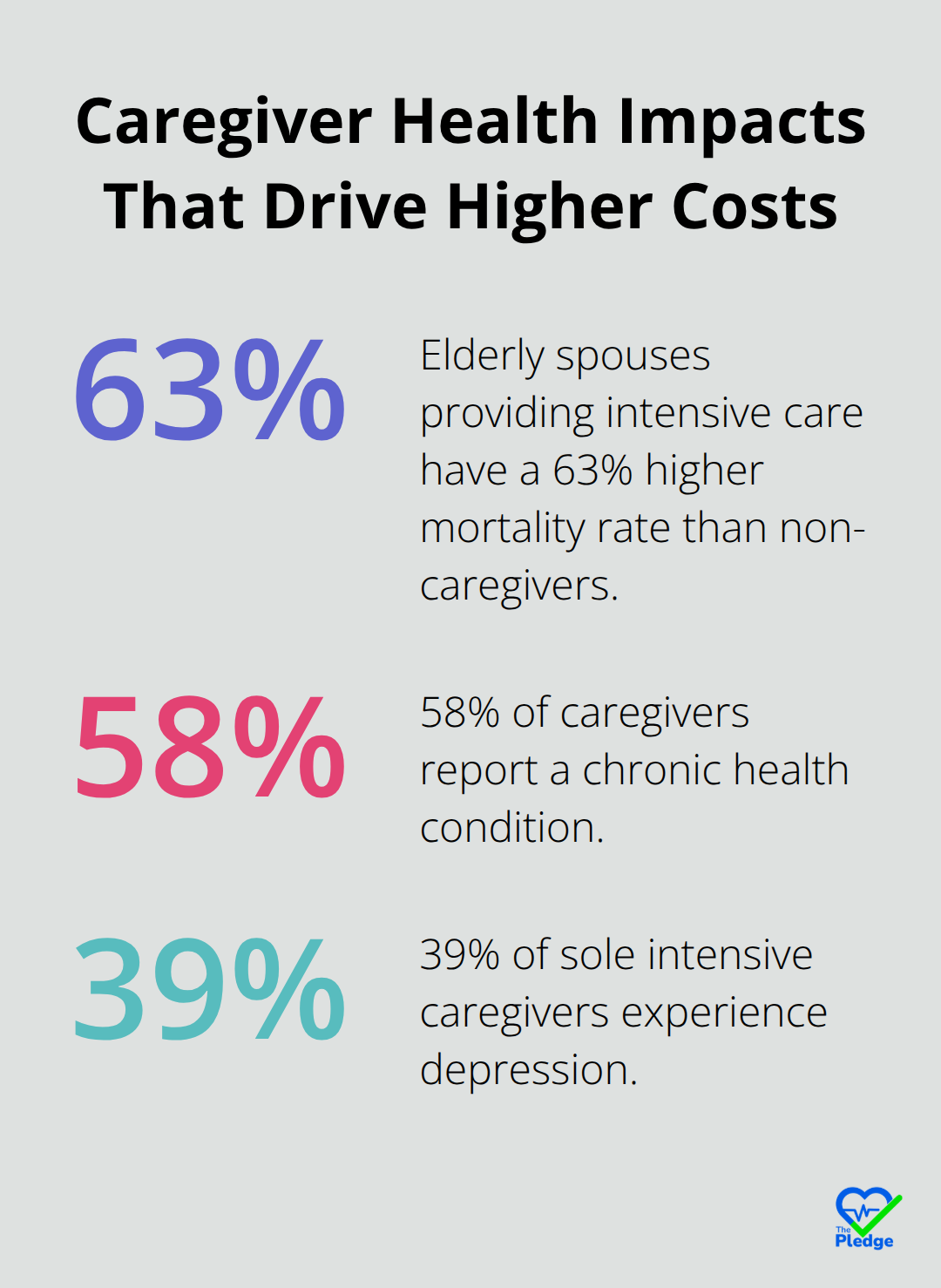
The physical toll on caregivers directly increases healthcare system costs. Elderly spouses providing intensive care show a 63 percent higher mortality rate than non-caregivers, and this pattern extends across age groups. Caregivers experience measurable immune system decline, slower wound healing, elevated blood pressure, sleep disturbances, and fatigue-all drivers of future medical expenses. About 58 percent of caregivers report a chronic health condition, and 28 percent have two or more.
When caregivers’ own health deteriorates, they generate additional claims, hospitalizations, and emergency visits that inflate healthcare costs. Depression affects 39 percent of sole intensive caregivers, and depressive symptoms correlate directly with the care recipient’s functional decline-creating a feedback loop where caregiver mental health worsens as care demands intensify. Healthcare systems absorb these costs downstream when caregivers themselves become patients.
The Hidden Healthcare Price Tag
Caregiver health declines contribute approximately $28.3 billion annually to healthcare costs. This figure alone justifies preventive investment in caregiver support as a cost-containment strategy, not merely a benefit offering. Organizations that recognize this connection position themselves to reduce claims, lower emergency utilization, and improve workforce stability simultaneously. The question shifts from “Can we afford to support caregivers?” to “Can we afford not to?”
Digital health platforms and coordinated care systems offer a pathway to interrupt these costly cycles before they accelerate.
What Digital Tools Actually Change for Caregivers
Information Fragmentation Wastes Hours Every Week
Caregivers manage information scattered across multiple locations. One provider holds medication records, another stores test results, insurance documents sit in email folders, and family members text updates through different conversations. A caregiver coordinating care for an aging parent spends 5–10 hours weekly just tracking down information, calling offices for updates, and repeating the same medical history to different providers. This administrative burden directly reduces their ability to work and increases stress-driven health problems.
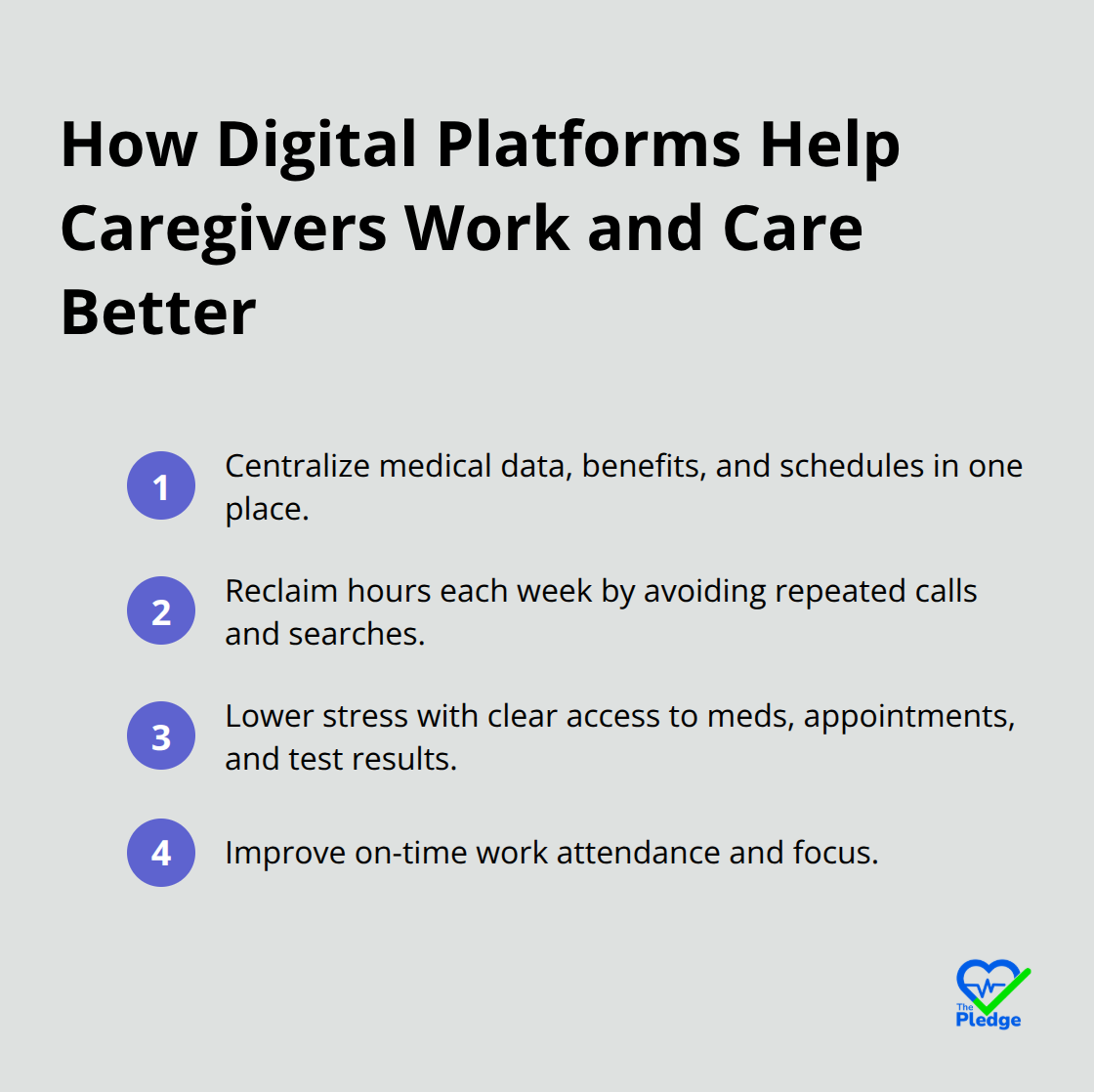
Digital health platforms eliminate this fragmentation. They centralize medical data, benefits information, and care schedules in one accessible location. When caregivers access medication lists, upcoming appointments, test results, and insurance details through a single interface, they reclaim hours each week. That time translates directly into work productivity and reduced stress.
Real-Time Coordination Replaces Reactive Scrambling
Real-time coordination between caregivers and healthcare providers means updates flow automatically rather than requiring phone calls or office visits to request information. Appointment reminders reach caregivers directly, medication changes sync instantly, and questions get answered through secure messaging instead of voicemail tag. This shift from reactive scrambling to proactive visibility transforms the caregiver experience from chaotic to manageable.
Research on transitional care shows that better information coordination after hospital discharge significantly reduces readmissions and prevents complications that would otherwise send patients back to emergency rooms. When a caregiver receives a clear medication list from the hospital along with automatic reminders about timing and potential interactions, medication errors drop dramatically. Caregivers who see real-time data about their care recipient’s health metrics catch problems early rather than discovering them during crises that demand emergency care.
Productivity Gains Flow Directly to Employers
For employed caregivers juggling work and care duties, time reclaimed from administrative tasks translates directly into productivity. A caregiver who previously spent two hours daily managing appointments and information now spends thirty minutes. That caregiver shows up on time more consistently, takes fewer unscheduled absences, and experiences less stress-related fatigue at work.
The Wolff research noted earlier showed that caregivers managing substantial healthcare tasks experience triple the productivity loss compared to lighter-duty caregivers. Digital coordination reduces the intensity of those tasks (automating routine work like information gathering and appointment scheduling). Employers gain measurable benefits through reduced absenteeism and improved focus during work hours.
Healthcare Systems Reduce Costs Across Multiple Points
Healthcare systems benefit through lower utilization across the board. Fewer redundant tests occur because information is shared, fewer emergency visits happen because problems get caught earlier, and shorter hospital stays result because caregivers have clear discharge instructions and real-time support. The combination of reduced caregiver stress, reclaimed time, and better information flow creates a cost-reduction cascade that justifies investment in these platforms as a core strategy rather than a nice-to-have benefit.
These measurable improvements in coordination and caregiver capacity set the stage for examining specific cost savings that organizations can track and quantify.
Where Caregiver Support Cuts Real Healthcare Costs
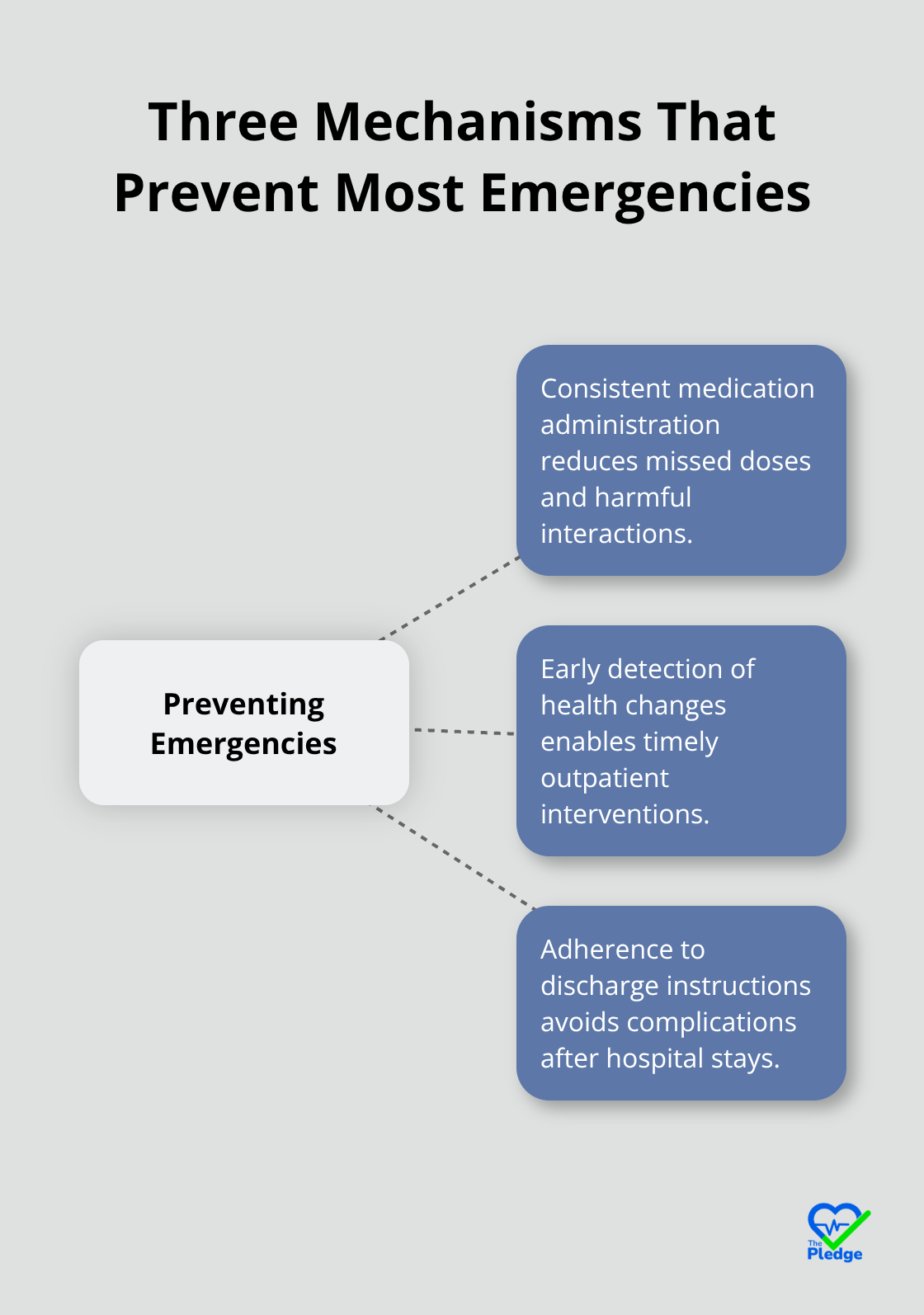
Supporting family caregivers produces measurable reductions in emergency room visits, hospitalizations, and medication errors-three of the highest-cost events in healthcare. When caregivers receive coordination tools and stress reduction support, their care recipients experience fewer crises that demand urgent intervention. Research from the National Study on Caregiving shows that caregivers managing complex health tasks like medication administration and care coordination operate under extreme stress, which translates directly into missed appointments, medication errors, and delayed problem detection. These failures cascade into preventable emergency visits that cost hospitals an average of $1,150 per visit and drain employer healthcare budgets. Organizations that invest in caregiver support interrupt this pattern through consistent medication administration, early detection of health changes, and adherence to discharge instructions-the three mechanisms that prevent most emergency situations.
Emergency Room Visits Drop With Real-Time Caregiver Support
Hospital readmissions and emergency visits spike when caregivers lack clear information or feel overwhelmed. Research on transitional care coordination shows that patients with engaged, well-supported caregivers experience readmission rates 15–20 percent lower than those without coordinated support. A caregiver who receives automatic medication reminders, understands warning signs through clear discharge instructions, and can contact providers through secure messaging catches problems like infection, medication interactions, or symptom changes before they become emergencies. The financial impact proves substantial: preventing one unnecessary emergency room visit saves the healthcare system roughly $1,150, and preventing one hospital readmission saves $15,000 or more depending on the condition. Employers with 5,000 employees who provide coordinated caregiver support eliminate dozens of preventable emergency visits annually, translating into $50,000–$100,000 in direct savings plus reduced absenteeism when employees aren’t managing acute crises.
Medication Adherence Improves With Caregiver Coordination
Medication errors represent one of the costliest and most preventable problems in healthcare. Caregivers often manage patients taking 5–14 medications daily, and without clear instructions or reminders, adherence rates drop below 50 percent for complex regimens. When a caregiver misses doses, administers the wrong medication, or combines incompatible drugs, the results include adverse events, disease progression, and hospitalizations that cost the system thousands per incident. Digital coordination platforms that send automatic reminders to caregivers, display medication interactions in real time, and flag dosing errors before they occur reduce medication-related hospital admissions by 10–15 percent in published studies. For a large employer, this translates into preventing 50–100 medication-related hospitalizations annually. Each prevented hospitalization saves approximately $10,000–$20,000 in direct medical costs, not counting the productivity value of employees who avoid extended absences caring for hospitalized relatives.
Preventable Hospitalizations Decline When Caregivers Catch Problems Early
The majority of hospitalizations for chronic conditions like congestive heart failure, diabetes, and COPD are preventable through early detection and intervention. Caregivers who understand their care recipient’s condition, recognize early warning signs, and have direct access to provider guidance catch deterioration before it reaches crisis point. Medicaid home- and community-based services research shows that structured caregiver support and care coordination improve outcomes and reduce costs. A caregiver who notices shortness of breath in a heart failure patient and contacts the provider immediately can receive diuretic adjustment or other interventions that prevent hospitalization. The cost difference is dramatic: outpatient management costs $200–$500, while hospitalization for the same condition costs $8,000–$15,000. Organizations supporting caregivers with tools, training, and real-time access to providers eliminate thousands of preventable admissions annually. For employers with older employee populations or employees caring for aging parents, even a 5–10 percent reduction in preventable hospitalizations among care recipients generates $500,000–$2,000,000 in annual savings depending on workforce size and age distribution.
Final Thoughts
The evidence proves that supporting family caregivers produces measurable reductions in healthcare costs while protecting the people who sustain the entire care system. Family caregiver burden drives emergency visits, preventable hospitalizations, and medication errors that cost employers and healthcare systems billions annually. When organizations invest in caregiver support, they interrupt these costly cycles at their source, and the financial returns justify immediate action.
Employers gain concrete benefits from caregiver support programs. A single prevented hospitalization saves $15,000 or more, a prevented emergency room visit saves roughly $1,150, and reduced absenteeism from caregiver stress saves $5,600 per employee annually. Organizations with significant caregiver populations see these savings compound quickly into six-figure annual reductions in healthcare spend, making caregiver support programs a strategic investment rather than a cost center.
Healthcare systems and employers must implement digital platforms that centralize health information and coordinate care in real time, establish clear pathways for caregivers to access providers and receive guidance, and measure outcomes systematically to track emergency visits, hospitalizations, medication adherence, and caregiver stress levels. The Pledge integrates medical data, benefits information, and care schedules into a single accessible interface, enabling caregivers to reclaim hours weekly while improving care quality and demonstrating that supporting caregivers benefits everyone involved.
![Navigating Your Provider Network for Maximum Savings [Guide]](https://thepledge.app/wp-content/uploads/emplibot/Navigating-Your-Provider-Network-for-Maximum-Savings-_Guide__1781489382-300x168.jpeg)