

Companies spend billions on employee wellness programs each year, yet many executives question their actual impact. Do employee wellness programs work, or are they just expensive feel-good initiatives?
At The Pledge, we analyzed the latest research to separate fact from fiction. The answer isn’t as straightforward as you might expect.
What Do Wellness Program Statistics Actually Reveal?
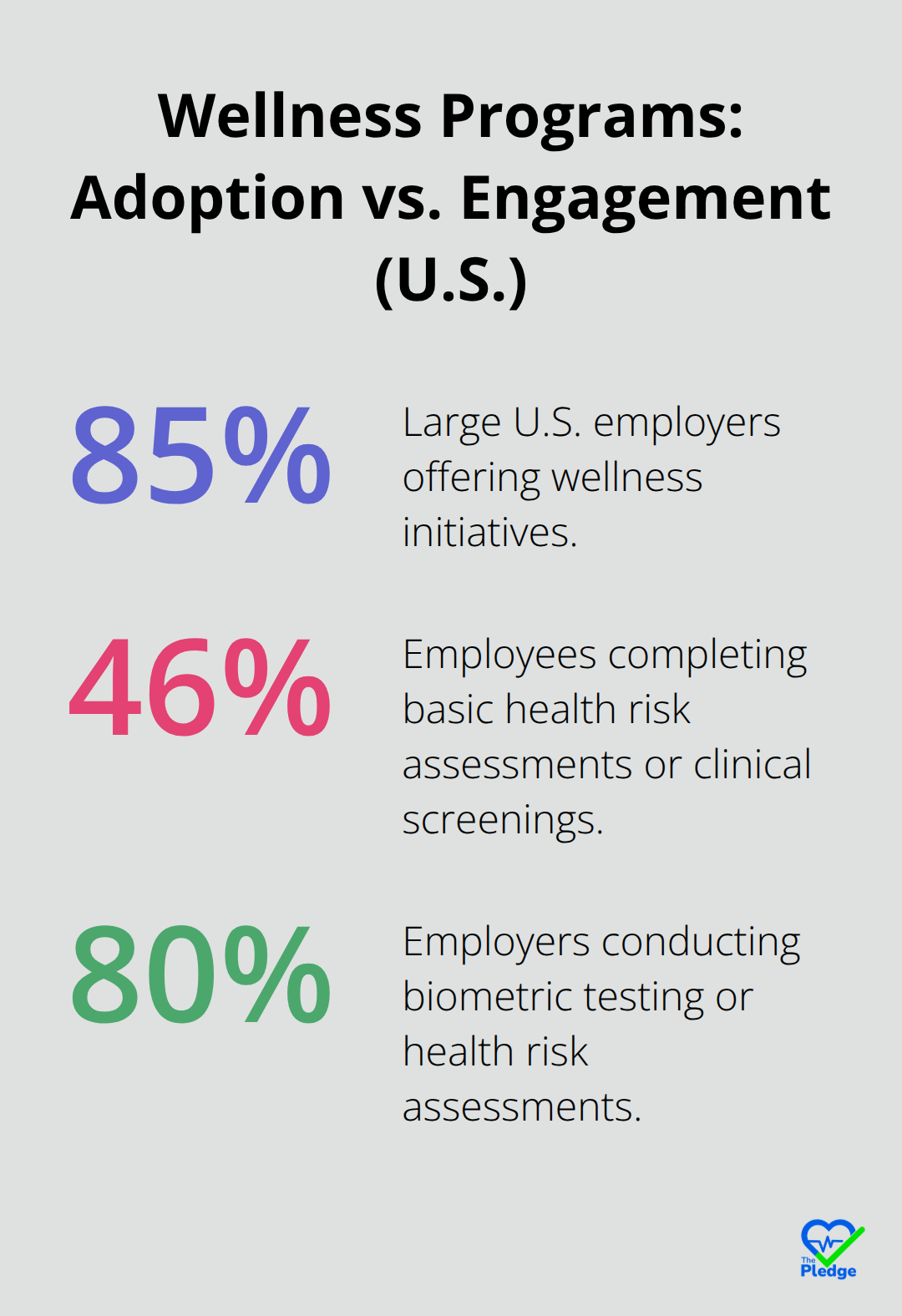
Workplace wellness programs have exploded across American businesses, with 85% of large U.S. employers now offering some form of wellness initiative. The numbers paint a picture of massive corporate commitment: global spending on wellness programs is projected to reach $100 billion by 2026, representing unprecedented investment in employee health.
However, the reality behind participation rates tells a different story. Only 46% of employees complete basic health risk assessments or clinical screenings, and engagement drops even further for ongoing lifestyle interventions. This participation gap represents billions in wasted spending on programs that employees simply don’t use.
The Most Popular Program Types Show Mixed Results
Health screenings dominate the wellness landscape, with 80% of employers conducting biometric testing and health risk assessments. Lifestyle management programs targeting nutrition, weight management, and smoking cessation are offered by 77% of companies, while disease management programs for chronic conditions like diabetes reach 56% of employers.
Despite this variety, the Harvard study published in JAMA found that wellness program participants showed only an 8.3% higher rate of regular exercise and 13.6% increase in active weight management compared to control groups. These modest behavioral changes failed to translate into meaningful clinical improvements in blood pressure, cholesterol, or body mass index.
Financial Incentives Fail to Drive Real Change
Companies double down on financial incentives, with 69% using monetary rewards to boost participation in health screenings and interventions. The Affordable Care Act allows incentives up to 30% of health coverage costs (with higher limits for smoking cessation programs), yet 70% of companies struggle to prove their value from their wellness program evaluations.
The disconnect between investment and results suggests that throwing money at participation rates doesn’t address the fundamental design flaws that prevent programs from creating lasting health improvements. This gap between spending and outcomes raises serious questions about how companies design and implement their wellness strategies.
What Does the Research Say About Wellness Program ROI?
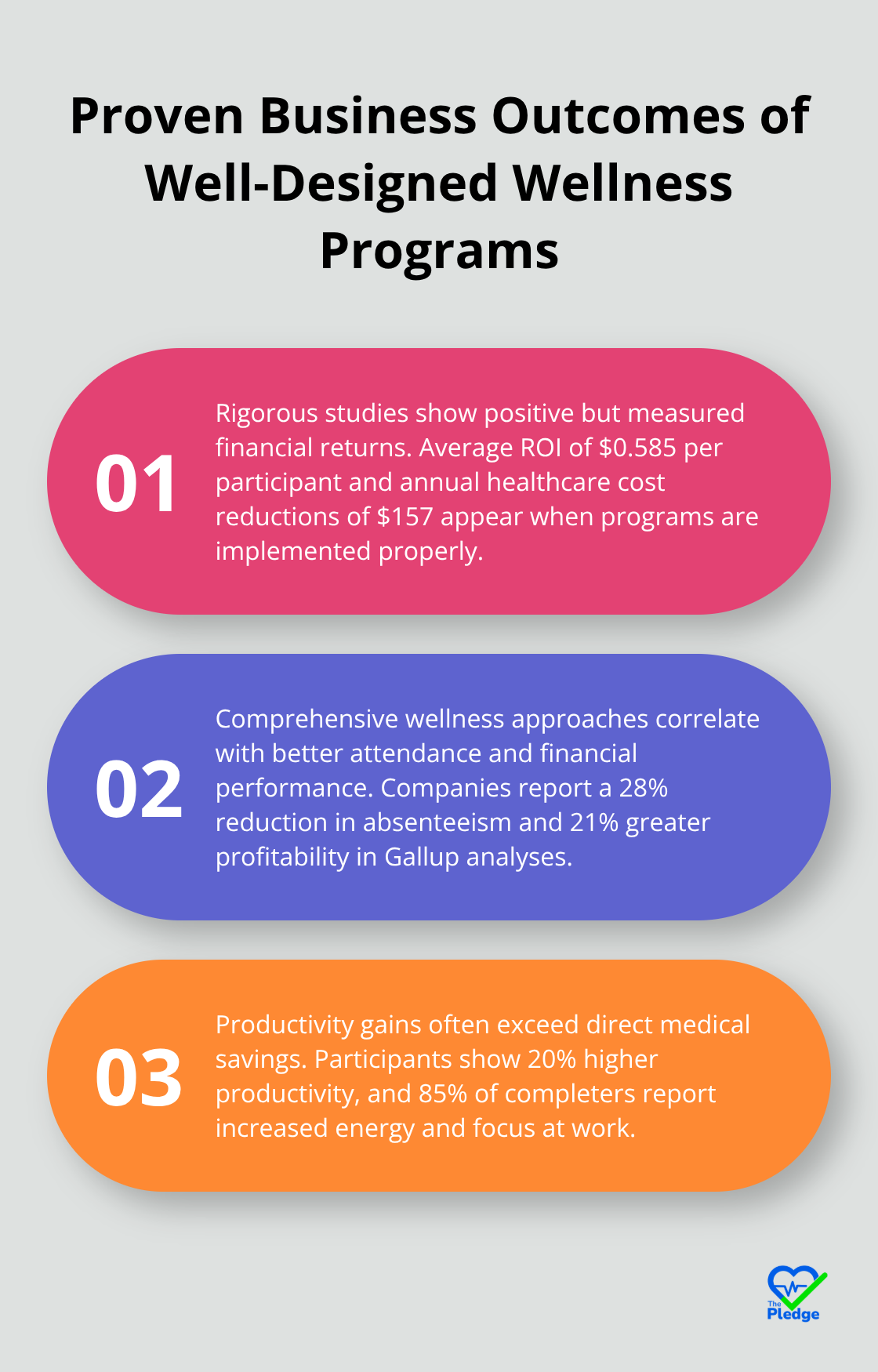
Despite widespread skepticism, rigorous research reveals compelling evidence for wellness program effectiveness when companies implement them properly. Research shows ROI of $0.585 per participant in workplace wellness programs, while RAND Corporation analysis found healthcare cost reductions that average $157 per participant annually.
Companies with comprehensive wellness programs report 28% reduction in absenteeism and 21% greater profitability according to Gallup research. Organizations that use digital wellness platforms like Marsh McLennan observed measurable improvements in workplace satisfaction across thousands of employees.
Productivity Gains Drive the Strongest Business Case
The productivity benefits far exceed healthcare savings in most cases. Research shows wellness program participants demonstrate 20% higher productivity rates, with 85% of participants who complete programs report increased energy and focus at work.
Companies that integrate physical activity and mental health resources see 25% lower health-related costs and significantly reduced turnover rates. A systematic review of workplace interventions confirmed substantial improvements in smoking cessation rates, physical activity levels, and dietary habits compared to control groups.
Employee Retention Creates Long-Term Value
Wellness programs generate measurable retention benefits that compound over time. Companies with robust wellness offerings experience lower turnover rates, with 79% of participants who report improved job satisfaction and physical health (University of Oxford research confirms these findings).
The key differentiator lies in program design: successful initiatives achieve sustained behavior change through personalized approaches rather than one-size-fits-all solutions. However, companies must collect comprehensive baseline data to improve their wellness program outcomes significantly, as the Harvard JAMA study highlighted a critical gap that explains why many programs fail to deliver these impressive results.
Why Do Most Wellness Programs Fail to Work?
The fundamental problem with most wellness programs lies in their generic, checkbox approach to employee health. Companies implement identical programs across diverse workforces without considering individual health needs, work schedules, or personal preferences. Harvard JAMA research shows that workplace wellness programs tend to focus on modifiable risk factors of disease, such as nutrition, physical activity, and smoking cessation, but fail to address the specific health challenges that different employee populations face. A 45-year-old office worker with diabetes requires completely different interventions than a 28-year-old warehouse employee who deals with stress management issues.
Generic Programs Cannot Address Individual Health Needs
Most companies deploy wellness programs that treat all employees identically and ignore the reality that health challenges vary dramatically across age groups, job functions, and personal circumstances. Research from the University of Oxford shows that personalized wellness strategies achieve 60% higher engagement rates compared to one-size-fits-all approaches. Companies that segment their workforce by health risk factors and job demands see significantly better outcomes. Shift workers need sleep management programs while desk-based employees require ergonomic and movement interventions (the failure to customize programs explains why only 46% of employees complete basic health screenings despite financial incentives).
Poor Data Integration Prevents Meaningful Program Adjustments
Companies collect massive amounts of wellness data but fail to integrate this information with productivity metrics, healthcare claims, and employee feedback to create actionable insights. RAND Corporation research found that less than half of employers regularly evaluate their wellness programs, and only 2 percent provided actual savings estimates, primarily because they cannot connect program participation to business outcomes.
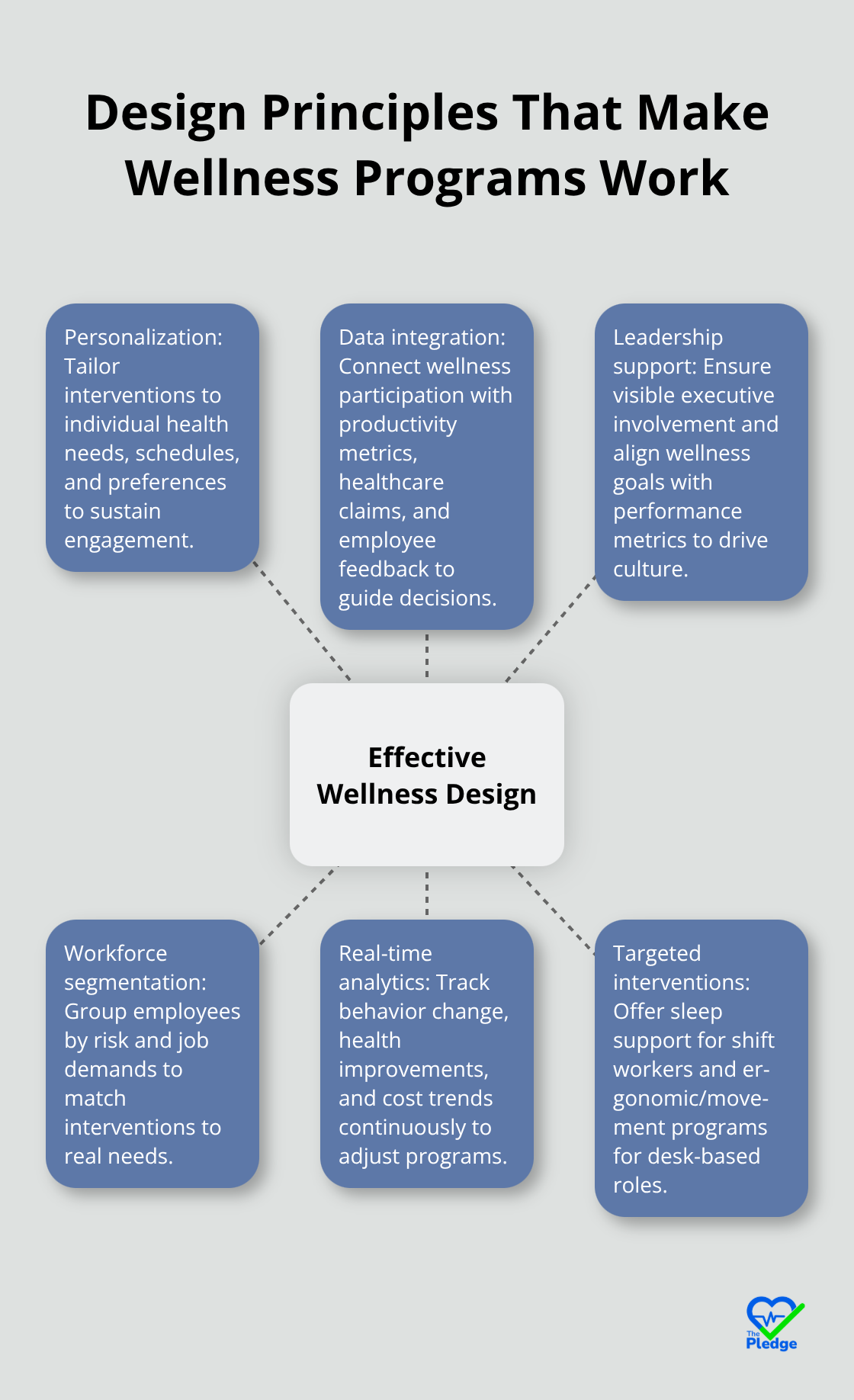
Successful programs require real-time data analysis that tracks behavior changes, health improvements, and cost reductions simultaneously.
Lack of Leadership Support Undermines Program Success
Wellness programs fail when leadership treats them as HR initiatives rather than strategic business investments. Companies that achieve meaningful results demonstrate visible executive participation and integrate wellness goals into performance metrics. Organizations without leadership engagement see participation rates drop by 40% within the first year (employees perceive these programs as optional rather than valued company priorities). Management must champion wellness initiatives through consistent communication and resource allocation to create lasting cultural change.
Final Thoughts
The research reveals a complex answer to whether employee wellness programs work. While 85% of large employers invest billions annually in wellness initiatives, only programs with specific design elements deliver meaningful results. The Harvard JAMA study showed modest behavioral improvements but no significant clinical outcomes, while RAND Corporation research demonstrated $157 average healthcare cost reductions per participant when companies implement programs effectively.
The key differentiator lies in personalization and data integration. Generic programs that treat all employees identically fail to address individual health needs and achieve only 46% participation rates. Successful programs segment workforces by health risk factors, integrate real-time data analysis, and demonstrate visible leadership support (companies that customize interventions see 60% higher engagement rates and 28% reduction in absenteeism).
For employers who consider wellness investments, focus on comprehensive platforms that centralize health data and provide personalized interventions. The Pledge exemplifies this approach through technology that simplifies care navigation and promotes preventative care while it integrates seamlessly with existing health plans. Employee wellness programs work when companies move beyond checkbox approaches to create data-driven, personalized health solutions that address specific workforce needs.
![Building Your Employer Health Strategy for [2025]](https://thepledge.app/wp-content/uploads/emplibot/Building-Your-Employer-Health-Strategy-for-_2025__1782094238-300x168.jpeg)



![Navigating Your Provider Network for Maximum Savings [Guide]](https://thepledge.app/wp-content/uploads/emplibot/Navigating-Your-Provider-Network-for-Maximum-Savings-_Guide__1781489382-300x168.jpeg)