
Most workplace wellness programs fail because companies treat them as one-size-fits-all initiatives. At The Pledge, we’ve seen firsthand that the programs generating real results share specific characteristics: clear metrics, genuine employee buy-in, and alignment with actual health benefits.
This workplace wellness programs case study examines what separates thriving initiatives from forgotten ones. We’ll break down the strategies that work, the mistakes to avoid, and how to measure what actually matters.
What Separates Programs That Work From Programs That Fail
Successful wellness programs operate on hard data, not assumptions. The Illinois Workplace Wellness Study at UIUC tracked 4,834 employees over two years and found that comprehensive programs with biometric screening, health risk assessments, and ongoing activities had no significant effects on measured physical health outcomes. This challenges the conventional wisdom that bigger programs automatically deliver better results. What actually matters is whether your program reaches the right employees with the right interventions.
The participation gap explains silent failures
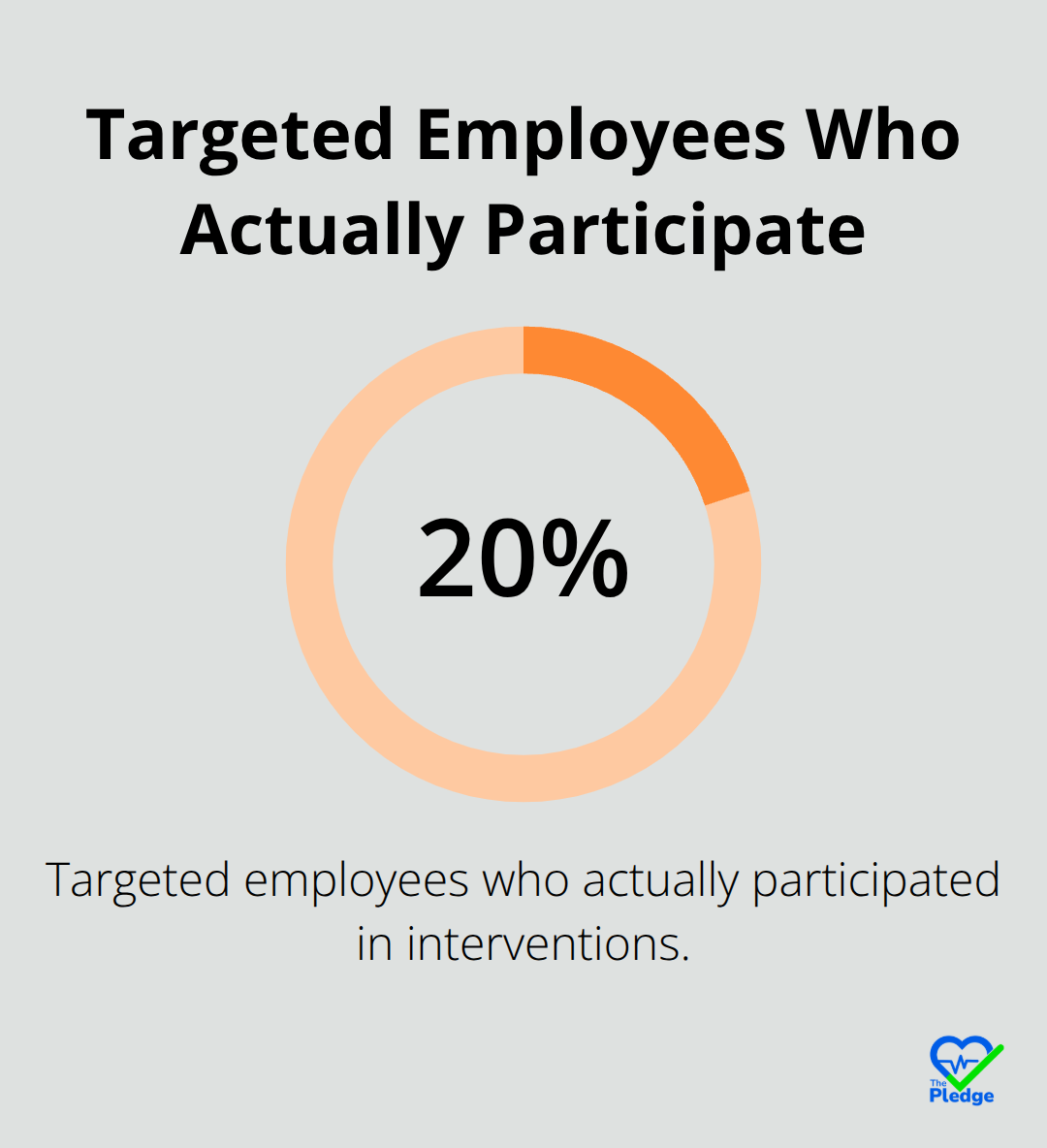
In the RAND Employer Survey from 2012, only 20% or fewer of employees identified as candidates for targeted interventions actually participated in those programs. This participation gap explains why many wellness initiatives fail silently.
Companies invest heavily but see minimal uptake from the employees who need help most. The solution isn’t throwing more money at wellness; it’s designing programs with genuine barriers removed and metrics tied directly to business outcomes.
Track the metrics that predict success
Medical claims reduction, absenteeism, and retention matter far more than participation rates alone. According to the 2024 Vitality survey, engaged employees generate an average of $462 in annual medical claims savings per person. Meanwhile, Deloitte estimates that absenteeism costs employers $3,600 per hourly employee and $2,650 per salaried employee annually. If your wellness program reduces absenteeism by even 10%, that translates to measurable savings.
Johnson & Johnson’s wellness program demonstrated ROI between $1.88 and $3.92 saved for every dollar spent. The key is connecting wellness participation to actual claims data and employment records, not just counting how many people attended a fitness class. Most companies fail here because they measure activity instead of outcomes. Implement a system that links wellness engagement to healthcare utilization and payroll records so you can demonstrate true business impact to leadership.
Integration with benefits drives higher participation
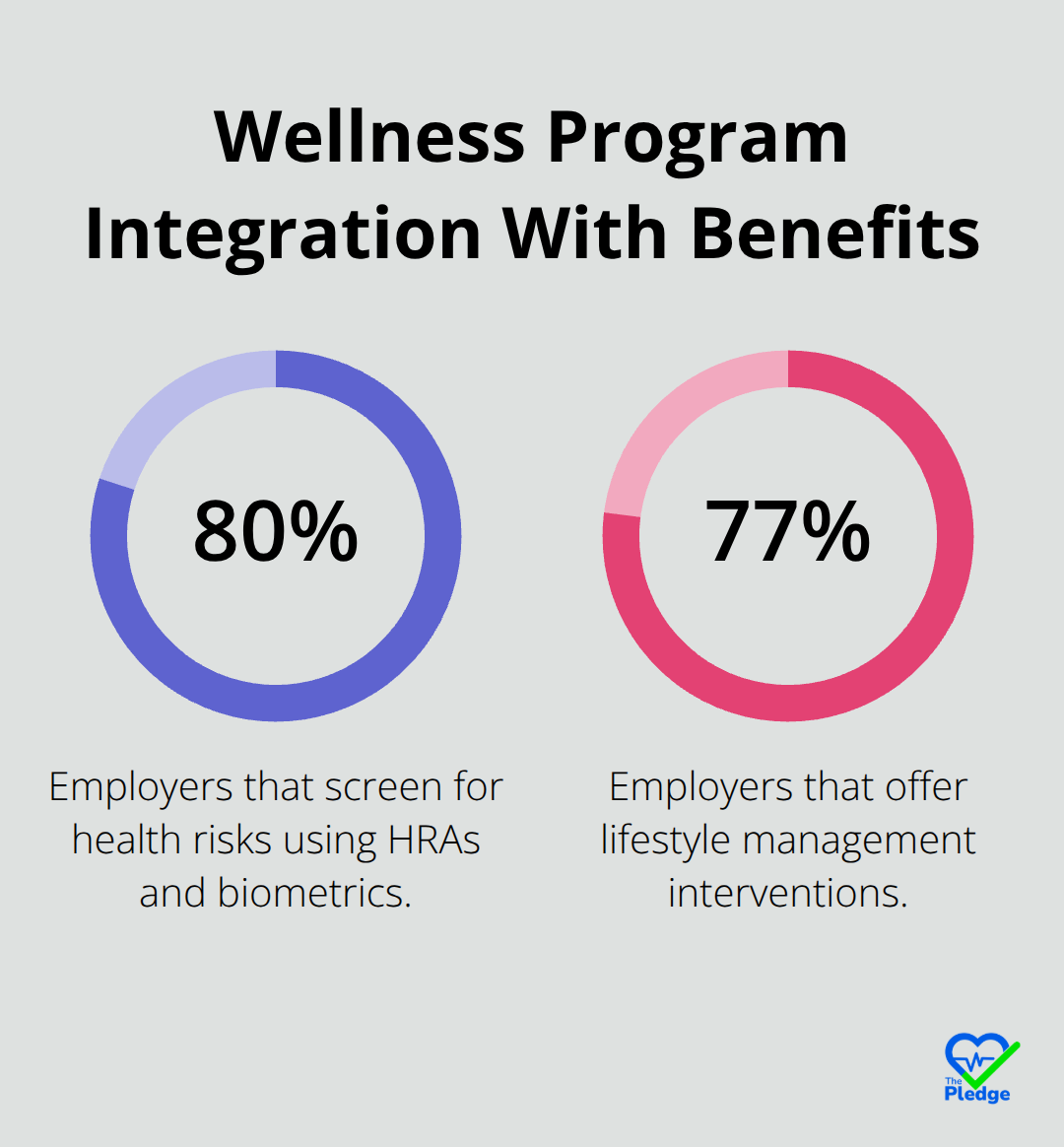
Wellness programs attached loosely to health benefits perform poorly. Programs that integrate screening, health risk assessments, and preventive care directly into benefits administration achieve higher participation and better targeting. Among employers offering wellness programs, 80% screen for health risks using health risk assessments and biometrics, and 77% offer lifestyle management interventions.
The National Rural Electric Cooperative Association case demonstrates that successful programs differentiate between inside and outside workers to address distinct health risks. This means your program design must reflect your actual workforce composition. Mesa, Arizona’s near-site wellness center serving 3,500 employees improved health outcomes precisely because it removed barriers to access. Technology integration combined with personalized health dashboards drives measurable results.
Financial incentives unlock engagement among high-need employees
Financial incentives also matter: 69% of employers with wellness programs use incentives, with HRA completion incentives at 31%, lifestyle management participation at 30%, and clinical screening incentives at 20%. The average results-based incentive represents less than 10% of total health coverage costs, making incentives a cost-effective lever for boosting engagement among employees most likely to benefit from intervention. These targeted incentives work because they remove friction for the employees who need support most-not just those already motivated to participate.
The real challenge ahead involves identifying which employees will respond to your specific program design and how to measure whether your interventions actually change behavior and health outcomes.
Real-World Examples of Effective Wellness Programs
Johnson & Johnson’s targeted approach to ROI
Johnson & Johnson’s wellness program produced measurable ROI of $1.88–$3.92 for every dollar spent, with high-risk employees showing the largest declines in medical claims. The program succeeded where others fail because it targeted specific populations rather than broadcasting the same message to everyone. J&J focused resources on employees with chronic conditions, those with elevated health risks, and workers in physically demanding roles. The company linked participation directly to claims data, allowing leadership to see exactly which interventions moved the needle on costs. This approach differs fundamentally from programs that measure only attendance or completion rates. J&J proved that wellness ROI emerges from connecting program activities to actual healthcare spending and productivity metrics, not from maximizing participation in generic fitness classes.
Physical accessibility transforms participation rates
Mesa, Arizona’s near-site wellness center served 3,500 employees and demonstrated how physical accessibility removes the largest barrier to engagement. Rather than asking employees to visit external gyms or attend programs outside work hours, Mesa placed comprehensive health services on or near the worksite. This model increased screening uptake dramatically because employees faced zero friction accessing services during their workday. The program offered biometric screening, health risk assessments, and ongoing lifestyle interventions without requiring employees to travel or sacrifice personal time.
Incentives that work for high-need populations
The financial incentives Mesa paired with screening-rewarding completion rather than results-achieved participation rates that far exceeded the typical 20% uptake rate cited in wellness research. This combination of physical accessibility, targeted incentives, and integrated benefits administration created a replicable template for employers serious about moving beyond token wellness spending. Companies operating across multiple locations or with dispersed workforces struggle with this model, but even partial on-site or near-site delivery significantly outperforms fully external programs.
The lesson here is direct: participation rates jump when programs eliminate access barriers. The next challenge involves understanding how to measure whether your interventions actually change behavior and health outcomes across different employee populations and work environments.
Why Wellness Programs Fail Without Executive Alignment
Leadership visibility determines program survival
Executive leadership determines whether a wellness program lives or dies. Companies that treat wellness as HR’s responsibility rather than a business priority watch participation collapse within months. When the CEO or CFO participates in health screenings, completes health risk assessments, or references wellness metrics in board meetings, employees notice and respond. The opposite is equally true: if executives view wellness as a checkbox compliance item, employees internalize that message immediately.
Leadership must demonstrate genuine commitment through concrete actions. Allocate budget, protect time for wellness activities during work hours, and connect program results directly to business outcomes in regular communications. Executive leadership participation in wellness programs drives marked improvements in productivity, reduced absenteeism, and lower healthcare costs. Without this visible alignment from the top, even well-designed programs struggle to overcome employee skepticism. Companies operating multiple locations face additional challenges because regional leaders must reinforce the wellness message consistently. A single email from corporate wellness fails; repeated messaging from direct managers and site leaders changes behavior.
Awareness campaigns fail when they happen once
Communication failures stem from assuming employees know a program exists. Most wellness initiatives reach only 20-30% of eligible employees because awareness campaigns are too sparse or poorly targeted. Companies broadcast wellness information once during open enrollment and wonder why participation stalls. Effective programs treat communication as ongoing and channel-specific.
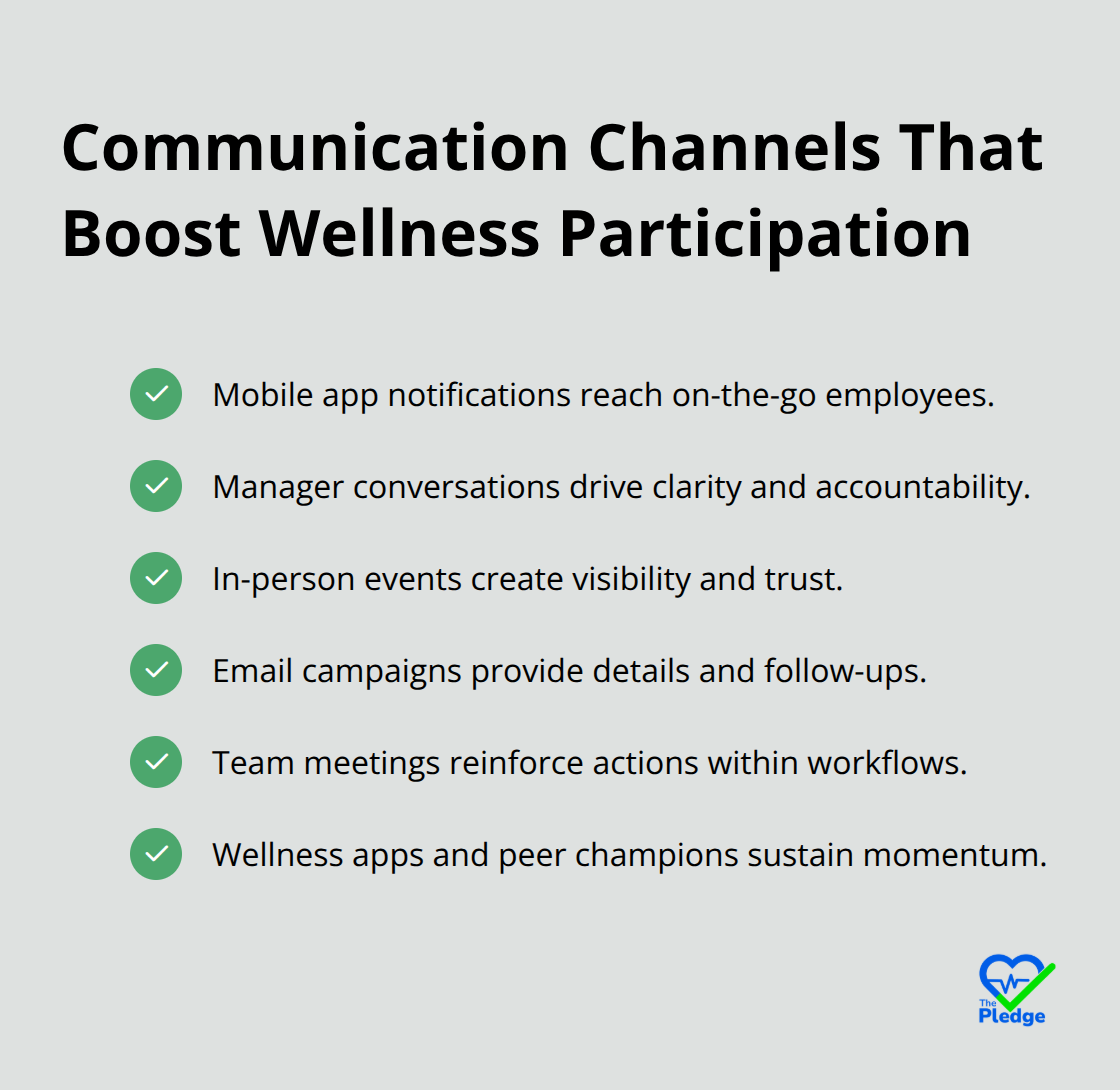
Some employees respond to mobile app notifications, others to manager conversations, still others to in-person events. Diversifying communication across email, team meetings, wellness apps, and peer champions reaches substantially more people.
Financial incentives amplified through targeted communication convert awareness into action. When employees understand exactly how to access a program, what health conditions it addresses, and what personal benefit they’ll receive, participation jumps. Research shows that active participation demands often discourage busy workers from engaging with traditional wellness initiatives.
Personalization drives engagement across different worker types
Programs that personalize messaging based on employee demographics, health risks, and job roles outperform one-size-fits-all campaigns significantly. Outside workers need different messaging than office-based employees. Younger workers respond to mobile-first communications while older employees prefer direct manager conversations. Customizing program messaging and delivery methods for different worker segments increases engagement dramatically.
Companies must invest in understanding their actual workforce composition and tailor every communication touchpoint accordingly. A generic wellness message fails across all populations. Instead, segment your employee base by role, age, health risk profile, and work location. Then craft distinct communication strategies for each segment. This targeted approach removes friction and helps employees see how your program addresses their specific health needs and circumstances.
Final Thoughts
Successful workplace wellness programs share three non-negotiable elements: they measure outcomes tied to business results, they secure visible executive support, and they remove barriers to participation. Johnson & Johnson’s $1.88–$3.92 return per dollar spent demonstrates what happens when programs target high-risk employees and connect activities directly to healthcare spending, while Mesa’s near-site wellness center proved that physical accessibility transforms engagement rates far beyond the typical 20% uptake. This workplace wellness programs case study examined real organizations that moved beyond participation metrics to track medical claims, absenteeism, and retention.
Wellness programs fail when companies treat them as HR initiatives rather than business investments, but they succeed when leadership visibly participates, communication reaches different worker types through multiple channels, and program design reflects your actual workforce composition. Connect wellness to your health benefits infrastructure from day one by integrating health risk assessments with benefits administration, linking screening incentives to actual participation, and measuring everything against claims data and employment records. Most companies measure activity instead of outcomes-stop counting fitness class attendance and start tracking whether your interventions reduce medical costs and absenteeism.
The real opportunity lies in centralizing health data so you can identify which employees need help most and whether your programs actually reach them. The Pledge integrates wellness programs with health benefits and real-time health metrics, enabling you to measure true program impact and drive engagement at scale. Treat your wellness program as a strategic business priority, not a compliance checkbox.
![Building Your Employer Health Strategy for [2025]](https://thepledge.app/wp-content/uploads/emplibot/Building-Your-Employer-Health-Strategy-for-_2025__1782094238-300x168.jpeg)



![Navigating Your Provider Network for Maximum Savings [Guide]](https://thepledge.app/wp-content/uploads/emplibot/Navigating-Your-Provider-Network-for-Maximum-Savings-_Guide__1781489382-300x168.jpeg)