
Only 40% of employees use preventive care services available through their health plans, according to recent data. At The Pledge, we’ve identified the key preventive care barriers that keep workers from taking action on their health.
These obstacles range from cost and scheduling conflicts to simple lack of awareness. Understanding what stops employees is the first step toward building a healthier workforce.
What Really Stops Employees From Getting Preventive Care
Hidden Costs Undermine Coverage
Cost remains the dominant barrier, but not always in the way employers think. One-third of adults have skipped or delayed needed care due to cost. The problem runs deeper than premiums alone. Under the Affordable Care Act, preventive services should be free, yet a Boston University study revealed that one in four people with employer-sponsored insurance still receive bills for preventive services that should have no cost.
Surprise charges create real obstacles. Colonoscopies carry significant fees for surgical trays that hit deductibles, and follow-up procedures after abnormal screenings cost employees anywhere from $112 to $702 out of pocket. When a preventive service includes diagnostic or treatment elements, patients still owe copays and deductibles. Employees avoid screenings altogether rather than risk unexpected bills. Many employers assume their plans cover preventive care completely but fail to address these hidden costs or communicate clearly about what’s actually free.
Time and Awareness Gaps Compound the Problem
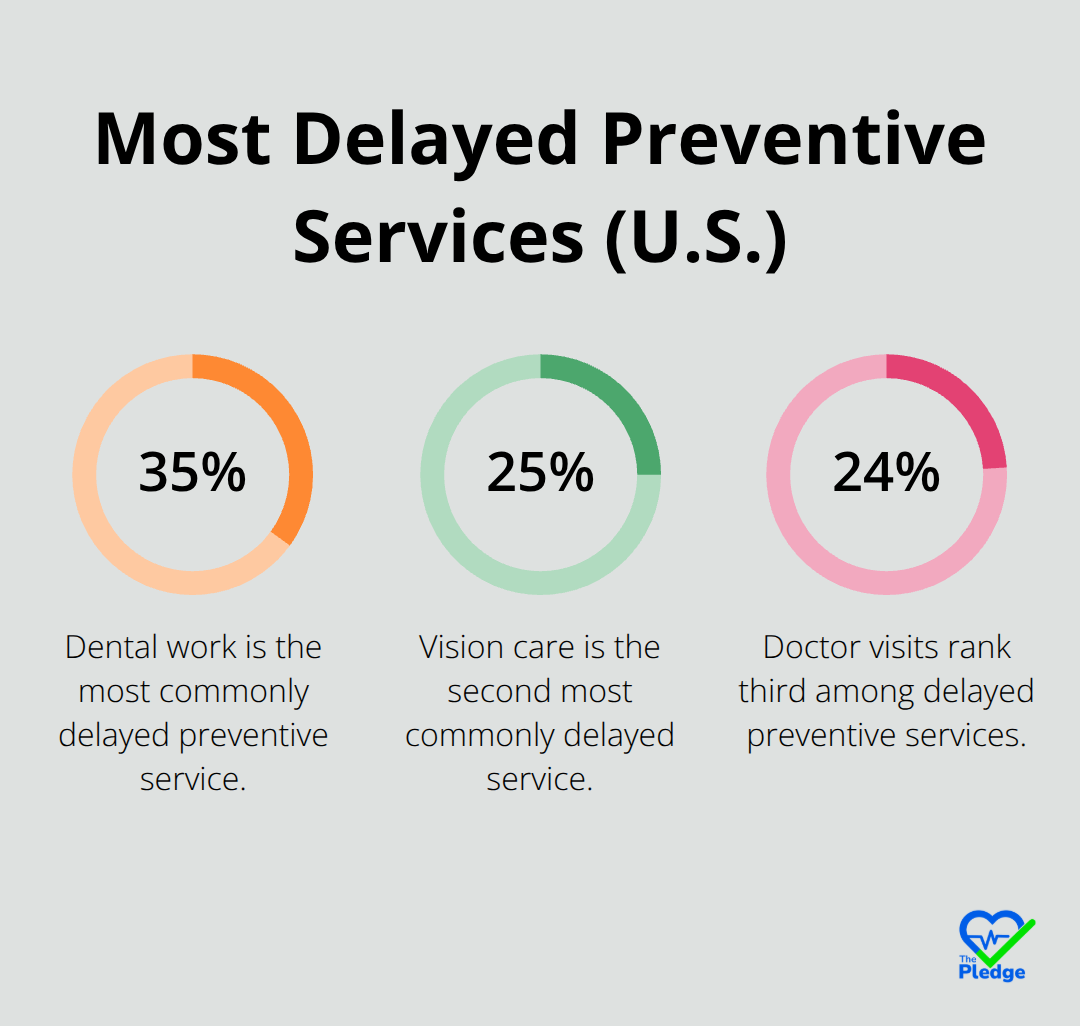
Time and awareness compound the cost problem significantly. The most commonly delayed preventive services are dental work (35 percent), vision care (25 percent), doctor visits (24 percent), and mental health care (18 percent), according to Kaiser Family Foundation data.
Employees with demanding schedules struggle to book appointments during business hours, and many lack a primary care provider entirely, making preventive services harder to access.
Limited awareness about which services are covered and why they matter also plays a critical role. Rural residents and people with chronic conditions face even lower preventive care rates due to limited provider access and health literacy barriers. The gap isn’t about motivation alone; it’s about removing friction at every step.
What Employers Must Address
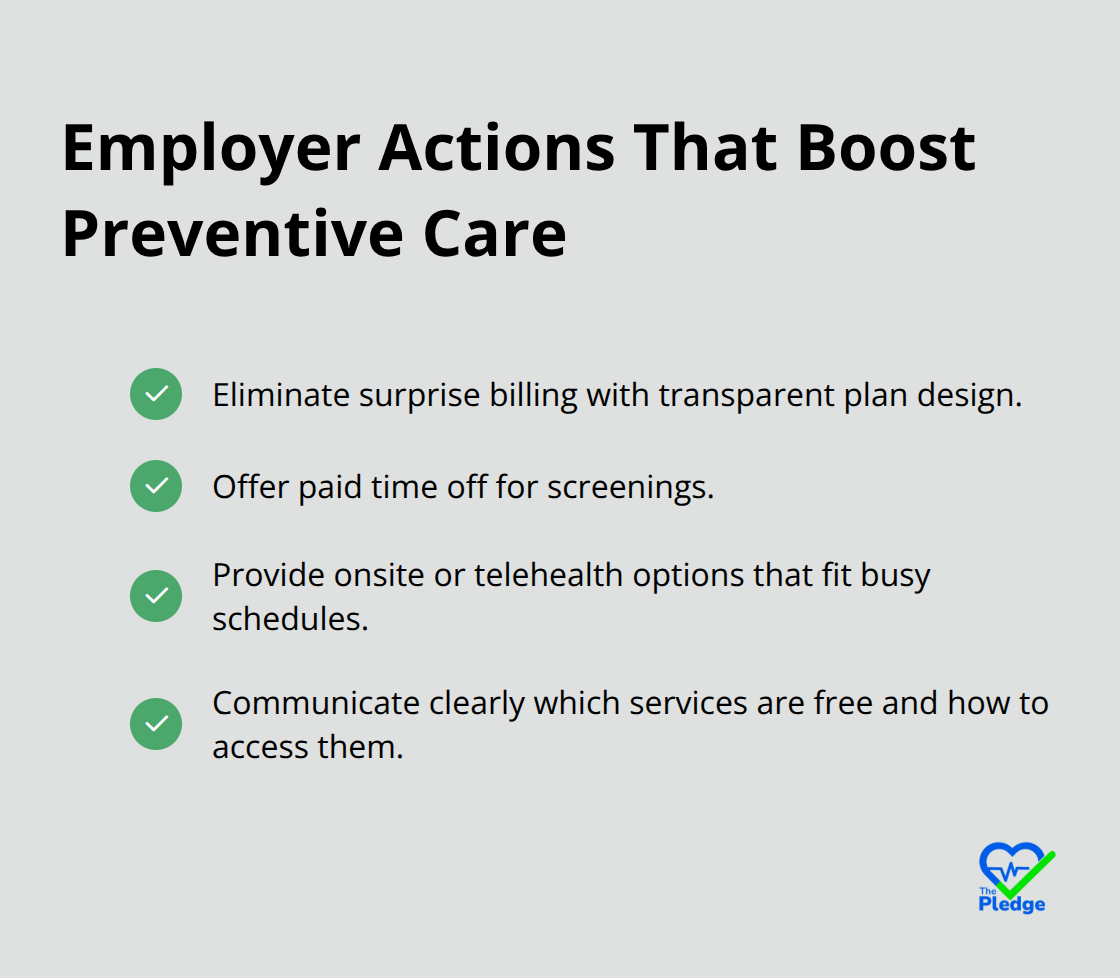
Employers who succeed in boosting preventive care participation address all three barriers simultaneously. They eliminate surprise billing through transparent plan design, offer paid time off for screenings, and provide onsite or telehealth options that fit busy schedules. These employers also communicate benefits clearly and consistently, ensuring employees understand exactly which services are free and how to access them without encountering unexpected costs.
The next section explores specific strategies employers can implement to remove these obstacles and drive meaningful preventive care engagement.
Why Employees Skip Preventive Care
The Motivation-Action Gap
Employees understand that preventive care matters, yet they still avoid it. The disconnect isn’t about motivation-it’s about competing demands and incomplete information. Many workers struggle to understand what preventive services their plans actually cover, which ones require follow-up appointments that might trigger costs, and why scheduling a screening matters when they feel fine. Health literacy varies dramatically across workforces. A Kaiser Family Foundation survey found that four in ten adults postponed preventive care due to cost concerns, but cost alone doesn’t explain why dental work tops the delayed-care list at 35 percent, followed by vision care at 25 percent. Delaying preventive care creates a domino effect of expenses that compounds over time, making early intervention far more cost-effective than treating advanced conditions.
Time Constraints and Scheduling Friction
These services require time away from work, coordination with providers, and navigation through scheduling systems that often operate during business hours. Employees with demanding jobs, caregiving responsibilities, or inflexible schedules face genuine barriers. Rural workers encounter additional friction-limited provider networks mean longer travel times and fewer appointment options. Workers with chronic conditions should prioritize preventive care most, yet they report the lowest engagement rates because managing existing health demands already consumes their time and mental energy.
The Communication Breakdown
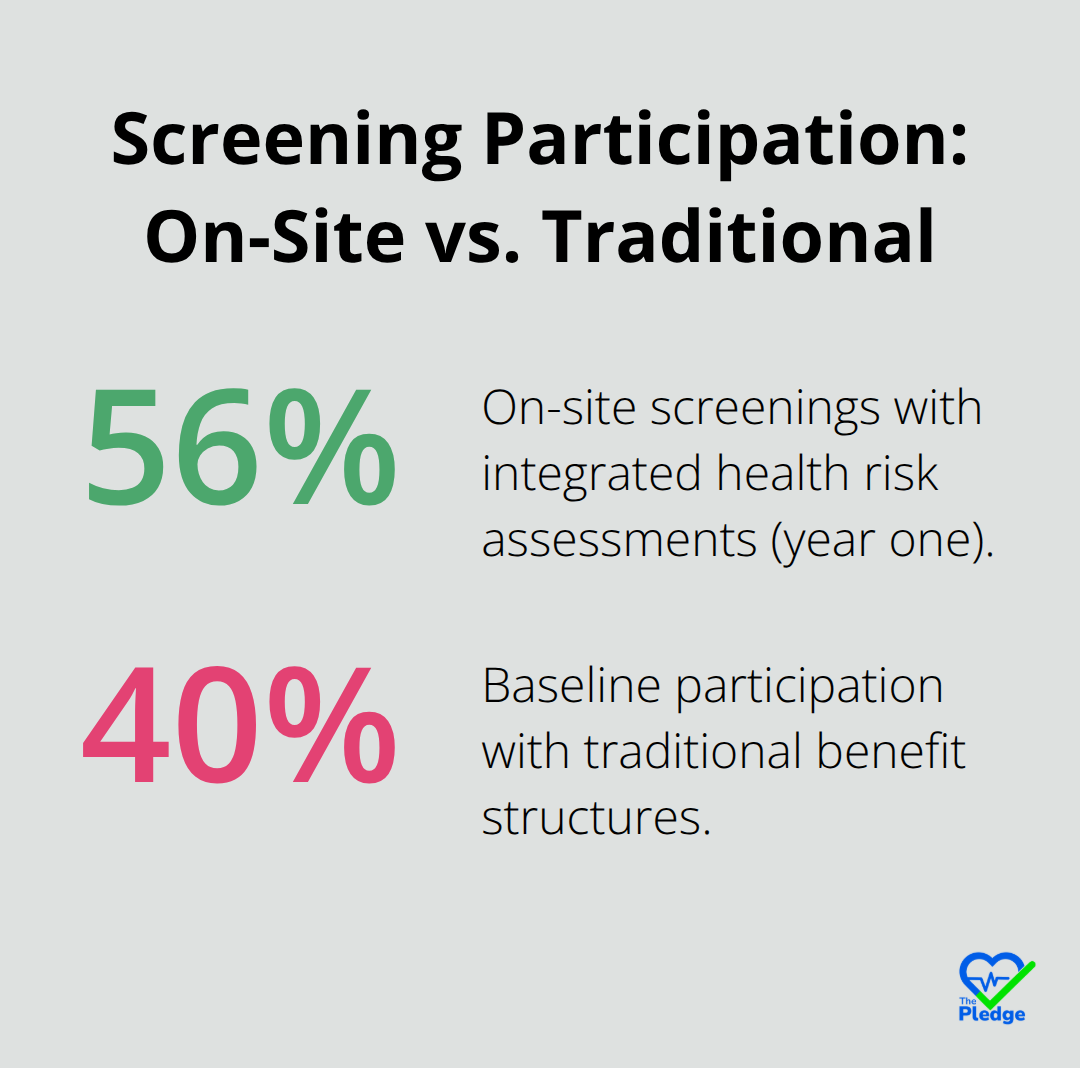
Employers often assume employees understand their benefits, but that assumption fails repeatedly. Without clear communication about which services are free, how to access them without hitting deductibles, and why early detection prevents expensive treatments later, workers default to avoidance. The Illinois Workplace Wellness Study tracked 4,834 employees and found that on-site screenings with integrated health risk assessments boosted screening participation to 56 percent in year one-proving that removing friction works. However, participation dropped in year two when incentives shrank and convenience decreased, demonstrating that sustained engagement requires persistent effort.
What Actually Drives Engagement
Employers who succeed address this through multiple channels: paid time off explicitly designated for preventive appointments, onsite or telehealth screening options that eliminate travel, and repeated communication that explains exactly what’s covered and how to use benefits without surprises. The most effective approach combines transparent plan design with proactive outreach to high-risk employees who benefit most from early intervention. These strategies shift the burden from employees to employers, making preventive care the path of least resistance rather than an obstacle course. When employers remove friction at every step, engagement follows-and that’s where digital health platforms become essential tools for scaling these efforts across entire workforces.
How Employers Can Actually Remove These Obstacles
Employers need to stop assuming that offering preventive benefits equals removing barriers. The gap between coverage and engagement reveals a harsh truth: access without friction does not exist in most workplaces. Employers who successfully drive preventive care participation treat the obstacles as design problems, not awareness problems. They restructure how employees interact with their benefits, not just communicate about them more loudly.
The most effective approach combines three concrete changes. First, eliminate scheduling friction entirely through digital platforms that integrate appointment booking directly into the benefits experience. The Illinois Workplace Wellness Study proved this works: on-site screenings with integrated health risk assessments achieved 56 percent participation in year one, compared to the baseline of 40 percent for traditional benefit structures. Second, employers must explicitly designate paid time off for preventive appointments and make this policy visible in every communication about benefits.
Third, employers should target high-risk employees proactively rather than waiting for engagement. An employee with undetected chronic conditions represents a cost problem; early detection through targeted outreach addresses both the financial barrier and the awareness gap simultaneously. Stage 3 chronic kidney disease costs approximately $18,294 annually per person for complications-making prevention a direct financial argument for both employer and employee.
Design Benefits to Eliminate Surprise Costs
The hidden billing problem requires structural solutions, not just better explanations. Employers should audit their plans to identify which preventive services trigger unexpected charges. Colonoscopies that include $250 surgical tray fees, follow-up procedures ranging from $112 to $702, and diagnostic add-ons that bypass preventive coverage exemptions need structural fixes through plan design changes. Work directly with insurers to expand what counts as fully covered preventive care and to cap or eliminate charges for follow-up diagnostics after abnormal screenings. A high-deductible health plan paired with Health Savings Account contributions specifically for preventive follow-ups removes the financial uncertainty that deters screening. Communicate this plan design change repeatedly: employees avoid screenings because they fear bills, so prove through transparent plan language that this specific risk is eliminated.
Make Access Automatic, Not Optional
Convenience must become the default path, not an alternative option. Digital health platforms that centralize appointment scheduling, medication reminders, and screening notifications dramatically increase engagement when they integrate into the benefits experience employees already use. Employers who offer onsite screenings during work hours see higher participation than those relying on external provider networks. When screenings happen at the workplace, employees lose the scheduling excuse. Telehealth options for initial consultations and follow-up discussions further remove the time barrier. The most critical step is establishing a primary care relationship for every employee, since having a provider nearly doubles preventive care utilization compared to employees navigating the system alone.
Target High-Risk Employees Proactively
One-third of people covered by employer health plans carry undetected chronic conditions. These employees benefit most from preventive care, yet they engage least frequently. Employers should use claims data to identify workers with elevated health risks and reach out directly with personalized outreach. This approach shifts resources toward those who need prevention most and generates the strongest financial return. Targeted communication that speaks to specific health risks (diabetes screening for workers with family history, cardiovascular screening for those with high blood pressure) proves far more effective than generic wellness messages. Pair this targeting with explicit offers of paid time off and onsite screening appointments, and engagement rates climb substantially.
Integrate Preventive Care Into Workplace Culture
Preventive care becomes routine when employers treat it as a workplace norm, not an optional benefit. Managers should receive training to encourage team members to use preventive services without judgment. Health communications should appear regularly in channels employees already check-internal newsletters, team meetings, benefits portals-rather than as one-time announcements. Celebrate preventive care milestones (screening completion rates, vaccination uptake) in company communications to reinforce that this behavior aligns with organizational values. When preventive care becomes visible and normalized, employees stop viewing it as an extra task and start treating it as part of their employment relationship.
Final Thoughts
The preventive care barriers we’ve outlined-hidden costs, scheduling friction, and communication gaps-aren’t inevitable obstacles. Employers can solve these design problems through deliberate structural changes that eliminate surprise billing, designate paid time off for screenings, and proactively target high-risk employees. Early detection of chronic kidney disease costs roughly $26,843 annually in stage 3, compared to nearly $200,000 in stage 5, which demonstrates the real financial value of prevention.
Technology plays an essential role in scaling these efforts across entire workforces. Digital health platforms centralize appointment scheduling, send personalized reminders, and integrate with existing benefits to remove friction at every step. Platforms like The Pledge simplify care navigation through AI-powered technology, allowing employees to manage preventive appointments alongside their full health picture.
When employers address preventive care barriers systematically, they see measurable improvements in both health outcomes and financial performance. Employees who receive preventive care miss fewer workdays and maintain higher productivity, while organizations strengthen retention and workplace culture. The question isn’t whether prevention matters-it’s whether your organization is ready to remove the obstacles that prevent employees from accessing it.
![Building Your Employer Health Strategy for [2025]](https://thepledge.app/wp-content/uploads/emplibot/Building-Your-Employer-Health-Strategy-for-_2025__1782094238-300x168.jpeg)



![Navigating Your Provider Network for Maximum Savings [Guide]](https://thepledge.app/wp-content/uploads/emplibot/Navigating-Your-Provider-Network-for-Maximum-Savings-_Guide__1781489382-300x168.jpeg)