Most wellness challenges fail before they start. Companies launch programs without clear metrics, fail to engage employees, or misalign initiatives with actual health goals.
At The Pledge, we’ve seen firsthand that wellness challenge design requires a strategic approach. The difference between a program that moves the needle and one that fizzles comes down to specificity, accountability, and the right technology backbone.
Why Wellness Challenges Lose Momentum
Metrics and Measurement Gaps
Most wellness challenges fail because companies treat them as standalone events rather than data-driven initiatives. Without clear metrics from day one, you operate blind.
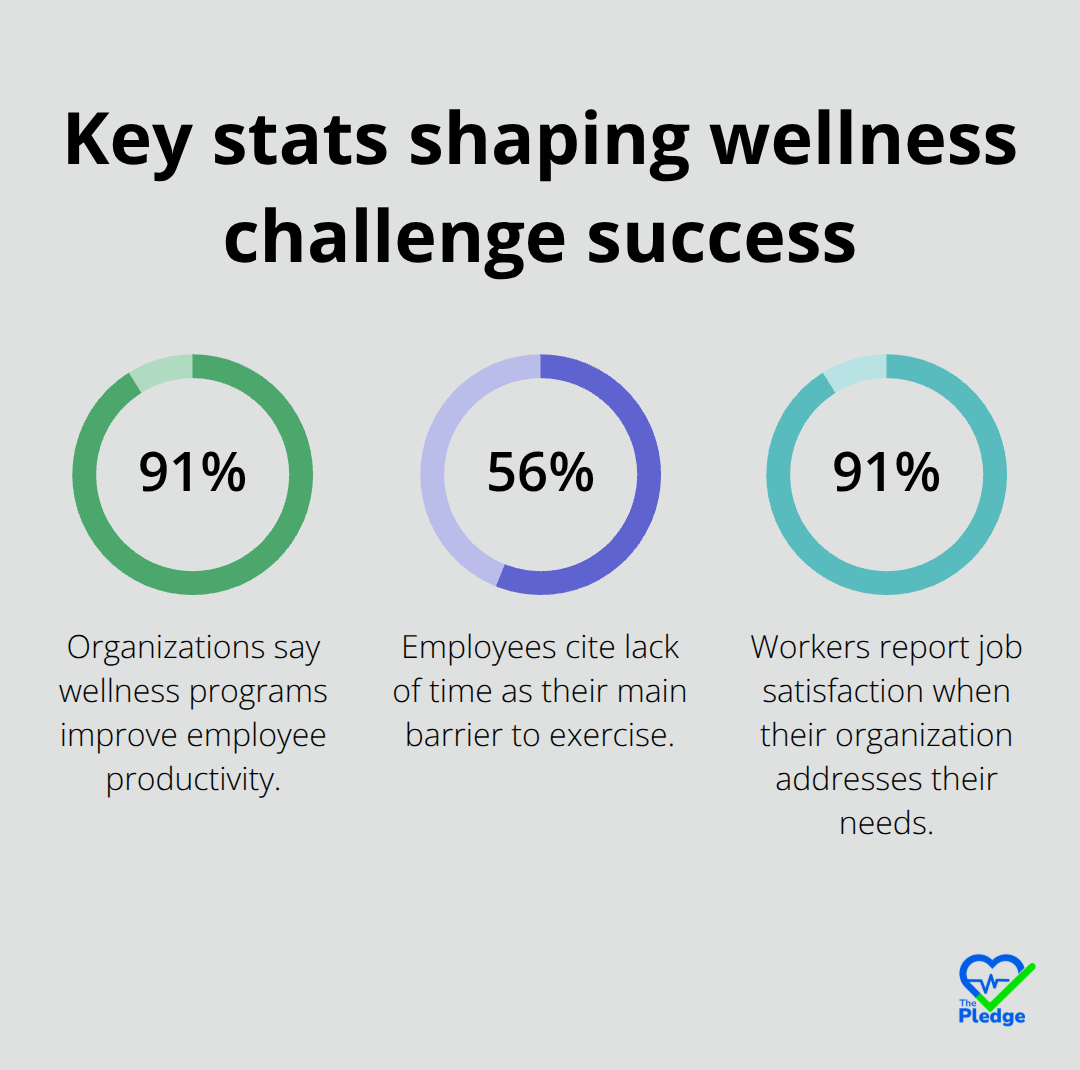
Ninety-one percent of organizations say wellness programs improve employee productivity, according to Wellhub’s Return on Wellbeing 2026 report. This gap isn’t random-organizations that lack specific tracking mechanisms can’t identify which activities drive engagement or which employee segments need different approaches. When you don’t measure daily activity participation, completion rates, or health outcome shifts, you can’t tell if your program moves the needle or just consumes budget.
Misunderstanding What Motivates Your Workforce
The second pitfall stems from assumptions about what motivates employees. Many companies assume generic fitness challenges appeal broadly, but 56% of employees cite lack of time as their main barrier to exercise, according to The State of Work-Life Wellness 2025. A challenge that demands 45-minute gym sessions instead of flexible 10-minute activities will hemorrhage participants by week two. Engagement fails when the program doesn’t meet people where they are.
Organizational Misalignment and Communication Failures
Your wellness challenge can’t exist in isolation from your actual business health goals. If your company hemorrhages talent due to burnout, a step-counting challenge won’t address it. Instead, you need challenges that directly target your known pain points-whether stress management, sleep quality, or mental fitness. When 91% of workers who feel their organization addresses their needs report job satisfaction compared to 44% who don’t (SHRM’s 2025 Employee Benefits Survey), the gap becomes clear: disconnected programs signal that leadership doesn’t understand employee needs.
This misalignment extends to how you communicate the challenge. Mandatory participation kills momentum because it removes choice. Overcomplicating tracking technology-requiring employees to juggle multiple apps or manual spreadsheets-creates friction that kills adoption. Ignoring remote or hybrid workers entirely means you design for less than half your actual workforce. The strongest programs start with ruthless honesty about what your employees need, design for accessibility across every work model, and commit to measuring real outcomes beyond just who signed up. These foundations set the stage for the next critical step: actually designing a challenge that people want to participate in.
How to Build Challenges That Actually Stick
Start with Outcomes, Not Assumptions
Start with the outcomes you need to move, not the activities you think sound good. Organizations make this mistake constantly: they launch a step challenge because it’s trendy, not because sedentary behavior is their actual problem. Define what success looks like in concrete terms before you design a single activity. If your organization has 66% of employees experiencing burnout according to BambooHR’s 2025 data, your challenge should target stress reduction and mental fitness, not just physical activity. Set two to three specific goals that align with your known employee pain points and your business objectives. Then assign measurable metrics to each goal.
Track daily activity participation rates, completion percentages, and health outcome shifts like changes in sleep quality or reported stress levels. Without these baselines established in week one, you have no way to prove the challenge moved anything. This foundation separates programs that generate real results from those that simply consume budget.
Structure Incentives Around Behavior, Not Just Winners
Incentives work only when they reward the behaviors you actually want to see repeated. Most companies hand out generic prizes for top leaderboard finishers, which inadvertently rewards people who were already healthy and motivated. Instead, structure incentives to recognize consistency, team participation, and improvement from baseline.
High-impact activities like exercising for 30 minutes or achieving seven-plus hours of sleep earn three points. Medium-impact activities like drinking 64 ounces of water daily or sharing gratitude earn two points. Low-impact activities like journaling or meditating for ten minutes earn one point.
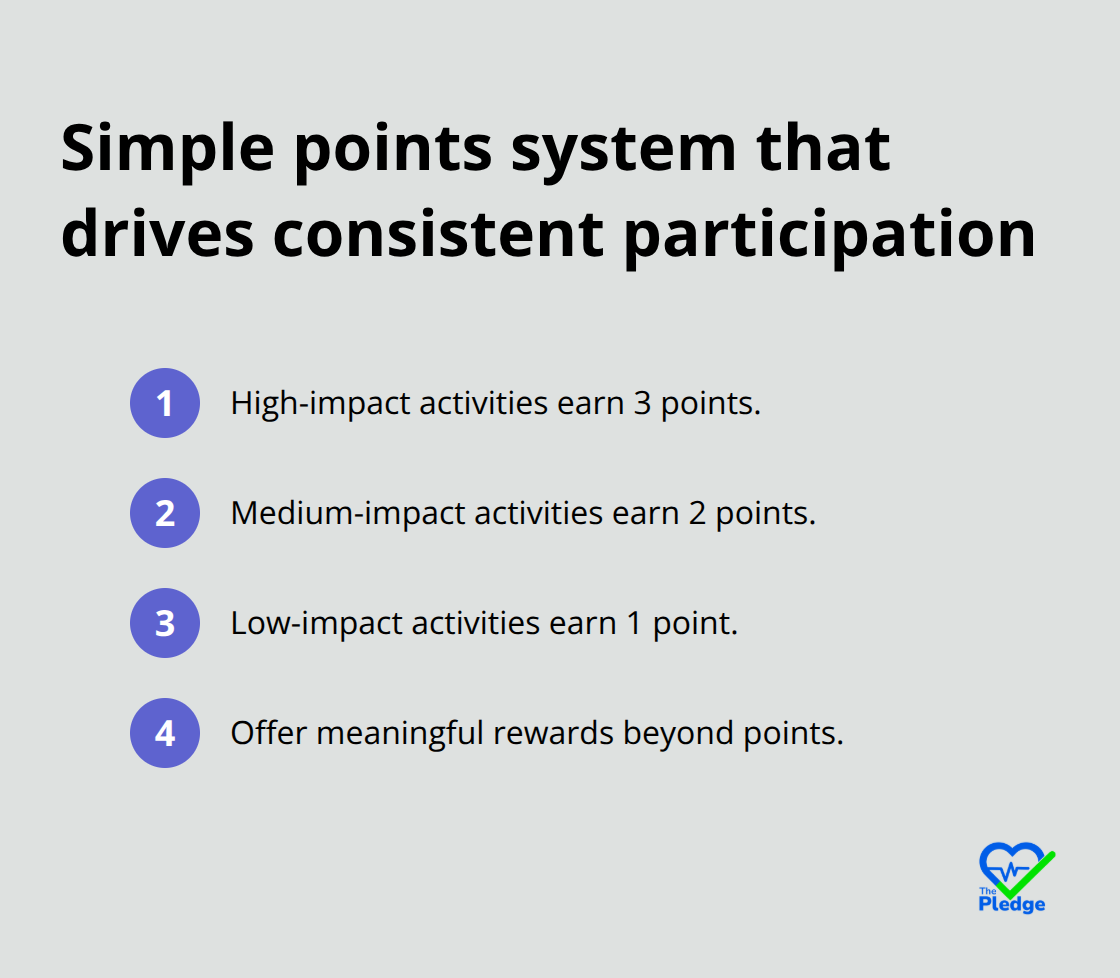
This transparent points system lets every employee see exactly how their choices accumulate. Offer rewards beyond points: extra PTO, charitable donations in the employee’s name, or platform upgrades matter far more than branded merchandise.
Activate Social Accountability Through Team Competition
The real motivation multiplier is social accountability. Teams outperform individuals because peer expectation creates sustained effort. Organize employees into departments, office locations, or even self-selected teams and display weekly progress on a shared leaderboard. Weekly recaps that highlight not just the top performers but also the most improved team and the team with highest participation rates create multiple pathways to recognition.
When employees see their team’s name climbing the rankings and know their contribution matters to group success, engagement stays high through week four and beyond. This team-based structure also surfaces which employee segments respond to different challenge formats, which activities drive the most consistent participation, and where your communication strategy needs adjustment. These insights become invaluable as you move into the technology layer that actually powers sustained engagement and real-time visibility across your entire workforce.
Pick the Right Technology Stack
The technology you select either accelerates your challenge or becomes a friction point that kills participation. Too many companies choose platforms based on flashy features rather than integration capability. Your challenge lives within an ecosystem of existing health data, insurance claims, wearable devices, and employee health records. If your platform can’t connect to that ecosystem, employees end up manually logging activities across three different apps, and engagement collapses by week three. Seamless integration with existing health infrastructure matters far more than gamification bells and whistles. Select a platform that connects directly to your health plan data, pulls information from wearables like Fitbit or Apple Health, and syncs with your existing benefits platform. This eliminates data silos and gives employees a single source of truth for their progress. When employees see their step count automatically populate from their smartwatch or their sleep data flow in from their health app without manual entry, friction disappears and participation stays consistent through the entire challenge duration.
Real-Time Visibility Drives Sustained Engagement
Real-time progress updates create momentum that static monthly reports simply cannot match. Your challenge platform should push automated reminders when employees haven’t logged activity for three days, display updated leaderboards that refresh daily, and send weekly team recaps that highlight progress toward group goals. The streak feature matters more than most companies realize. When employees see they’ve hit fourteen consecutive days of activity, that visible progress creates psychological commitment to maintain the streak. Platforms like Headversity SOLO provide automated reminders and gamified progress tracking specifically designed to maintain engagement through the full challenge window.
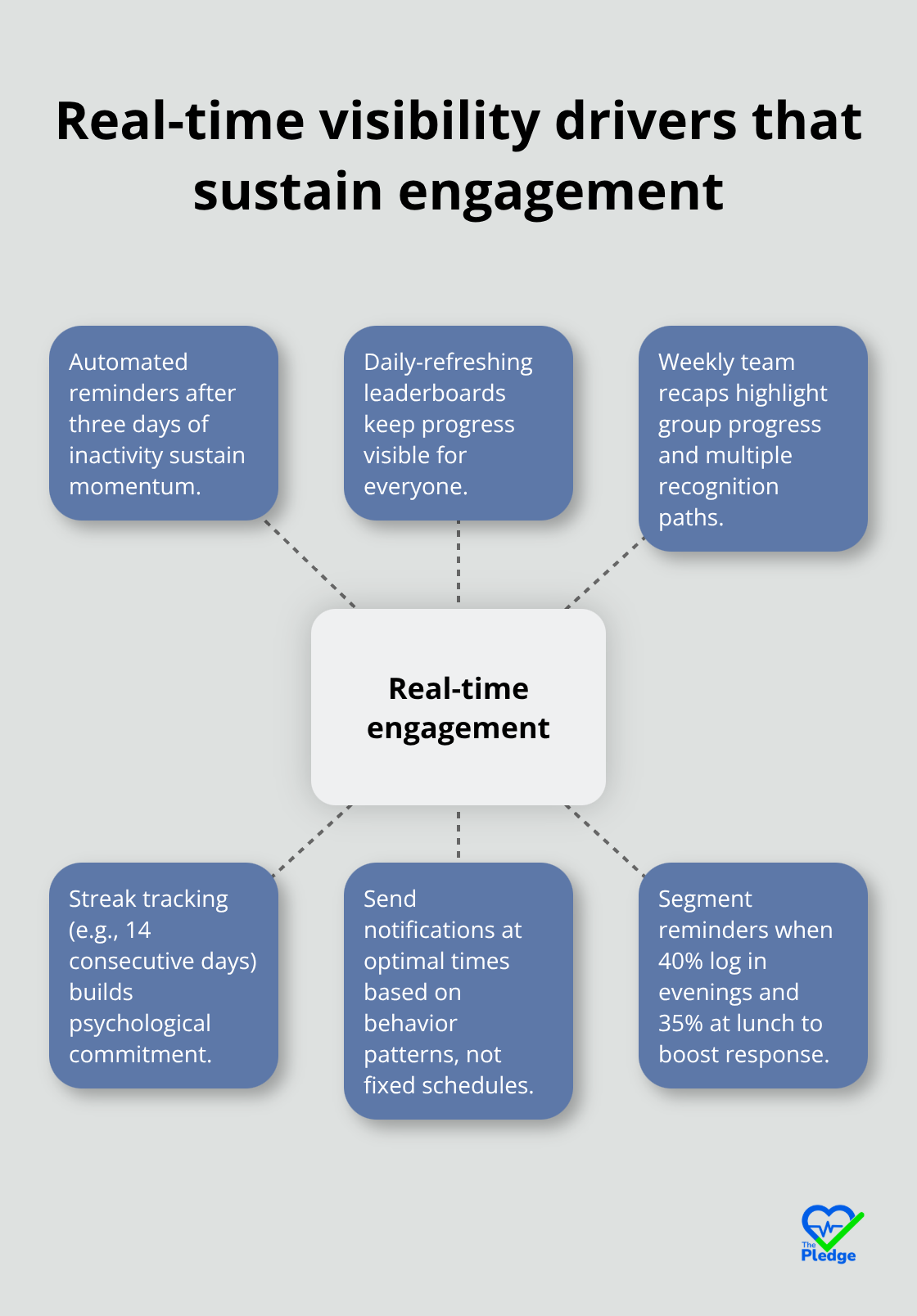
Configure your platform to send notifications at optimal times based on employee behavior patterns, not just once per day at 9 AM. If your data shows that 40% of your workforce logs activity in the evening and 35% during lunch breaks, segment your reminders accordingly.
Personalization Transforms Generic Challenges Into Relevant Programs
The personalization layer transforms a generic challenge into one that meets employees where they actually are. Your platform should allow employees to set personal goals based on their baseline activity levels rather than forcing everyone toward the same target. An employee averaging three thousand steps daily shouldn’t compete on the same scale as someone already hitting eight thousand. Instead, offer them a path to increase their baseline by 20% over the challenge period. This design principle rewards improvement over absolute performance and keeps previously inactive employees engaged rather than discouraged. When you measure success through individual progress and team participation rather than just leaderboard rankings, you unlock participation from the 60% of your workforce that would otherwise sit out because they know they can’t win a straight competition. Personalized health dashboards that reflect each employee’s specific wellness priorities-whether stress management, sleep quality, or nutrition-create relevance that generic step counts cannot match.
Final Thoughts
Effective wellness challenge design hinges on three non-negotiable principles: measure what matters, build for sustainability, and embed challenges into your broader health strategy. Research shows that behavior change from well-designed challenges persists for at least six weeks after completion, which means your four-week stress management challenge in June feeds into resilience training, flexible work policies, and mental health resources throughout the year. When employees see that your organization’s commitment to their wellbeing continues beyond the challenge period, trust deepens and participation in future programs increases.
Success extends beyond the challenge window itself because you must connect each challenge to your specific pain points rather than chase generic fitness trends. If your organization faces high burnout or turnover, your wellness strategy must address those root causes directly through challenges that target stress reduction, mental fitness, or sleep quality. Honest assessment of what your workforce actually needs separates programs that move retention metrics from those that simply consume budget without measurable impact.
The strongest wellness programs treat challenges as part of an integrated ecosystem where health data flows seamlessly, personalized reminders reach employees at optimal times, and outcomes align with business objectives. Wellness challenge design that eliminates friction and creates real-time visibility transforms participation rates and sustains engagement long after the challenge ends. Start with clear metrics, build for accessibility across your entire workforce, and measure impact honestly to move from challenges that fizzle to programs that transform your organizational health.
![Building Your Employer Health Strategy for [2025]](https://thepledge.app/wp-content/uploads/emplibot/Building-Your-Employer-Health-Strategy-for-_2025__1782094238-300x168.jpeg)



![Navigating Your Provider Network for Maximum Savings [Guide]](https://thepledge.app/wp-content/uploads/emplibot/Navigating-Your-Provider-Network-for-Maximum-Savings-_Guide__1781489382-300x168.jpeg)